Nov 22, 2024 | NEWS
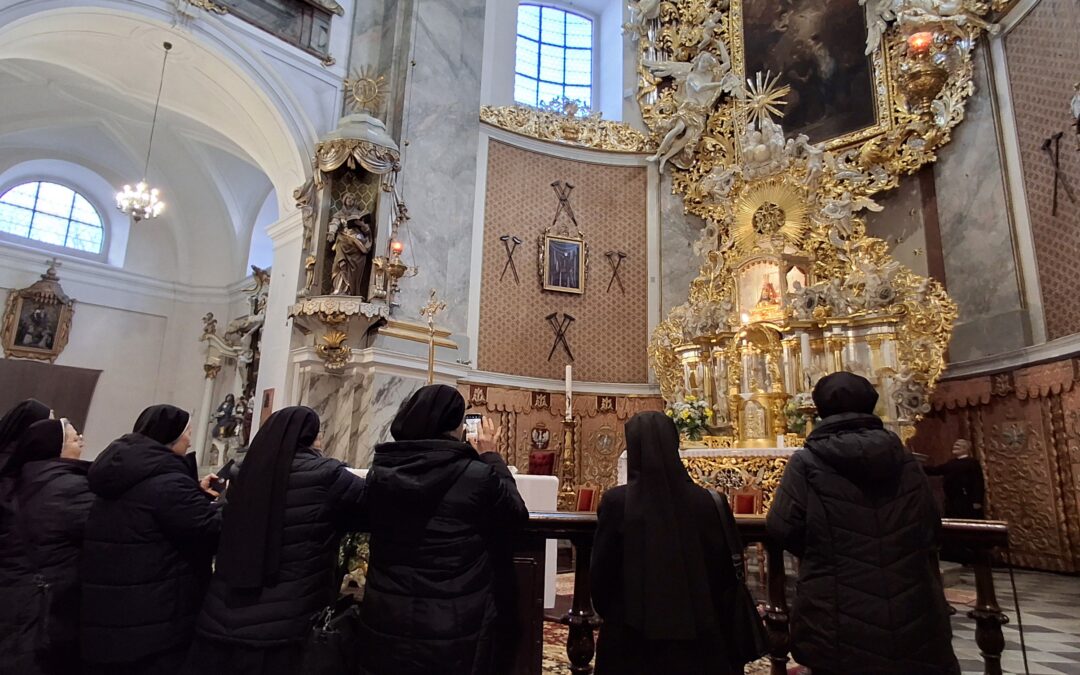
On November 21, the liturgical commemoration of the Presentation of the Blessed Virgin Mary, we made a pilgrimage to Our Lady Guardian of Faith in Bardo.
The 98th Thanksgiving pilgrimage of the Congregation of the Sisters of Mary Immaculate gathered sisters from many Polish missions; sisters from Rome and Germany were also present. We prayed together with the sisters of the general and provincial boards, and were spiritually united with us by the elderly and sick sisters, including those who stayed at home. At the Sanctuary of Our Lady Guardian of the Holy Faith at 10:30 a.m., we began praying the rosary, which spiritually introduced us to the Eucharist.
The Mass, celebrated under the presidency of parish priest Father Piotr Wisniewski CSsR and the co-celebrating priests, was a heartfelt thanksgiving offering for each of us.
During his homily, Father Pastor encouraged everyone to have good memories of the past years, when each of us wanted to offer our lives to God, to offer so seriously and without reservation.
Provincial Superior Sr. M. Magdalena Zablotna, in the Act of Entrustment, placed the Congregation of the Sisters of Mary Immaculate under the protection of the Guardian of the Holy Faith The Sister Choir, under the watchful eye of Sr. Barbara Mroziak, made. That the liturgy had a beautiful solemn character.
The Magnificat, sung from the heart, opened our souls to praise God here and now, for great things the Almighty has done for us, and holy is His Name.
S.Małgorzata Cur SMI

Nov 22, 2024 | DAILY BREAD
Saint Cecilia, Virgin, Martyr
Friday of week 33 in Ordinary Time
Gospel – Luke 19:45-48
“‘According to scripture,’ he said ‘my house will be a house of prayer. But you have turned it into a robbers’ den.’” We transform the house of prayer into a robbers’ den when we approach even prayer for our selfish interests. Indeed, this passage from Luke highlights the importance of purity in our intentions, especially in the sacred act of prayer and worship. Jesus’ indignation at the temple being used for selfish gain reflects a deeper message about the purpose of spiritual spaces and practices: they are meant for communion with God, not for personal profit or ulterior motives. When we reduce prayer to a tool for solely obtaining what we want, we risk losing the essence of true connection with God. Genuine prayer is not about bargaining or solely presenting a list of desires; it is about opening our hearts to God, seeking His will, and aligning ourselves with His purpose. This passage challenges us to reflect on the authenticity of our spiritual practices. By approaching prayer with humility and selflessness, we honor the sacredness of God’s “house”—not just the physical church but also the temple of our hearts. In doing so, we transform our spiritual life into what it is meant to be: a true house of prayer, not a robbers’ den. Let’s reflect: In what ways have I approached prayer or worship with selfish intentions, and how can I shift my heart toward seeking genuine communion with God and His purpose?
Don Giorgio
Nov 20, 2024 | DAILY BREAD
The Presentation of the Blessed Virgin Mary
Thursday of week 33 in Ordinary Time
Gospel Luke 19:41-44
“‘If you in your turn had only understood on this day the message of peace! But, alas, it is hidden from your eyes!”. The passage from Luke 19:41-44 reflects Jesus’ deep sorrow for Jerusalem, as He laments their failure to recognize the opportunity for peace that He offers. His words carry a profound truth: the peace He brings is not just an absence of conflict but a transformative relationship with God, rooted in love, justice, and reconciliation. If we don’t understand the message of peace which Jesus brings, the peace will be hidden from our eyes. This highlights how spiritual blindness, pride, or resistance can obscure the truth and prevent us from fully embracing His gift of peace. Jesus continually calls us to open our hearts and minds to His message. To understand His peace, we must seek humility, attentiveness, and faith. It requires surrendering to His will, forgiving others, and cultivating justice and compassion. Let’s us reflect: How might spiritual blindness, pride, or resistance be preventing me from fully embracing the peace that Jesus offers in my life today?
Don Giorgio

Nov 19, 2024 | DAILY BREAD
Wednesday of week 33 in Ordinary Time
Gospel Luke 19:11-28
Next came the other and said, “Sir, here is your pound. I put it away safely in a piece of linen because I was afraid of you; for you are an exacting man: you pick up what you have not put down and reap what you have not sown.” This passage from the Gospel of Luke, often referred to as the Parable of the Ten Minas, provides a profound reflection on the use of the gifts and talents entrusted to us by God. The servant in the story who hides his mina does so out of fear, driven by a misunderstanding of his master’s character. He perceives the master as harsh and demanding, which leads him to act out of self-protection rather than faithful stewardship. Our perception of God deeply influences how we live out our faith and use our gifts. If we view God as distant, exacting, or unforgiving, we might hesitate to take risks, step into our purpose, or even cultivate the talents we’ve been given. This leads to a kind of spiritual stagnation—burying our potential instead of allowing it to grow and bear fruit. However, the parable challenges this view by showing that God, as the master, entrusts His servants with resources not to punish them but to see them flourish and multiply their gifts. A true understanding of God’s character—a loving, generous, and just God—should inspire confidence and action. When we act in faith, even small efforts can yield significant results. In essence, this parable encourages self-reflection on our beliefs about God and how those beliefs shape our actions. It invites us to trust in God’s goodness, use our talents boldly, and align ourselves with His purpose. By doing so, we not only honor the giver of the gifts but also contribute to the growth of His kingdom. Let’s reflect: How does my perception of God influence the way I use my gifts and approach the opportunities entrusted to me?
Don Giorgio

Nov 18, 2024 | DAILY BREAD
Tuesday of week 33 in Ordinary Time
Gospel – Luke 19:1-10
“He was anxious to see what kind of man Jesus was, but he was too short and could not see him for the crowd. So he ran ahead and climbed a sycamore tree to catch a glimpse of Jesus who was to pass that way”. This anxiousness to see Jesus. His acknowledgment of his short stature. The solution he found for overcoming that shortness. These are important points to meditate. Zacchaeus’ eagerness reflects a deep longing for something beyond his current life. He is a wealthy man, but his material wealth hasn’t quenched his spiritual thirst. His desire to encounter Jesus symbolizes the human soul’s yearning for God, a restlessness that points us toward seeking deeper meaning and truth. Zacchaeus recognizes his limitation—not just physically, but symbolically. His shortness can be seen as an acknowledgment of human inadequacy or sinfulness. Recognizing one’s shortcomings is the first step toward humility and openness to grace. Despite his limitations, Zacchaeus doesn’t resign himself to the crowd’s barriers. Instead, he takes bold action by climbing a sycamore tree. This act of creativity and determination allows him to rise above the obstacles and see Jesus. Jesus responds to Zacchaeus’ efforts by calling him by name and inviting Himself into his home. This encounter leads to Zacchaeus’ conversion—a shift in his heart and priorities. Let’s reflect: What are the “crowds” in my life that keep me from seeing clearly Jesus, and what bold steps could I take to rise above them to encounter deeper truth and meaning?
Don Giorgio
