Sep 9, 2021 | POSITIVE IMPULSES
Don’t get dispersed yourself among the different things you would like to do. Multitasking is different from chasing your wishes and fantasies. Your wishes or desires in life should be aligned with a purpose. It is that purpose which puts yours desires or wishes in life in a priority list and encourages you to follow them. If the purpose is missing it will be like running in different directions without a finishing point. At the end of the day, you will be still looking for happiness though you satisfied some of your wishes. Put the purpose clearly before you and you will find your wishes brought into harmony and you have a direction to follow.
Don Giorgio
Sep 7, 2021 | NEWS
We have any reason to thank God for the gift of life and the divine calling. It is truly to thank God for continuing to receive sacred vocations in our Congregation especially in our Region of Tanzania. The scriptures tell us that; the harvest is plentiful but the labourers are few, so we ask the Lord of the harvest to send many labourers into his field. Encouraged by these words of comfort we have any reason to thank God for having a new vocation in our Congregation especially in our Tanzanian Region.
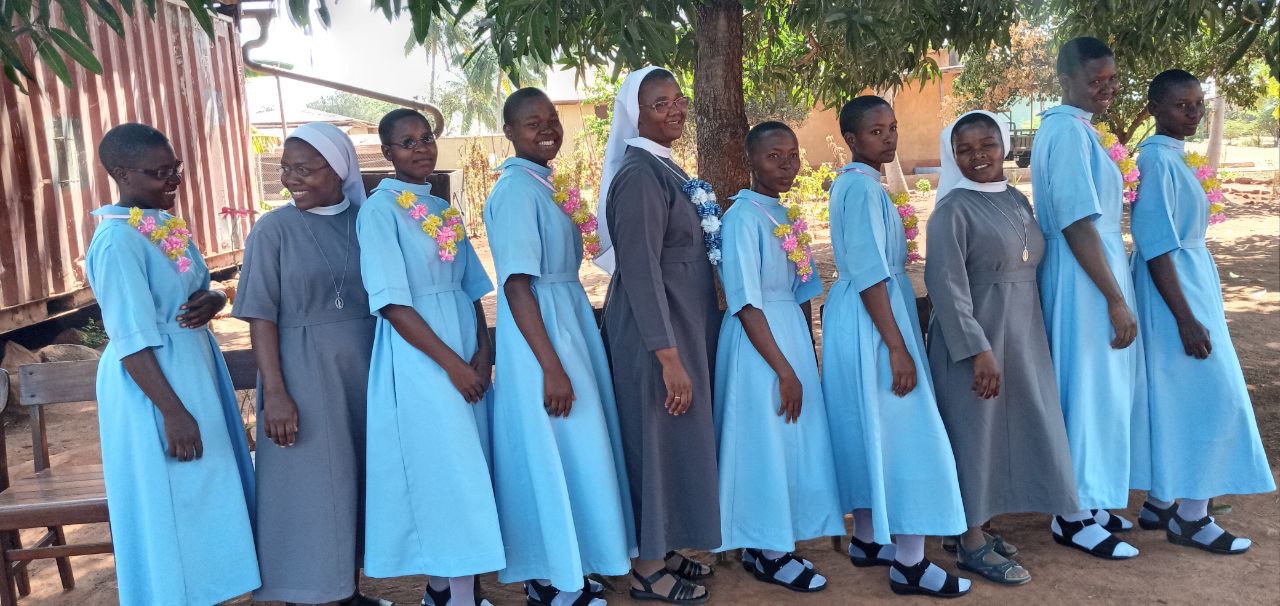
In this year we are so happy to have 5 new Sisters of first Profession which held on 28.08.2021 in our Chikukwe Community. We thank God for that gift.
Also we thanking God for having 5 Novices in the same day; and on 29.08.2021 they entered 7 Postulant. What more can we say than to give thanks to God for His goodness that He gives us every day. As we continue to thank God for the gift of our vocation we are proud that those who are called continue to glorify God for their lives within the Congregation. It seems is the good sign of life in our Region by having a new vocation is like a child now the Region are growing and widening daily. Let us joined together to thank God for having 2 sisters on 28.08.2021, who fulfilled the 25º Jubilee of their religious vows. Glory to God in the highest, and on earth peace, good will toward men.
We commend them all and pray for God’s grace so that they may continue to love God more and give a better witness of their religious life.
From Region office,
Sr. Agnes Mwanajimba

Sep 7, 2021 | FORUM
We say the Lord’s Prayer several times every day. Probably we have considered its content many times by listening, reading or meditating on what the Lord Jesus left us in it and to what he invites his disciples to. For some time, however, I have been paying special attention to the fifth request, which is conditional and touches the essence of Christianity: And forgive us our trespasses, as we forgive those who trespass against us.
The theme of forgiveness is closely related to mercy. Forgiveness is one way we show mercy. One of the more demanding ways I would say … I trust everyone has experienced his healing power in their lives. Forgiveness received from loved ones teaches us to show mercy to other people, and also to ourselves, from childhood. People who are unable to show mercy to themselves usually have difficulties showing mercy to others, which makes it difficult to build social and community relations. Forgiveness serves our human and Christian development. He conforms us to Christ who invited his disciples to love their enemies (cf. Mt 5: 43-48). Jesus himself gave an example when he died on the cross for us, while we were still sinners (Rom 5: 8) and prayed in agony. Father, forgive them, for they do not know what they are doing (Lk 23: 34a). Most often we experience forgiving love from God in the sacrament of penance and reconciliation. A well-lived confession allows us to mend our relationships with those who have been at fault towards us or who have suffered because of us … Forgiveness requires rising above personal resentment, regret or such a natural but very primal desire to retaliate, which in fact does not help but drives the mechanism of evil. In the parable of the unmerciful debtor, the Lord Jesus invites us to forgive from the heart (cf. Mt 18:35), and not only superficially. In the Bible, the heart is the seat of feelings and will, it is the center of humanity. Forgiveness requires faith and trust in God, although it does not mean giving up your sense of justice and the expectation of restitution. During the trial before Annas, Jesus, struck by the servant of the high priest, asks him the question: If I said wrong, prove what was wrong. If that’s right, why do you beat me? (Jn 18:23). With these words, Jesus touches the conscience, stimulates the reflection of a man seeking human favors. It teaches us to care for the souls of those who have hurt us. This concern involves prayer, if possible, conversation, and, if necessary, help from the culprit.
Personally, I have found many times that forgiveness builds community. It belongs to its fundamental principles. When shown in a natural way, it helps to overcome difficulties that are not lacking in everyday life. Forgiveness is always possible. It leads to inner freedom even in difficult circumstances and helps to a fuller union with Jesus. Forgiveness received from the community brings us closer to each other and opens us to a variety of thinking, reacting and perceiving reality. Finally, forgiveness is combined with the gentleness which Pope Francis, in his Apostolic Exhortation on the call to holiness in the modern world Gaudete et exultate, describes as the style of Jesus (cf. no. 71).
S.M. Michaela Musiał
Aug 30, 2021 | HISTORY
It is 1954. At that time, I was at the post in Ścinawka Średnia. There were seven sisters in the community: six sisters dealt with the care of the sick in the health center, work in the delivery ward, care for the elderly in the center and work in the field, one sister was a sacristan.
I will remember August 2, 1954 for the rest of my life. It was the day we found out about the deportation. At 5:30 a.m. the military arrived in their cars to our house, at that time we were in the chapel. We had to pack right away, we had about 2 hours to do it. We were scared and didn’t know where they were taking us. We were packing up in a hurry. We felt panic and uncertainty. We asked the policemen where they were taking us, but the only answer we heard was that we were going “on vacation”.
We had to pack all our things: furniture and livestock (two cows, two pigs, chickens, ducks). They ordered us to take the Blessed Sacrament to the church. I would like to add that at that time the elderly who were with us in the health center were taken to another home.
A few hours after the arrival of the police, we were on our way to Wrocław. We were brought to our motherhouse, where we spent the night. The next day, they drove us to Karłowice (a district of Wrocław) to the Franciscan Fathers, where we stayed overnight. There we met our sisters from other institutions. The next day, we were loaded onto three buses marked “TRIP”. We still did not know where they were taking us and for what reason, so we tried again to ask the policemen who were guarding us, but we only received an answer that “we are going to our destination”, and later said that to Siberia. So we thought they would really take us there, and we prayed fervently for survival.
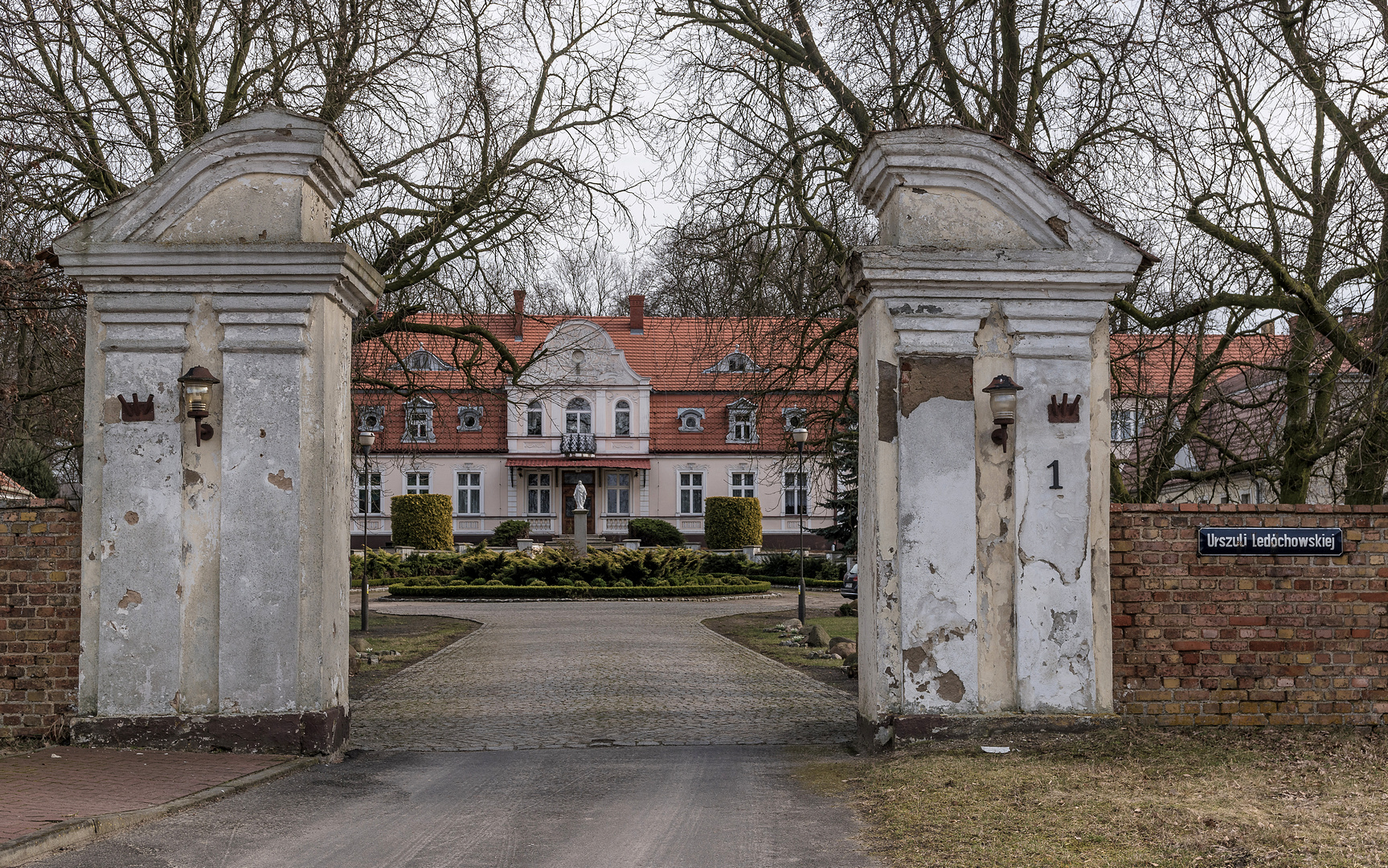
During the trip, we made a few stops in the woods for a short break. These stops were under the control of the security authorities because they were afraid that one of us would escape. We arrived in Otorowo in the evening of August 4, 1954. It was a convent of the Ursuline nuns, but for that time the sisters left their convent. When we arrived some of our sisters were there. There were 153 of us in total.
They told us to look for rooms and take places. They showed us a park nearby where we could take the cattle out.
For the first three months, we were dependent on the state authorities. The conditions were like in prison – we could not leave the camp grounds, beyond the gate, we were under the control of the police all the time, at the beginning there was no electricity, heating or hot water. Our food was very modest, the sanitary conditions were not the best, it was cramped (a dozen or so of us slept in one room).
There was a chapel in the camp, where we prayed together every day, morning and evening. The chaplain lived there and celebrated Holy Mass and evening services every day. In addition, we were under the spiritual protection of a local priest, dean from Pniewy, from the convent of the Ursuline nuns.
After 3 months, we were ordered to work for the state under the supervision of officials under the so-called productivization. Sewing rooms were created and I was ordered to sew in the piece, shift and band system. We sewed underwear, shirts, pajamas, chutes, we embroidered “tabs” for railway uniforms as well as hats and caps that I sewed. We were tearing the feathers. We worked from 7 am to 4 pm with an hour break. We worked all the time under the supervision of the guards. We received money for the work, thanks to which we could survive until the camp was dissolved.
During our stay in Otorowo, we had no contact with our family or people from the area, because the camp was closed. Some of us worked in state farms during harvesting, digging, grooming cows, pigs, spreading manure, it was work performed only under the control of security office officers.
There were secular officials working in the camp, who dealt with supplies and issued us passes.
On December 8, 1954, in camp conditions, we celebrated the centenary of our Congregation. Throughout this time, religious vows and anniversaries were normally held.
At the end of 1956, the civil authorities of the Szamotuły district informed us about the dissolution of the camp and the possibility of returning to the place of our previous stay. So I returned to my post in Ścinawka Średnia.
During our absence, our house was still a health center with a delivery room. Initially, we only received one room, we had to recover the next rooms with great effort, because they were inhabited by lay workers. The caretaker of the house turned out to be particularly unpleasant, even cruel, who stubbornly refused to leave the premises.
The rooms we recovered were devastated, dirty, there were bugs everywhere (all rooms had to be decontaminated). We had to renovate everything ourselves because nobody wanted to help us. We worked day and night to bring the house back into a state of living. This work affected our health, but we thanked God every day for being with us, for giving us the strength to bear it all.
S.M. Borgia Drobina
Aug 25, 2021 | POSITIVE IMPULSES
Are we a burden for the other? It’s good to ask this question because, sometimes the way we are, it could be like that especially when we are lazy. But actually, before we become a burden to the other, we are a burden to ourselves. What is projecting to the other, is just a reflection of what you are to yourselves. Unfulfilled aspirations, failed projects or other disappointments can create the burden in you which you eventually push over others. So, don’t let the failures or shortcomings become a burden in you. Trash it and liberate yourself, so that you can work hard not to be burden for the other.
Don Giorgio
