Aug 7, 2021 | SPIRITUALITY
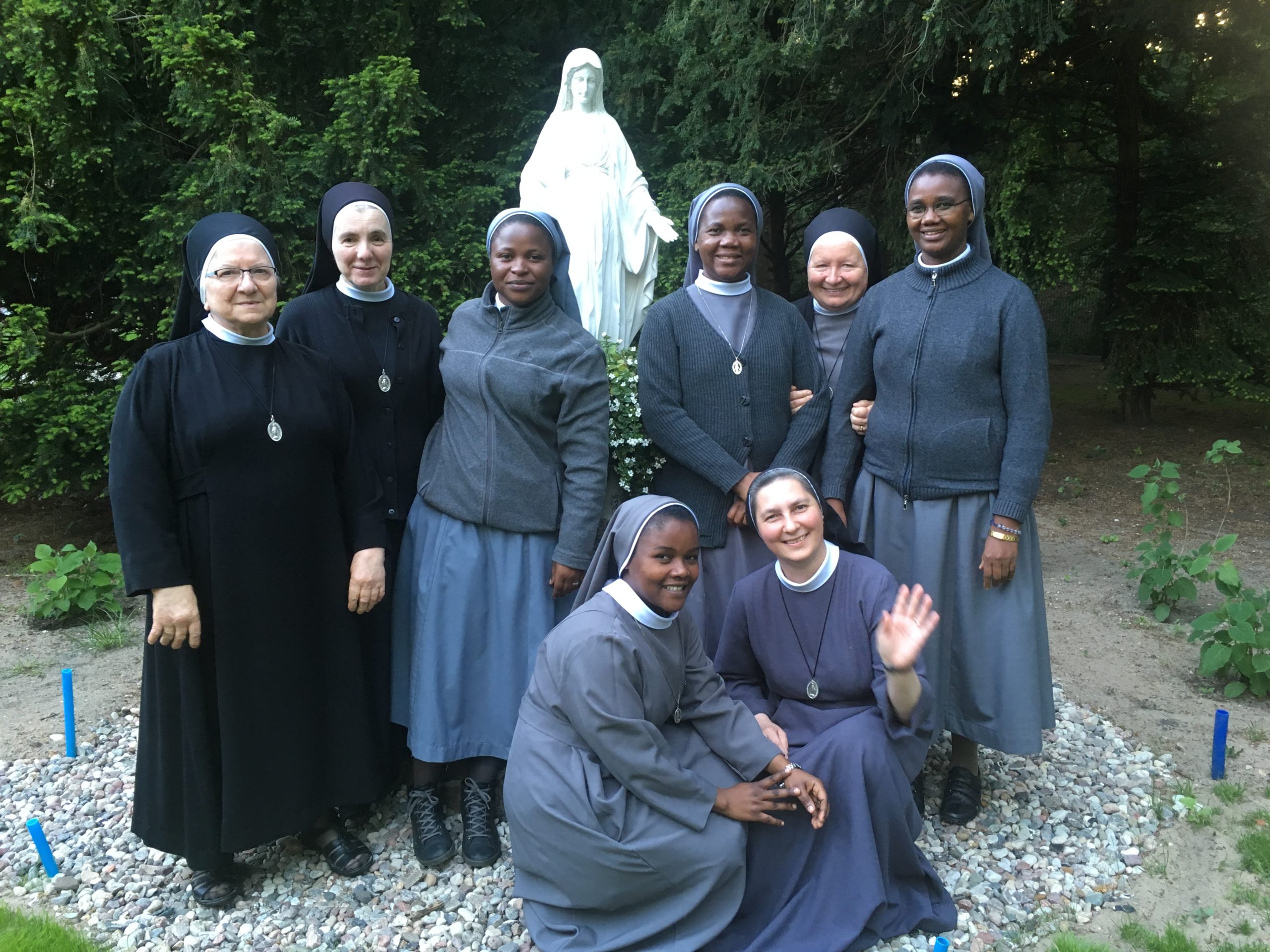
Start with a spiritual exercise. Ask yourself: What is the value of a community for you, or more specifically: what is the value for you of this community in which you now live or in which you previously lived? And I’ll tell you right away: Don’t just look at this question in theory, but in everyday practical life.
I think that the pursuit of unity depends largely on the value you place on community. If the community is of value to you (and not only on paper in a constitution, but in everyday life), then you will also want to meet the concerns of the founder, Rev. Johannes Schneider, and seek and deepen the unity.
1 + 1 + 1 = 3
Why do people form a community?
There are many good reasons for joining a community:
– Strength in togetherness
Men and women can very quickly be overwhelmed by tasks, difficulties and hardship. The experience of not being alone strengthens everyone in what they do. You can achieve more together than alone.
– Difference in diversity
Creativity plays a big role in our lives. This applies to the design of everyday life as well as to solving problems. Working groups are therefore often formed. A community is a good space in which ideas can grow and develop.
– Joy in the community
By joining forces (e.g. when doing sports and games, experiencing nature, making music and singing, while traveling) people experience a lot of joy.
All of these experiences can be summed up briefly: Community strengthens and helps the individual. Or expressed mathematically: 1 + 1 + 1 = 3
More than the sum of the individuals
The criteria just mentioned speak in favor of a community, but are not necessarily mandatory for such a community. Each individual could also live a spiritual life without belonging to a community. You can also see and experience that: that a community is only sought and lived when I have a need (e.g. need for support). – But I dare to say that this alone is not enough to strive for unity. That is only possible if I see something “more” in the community that is valuable and worth striving for to me.
The value of communication
The following exercises were carried out at marriage seminars: Each couple should build a house with already labeled blocks. What was important to them was put in the foundation, what seemed unimportant to them was put on the rubble. The houses were then presented. Many couples have reported that it was not the presentation of the finished house that was decisive, but that the communication that took place during the construction of the house was particularly valuable.
The value of the superfluous
There is a great temptation to distinguish what is necessary from what is not necessary in life and to separate yourself from everything that is not necessary: I do not need that, it is superfluous.
An interesting experiment in addition. To stand you need a few square centimeters of earth on which you have placed your feet. But if the earth (or better: the ground) were withdrawn from you all around, you would quickly get dizzy and scared. Even if I don’t need the floor around me to stand, they give me support and are important.
Spiritual exercise: collect in a table (with 2 columns) what is absolutely necessary and what is not absolutely necessary at first. And then go to the second column (not necessary) and see what value these things have for you.
The value of others
The strongest motivation for the value of the community still seems to me to be the appreciation of the individual. Joining a community is often shaped by the appreciation of another. Incidentally, calling stories also often have their origins in the fact that I learned to appreciate and love someone.
Search and deepen the unity
The value I see in the community is a good motivation to strive for and deepen unity. To put it provocatively: whoever sees the community as merely a functional association will use every opportunity to step out of the community internally and perhaps also externally. Conversely, however, the value that a community has for me can promote my own identification with the community and deepen my contribution to unity. Or again expressed mathematically: 1 + 1 + 1 = 4.
Prelate Dr. Stefan Dybowski
June 17th, 2021 monthly lecture St. Augustinus Monastery, Berlin-Lankwitz
Aug 6, 2021 | FORUM
In this 2nd article on Sr. Joan Chittister’s book, I would like to invite you to reflect on religious vows, specifically the vow of chastity that Sr. Joan made in chapter 11 of her book in the context of sexuality, perfection and devotion describes.
Sr. Joan has given this chapter the title “Call for Love”. And again I have to say that these pages, like the entire book, are a kind of explosive, a challenge and provocation that force you to rethink principles that have been lived and believed up to now. But those who face this challenge can experience a vastness and liberation, especially in this vow, which is often seen as a restriction, which enriches life and makes it worth living.
Sr. Joan describes, among other things, how chastity was lived and understood over centuries, especially in women’s communities: “Religious life became an exercise of disembodiment, a spirituality of genderlessness, distance, security and fear … In such a climate the encounter between people was at the bottom of the ladder of spiritual development. Friendships in the communities were limited to fleeting contacts … Life was there to be denied … Work replaced human relationships. Community life became a life in which strangers learned to be lonely with one another. ”
The author describes the situation as it was common in most women’s communities until a few decades ago. And even if we have been trying, at least since the 2nd Vatican Council, to open ourselves to a new and contemporary order theology and to revise our constitutions and rules of life accordingly, this centuries-old thinking is still written down in our heads in many ways. And a traditional thought pattern to change a mentality is one of the most difficult and tedious tasks and challenges.
But the author also shows what vision she has for life as a religious and how it can succeed in integrating chastity, sexuality, love and the ability to love in religious life: “A chastity that makes love and friendship impossible, that distrusts privacy and refusing to allow personal feelings, misses the point of chastity. Chastity is not about not loving. It teaches us to love well, to love generously, to love energetically. ”And elsewhere:“ The ability to show feelings is a gift. If she is circumcised … she will corner people. If it is released, the soul gets wings…. Without love, life dies away and leaves us empty-handed. ”
In this context, I remembered a meeting with fellow sisters on the subject of chastity and sexuality in religious life. We talked about the fact that our body, even our sexuality, is a gift from God, nothing unclean and bad and that we, as women religious, must also become aware of these gifts. Even if we do not live out sexuality, we have to accept it and channel its energy, tenderness and the ability to love and give it to all the people we serve. In this way, it helps and enables us to love ourselves and others without tying us to one person. For many sisters (all of them at an advanced age) this was a revelation and liberation. One sister said: We should have been told that years ago.
Sr. Joan put this in a nutshell: “Love without sexual practice, wonderful because of its tireless attention, teaches us the beauty of the loving soul and the fulfillment that accompanies the overwriting of the self, the I-am, for the sake of others . To teach chastity without love means as much as teaching spiritual exercises without God. ”
I want to end my remarks with the opening quotation of Chapter 11 “Call for Love”. In my opinion, this quote from Henry Ward Beecher sums up everything the author has written on the subject: “I did not know how to worship and worship God until I knew how to love.”
I hope I have made at least some of you want to read Sr. Joan’s book not just in part, but in full. It’s worth it, even if it makes us uneasy at first. But it leads further, broadens our horizons and gives us an idea of the beauty of religious life, which we often overlook or cannot see in our everyday life because its beauty is encrusted and hidden under the ashes. May the book help us to rekindle the embers, indeed the fire, in us!
Sr. Petra Ladig

Aug 1, 2021 | POSITIVE IMPULSES
We all like appreciation. And sometimes we even long for that – a pat on the back. When desired and not achieved, we feel empty. An emptiness that comes from the craving for a pat or a word! Actually, by letting yourself to that feeling of emptiness, what are you doing? You are belittling your own hard work. Your efforts have an innate value of its own if done with conviction and love. When you yourself do not appreciate it and fill yourself with the emptiness created by the lack of appreciation from others, you are not doing justice to yourself. Learn to accomplish your task even the smallest one, with the conviction of its value and to see the difference it makes. You will not be haunted by your desire for a pat!
Don Giorgio
Jul 27, 2021 | FORUM, NEWS
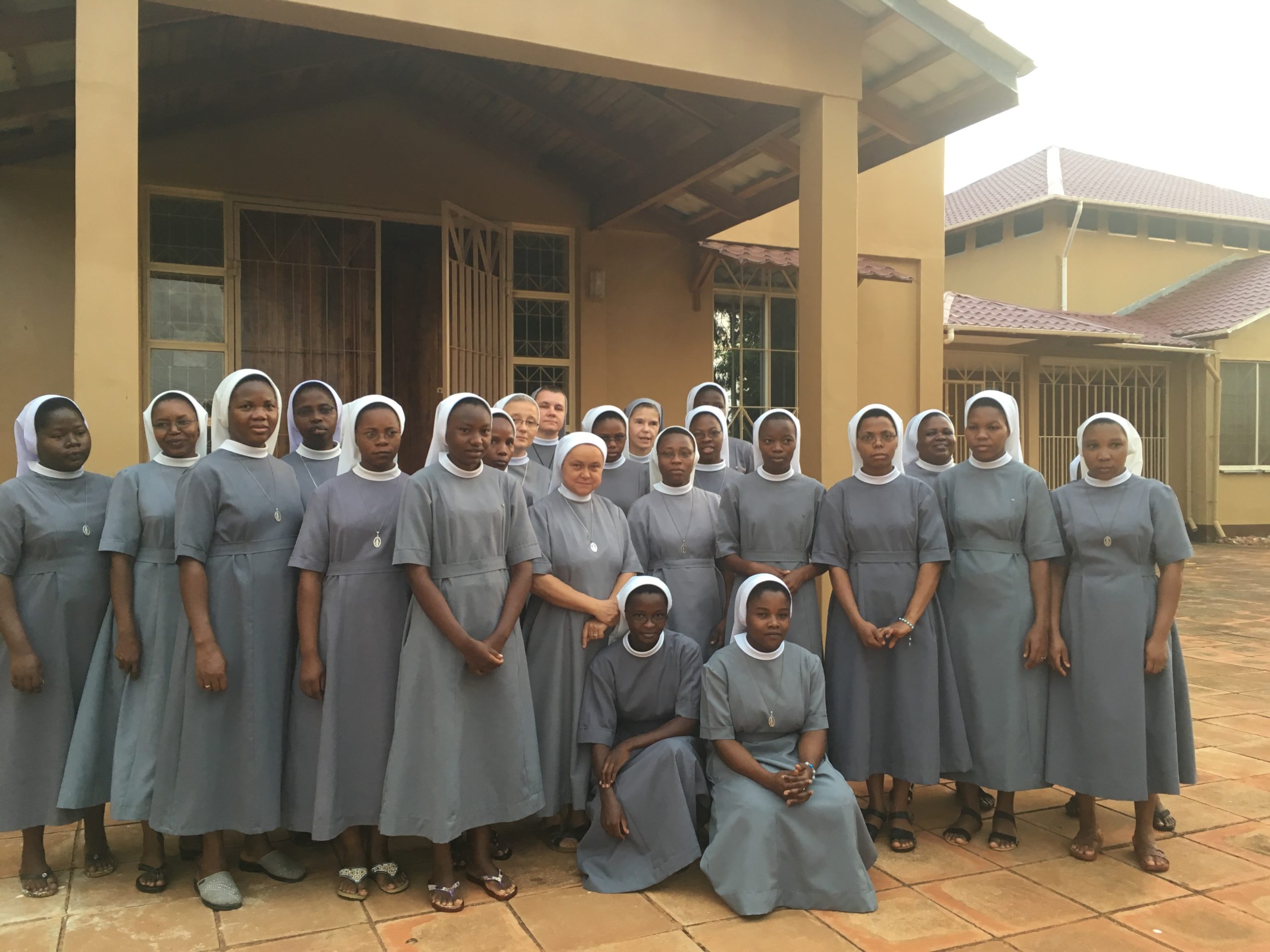
We live in times of enormous human possibilities. Even 50 years ago, the current lifestyle of people was unattainable for those times, even in the wildest dreams. Today, thanks to technical inventions and the ever-developing globalization in many areas of our lives, one has the impression that the world is at our fingertips, open to every human being, and what we will do with our lives depends only on our decision. In such a situation, choosing a simple, poor life in a monastery may seem completely absurd to contemporaries. For many people, religious life is losing its value today, becoming a kind of “religious folklore” or a medieval relic. Other roles of consecrated persons are perceived mainly in terms of social activity, which at present, with well-developed social institutions, does not play such importance as before. So, you get the impression that the time of religious orders is slowly coming to an end. In such thinking, the fact of the decreasing number of vocations to consecrated life in Europe can also confirm.
However, are we really dealing with a crisis of religious life today, which has become obsolete in the modern world, or is there a world around us in which basic and natural values, such as faith in God, love as a gift of self, truth, goodness and beauty? began to be a misunderstanding?
There is no doubt that in today’s world, spirituality has become one of the most stunted areas of life for many Christians. On the one hand, the weakening of faith, and on the other hand, the more and more felt, though perhaps not realized, desire of God the Creator – this is the drama of contemporary man. The witness of consecrated life has never been so necessary in history as it is today. It does not lose its sense, but it is much more difficult, because it is to fulfill its role in a culture that has chosen individualism as its hallmark. Consecrated life as a path of service, love, self-giving for the sake of often neglected, difficult and needy people stands in complete opposition to today’s mentality.
The essence of the vocation to consecrated life is not the activity, but the identity of the consecrated person. A vocation to religious life is a vocation to a unique bond with Christ that cannot become obsolete. Religious community is to show the passion of life for God – this is its task in the world. Of course, this does not mean that religious life would be the best path for all people. However, this life, which some Christians choose by God’s grace, helps others not to get lost in the variety of ways and offers that exist in the modern world.
Consecrated life should convince you that it is God who gives the experience of happiness that the world seeks and cannot find anywhere else. Money, power, or feelings will not give it unless it is integrated into the experience of faith. It is God who is the Lord of everything, it is up to us to fulfill the task entrusted to us.
S.M. Sybilla Kołtan
Jul 22, 2021 | SPIRITUALITY
Years back I gave a keynote speech on the subject of “Evangelical Council – Poverty” in one chapter. Since the evangelical counsels are essential basis of our spiritual life, I hope to be able to give one or the other an impulse or a help for their own spiritual life:
All three evangelical counsels – and in this case especially poverty – are not an end in themselves, but are an expression of the “life in abundance” promised in the New Testament (Joh. 10,10). This means that, as Sr. Zoe Marie Isenring writes in her book “The Woman in Apostolic Religious Congregations”, they should be “a means to be more and not less human”.
This sounded provocative to me at first and raised a few questions:
- Material poverty as such is not a value for me to strive for, but an injustice that we are to remedy on God’s behalf. God wants abundance for all people, also overcoming poverty. Since we cannot change these injustices with violence – i.e. new injustice – this aspect of poverty obliges us to a simple and undemanding way of life, to a responsible handling of property and becomes a duty of sharing out of solidarity with people, because that is what they do the essentials are missing. Understood in this way, poverty becomes a means of being more human for the community of people – the means of a more just world. Let us ask ourselves as individuals and as a community:
– How simple and undemanding is my lifestyle?
– Will my lifestyle and the life of the community become a sign or a stumbling block?
– Are we, for the people, the ones who solemnly take the vow of poverty and are now living comfortably, while the people outside are the ones who even have to live poverty?
- Poverty always has to do with renunciation. Conscious and free renunciation are inseparable from poverty. Where this aspect is missing, the vow becomes an empty phrase and our life becomes implausible. But poverty must not be reduced to just doing without. We are created as free and beloved daughters of God and God has given us the things of this world for use. We can use them with joy and responsibility. The vow of poverty does not release me and each of us from our responsibility for our own lives. The superior is not responsible for my life and also not for the fact that I did not get so many things in life or had to do without them! I was created by God in freedom and willed as a free person. Also and especially as a religious. Only when I see myself as loved and wanted and can accept the things of this world as gifts, am I able to let go of myself and everything, to continue to give and to do without. Let us ask ourselves as individuals and as a community:
– Do I experience myself as a daughter loved by God?
– Can I enjoy the things of this world?
– Can I see it as a gift or do I have to have it all?
– Do I know the difference between an insatiable “want to have” and a good “treat myself to something”?
– Can I also give something to others, be generous towards them?
– Can I do without becoming bitter or grouchy?
- The vow of poverty only has a meaning and value if it becomes not just an external way of life but an internal attitude. Only when I am not attached to the things of this world am I truly free to follow Christ. But that then confronts me with the question: What does my heart depend on? What do I trust, do I really trust this God or do I have to take care of myself? This is probably the most essential, but also the most difficult aspect of the vow of poverty. Only those who are poor in this sense are always free for God’s call and can follow him – without obstructing marching baggage. This is not only about material things, but also, for example, positions in the community, at work or in personal life that you have worked for, but which can quickly become wealth. Let us ask ourselves as individuals and as a community:
– What does my heart depend on?
– Do I trust God that He is leading me or am I afraid of Him and his demands?
– Do I have to secure my life and therefore have or keep everything?
– How rich or poor am I really?
– What cannot or do not want to let go: the office or the task that I have held for so long; the convent where I feel so comfortable; the position that made me so respected …?
There is still a lot to be said about the vow of poverty. But they are only intended to be a small impulse for reflection and help us to understand and live the vow of poverty a new and more deeply.
Sr. Petra Ladig
