Jun 1, 2021 | NEWS
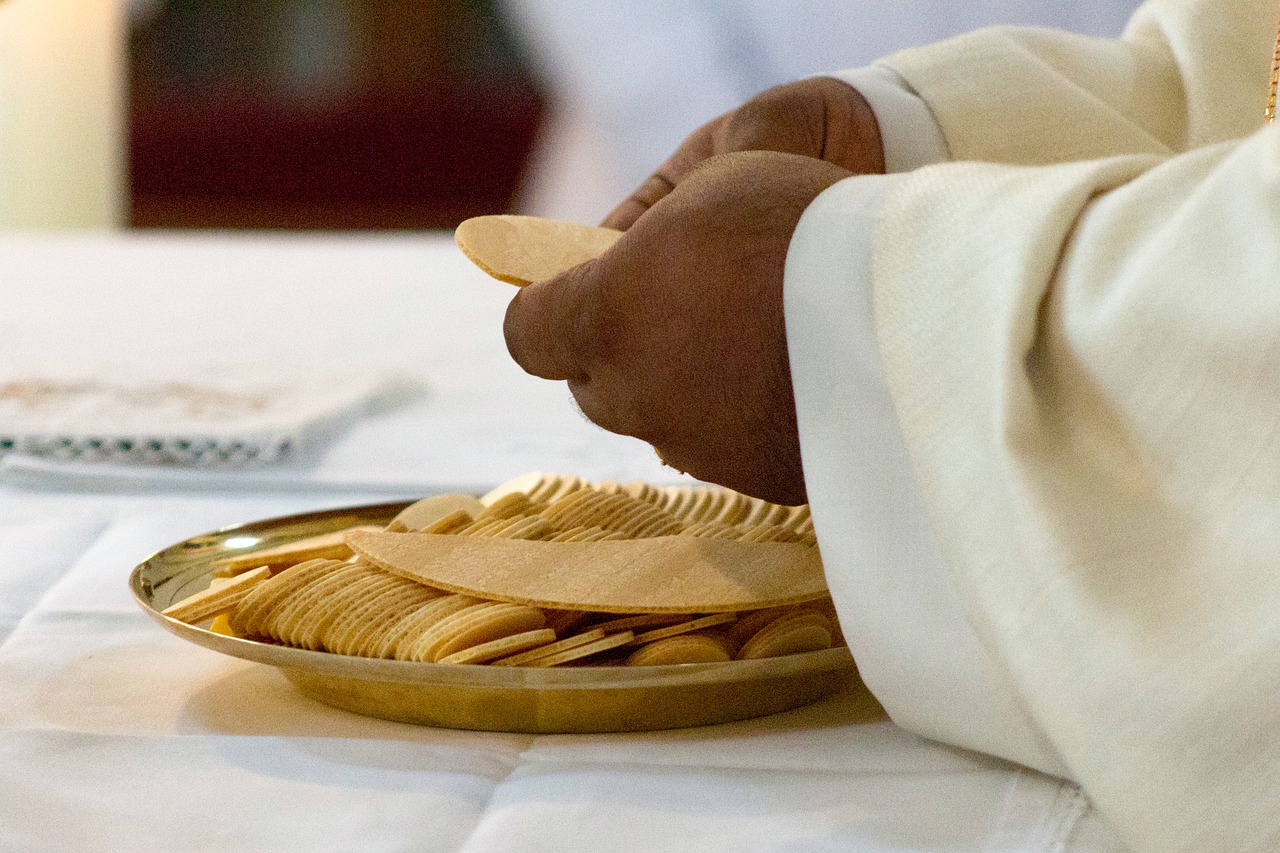
When the Solemnity of the Most Holy Body and Blood of the Lord is approaching, many memories associated with the Blessed Sacrament come to my mind. There are so many documents, books, sermons and conferences on the Eucharist … I don’t remember where I came across this term: Sacrament of consecrated life. The author argued that since two states in the Church – priesthood and marriage – have their own sacrament, the Eucharist is the sacrament proper to consecrated persons, because in it they unite with their Bridegroom.
Most often, we have the opportunity to attend Holy Mass every day in our religious convents or parish churches. The time when, due to illness or other circumstances, I cannot participate in it is an unpleasant experience for me, a reminder of my own poverty and human limitations. Many believers have had similar experiences, especially today in an ongoing pandemic. Participation in the Holy Sacrifice is a daily source of grace and light coming through the Word of God or the texts of mass prayers, invitations or songs. Likewise, the bread and wine which Christ chose to become his body and blood,
in the simplicity of their matter, they remind us of God’s love for what is small, humble and fragile. The gesture of breaking the Bread before the rite of Communion reminds me of God’s humility and submission to man. And when the Lord Jesus comes in Holy Communion, He allows me to experience His transforming closeness and trust in me as a weak person. I am in communion with Him and with the Church, my community. Having contact with many people with different views, faith or lifestyle, when I come to church for the Eucharist, I feel more that I am at home. My Lord’s house is my home. Being at Holy Mass, I do not act individually, but in a community. The gestures, spoken words, and body postures lead to the transition from “I” to “we”. I discovered the unifying value of the Eucharist by spending many years in a small community when we could experience it together on Sundays, and as a community feast and distinction when the Holy Mass was celebrated in our community chapel.
Caring for a chapel with the Blessed Sacrament in each of our houses is an expression of the wisdom of the Church and Congregation. We really live under one roof with our Lord. His silent presence accompanies our daily affairs. When I remain in silent adoration in His presence, I am amazed by His love expressed in the sign of the Eucharistic Bread. I am to be His monstrance when I go to the sisters, to the apostolate in catechesis, always … and although I do not experience spiritual raptures, being in His presence is my peace, my strength. Daily communal adoration, which is on the agenda and faithfully practiced both in my old small community and nowadays, is of great value to me. By remaining with my sisters communally before the Lord, we strengthen each other with the testimony of faith and love.
Another form of Eucharistic worship is characteristic for the Solemnity of Corpus Christi – processions with the Blessed Sacrament. Since I was a child, I was aware that I was participating in the Eucharistic processions along the streets of my city in a particular form of manifestation of faith. I had a sense of distinction walking as if in the retinue of the Lamb, as St. John the Apostle: “They are those who accompany the Lamb wherever he goes; these men were redeemed as first fruits to God and the Lamb, and no lie was found in their mouth: they are blameless” (Rev 14: 4-5). And in another place: “And I did not see a temple in it: for its temple is the Lord God almighty and the Lamb. And the city does not need sun or moon to illuminate it, for the glory of God has illuminated them, and the Lamb with his lamp. And the nations will walk in his light, and the kings of the earth will bring their splendour to him ” (Rev21: 22-24). The image of Christ the Lamb illuminating the city and the nations suited the crowds of processions stopping at the four altars and Jesus blessing us in the Blessed Sacrament.
The First Holy Communion celebrations usually fall on the time around Corpus Christi, and later their subsequent anniversaries. Finishing my reflections on such a day I will share one more memory. On the day of my First Communion after the celebration in the church in the family circle I was asked by someone from the guests who I would like to become when I grow up. Without thinking, I replied that I was to become a nun. There was consternation among those present because nothing foreshadowed it, nor did anyone expect such an answer. Time passed, and to this day I do not know where this answer came from, although … today I can repeat from St. Paul: “by the grace of God I am what I am, and His grace was not in vain; on the contrary, I worked (…), not I, admittedly, but God’s grace with me” (1 Cor 15:10).
Sr. Michaela Musiał
May 27, 2021 | SPIRITUALITY
Liturgy as a teacher of unity
We have already remembered several times that unity is not a common external characteristic, but a living relationship. Hence the reminder of the founder to preserve and deepen the unity. How can one maintain and deepen this unity?
Lent gave us a good answer. The theme in March: Reconciliation (2nd reading from Ash Wednesday: “Be reconciled to God!” 2 Cor 5:20).
Easter also provides an important impetus for our question of how to preserve and deepen unity. So today I would like to speak with a sentence from the Acts of the Apostles: They had everything in common (1st reading, 2nd Easter Sunday reading year B): “They had everything in common” Acts 4,32-37)
A heart and a soul
The text (Acts 4,32-37) begins with this wonderful sentence: “They were one heart and one soul.” This is sometimes said when two people are united by a deep and intimate friendship. The apostle Luke uses this description to describe the life of the young early Christian community in the book of Acts. A nice expression to describe unity.
Question for reflection: Were or are there people with whom you are or have been, so to speak, “one heart and one soul”? How did you experience these times? How would you describe this (the same interests, the same views, sympathy, times spent together …)? Or have you had other experiences with this sentence?
Share
Luke goes on. And says this phrase: “They were one heart and one soul” means more than a match of views and interests or a feeling of sympathy. Luke becomes very specific: someone sells his property and makes the proceeds available to others. Sharing is the key. I share what I have with others, and that is how a communion, a unity, arises.
What I have, I give you
In the previous chapter (Acts 3.1-10), Peter and John heal a paralysed man who was begging in front of the temple. Peter builds up a relationship with him. “Look at us!” Then he rejects the beggar: “I do not own silver and gold.” And then comes his promise: “What I have, I will give you.”
Share life
In the book of Acts it is first reported that material things are shared here. But soon you can guess that not only material things were shared. The sentence “None of them suffered hardship” suggests that emotional hardships could also be meant here. There is someone, lonely, sick, sad … and the others don’t leave him alone with his need, but share with him what they have: time, attention, patience.
Criticize or try
This section of the life of the young Christian community is often viewed with scepticism: Was it really like that or was something too idealized by the writer? And besides, it was a small community. In today’s congregations that would be unthinkable given this size …
Maybe, but that doesn’t prevent us from trying it out. I suspect it won’t turn your whole life upside down, but some things will change.
My contribution to the unit
Unity is not just an external reality that I find or that I am placed in. Unity arises and lives from the fact that I can do my part to maintain and deepen it.
Spiritual exercise: what contribution I make so that the unity in the community can be maintained and deepened. What am I ready to give?
… so that the wedding can take place
There is a story in which two young people want to get married. But because they are so poor, they cannot afford a big wedding party. So, they ask each of the guests to bring a bottle of wine. The contents of the bottles were poured into a large barrel, and when the guests drank from it, everyone was disappointed. Everyone just added water.
Maintaining and deepening unity … so that the wedding (celebration) can take place.
Prelate Dr. Stefan Dybowski
April 19, 2021 monthly talk St. Augustine Monastery, Berlin-Lankwitz

May 23, 2021 | POSITIVE IMPULSES
Holy Spirit makes the difference in the spirit we do things. Because Holy Spirit purifies our spirit from our ego and our selfishness. Done with the inspiration of the Holy Spirit, the motivation to act is something superior to us, power to act is the love and mode of action is in silence and in peace. That changes the entire relationship of that action with our self and with others. This kind of actions contain the creative power of God and the creativity of love. It connects, refreshes, fulfills, and heals. So, more docile you are to the Holy Spirit, the more powerful your actions are!
Don Giorgio
May 17, 2021 | FORUM, NEWS
I am a Catholic newspaper journalist. I had a professional contact with the Servant of God, Sr. Dulcissima Hoffmann – one day I was just asked in the editorial office to write a text about this devout nun from Silesia. The editors responded to the request of Sr. Margret from the Congregation of the Sisters of Mary Immaculate, who promotes the person of Sr. Dulcissima. I was also one of those people who had not heard about the Servant of God before. I didn’t even want to take up this topic too much, because I thought that a friend who was considered to be a specialist in promoting pious nuns would better elaborate it, which I don’t really “feel”. In the end, I got the topic and I started working on the text.
After the first look at the dulcissima.pl website, I felt a great sympathy for the nice Helena Hoffmann, who was looking at me with sharp and piercing eyes from numerous photos posted on the Internet. I was captivated by the maturity of this young girl in accepting a serious disease, and I was touched by the local cult of her person and the common belief in her holiness in Brzezie. I also saw numerous testimonies of graces and healings through her intercession.
At that time, in our family, we had a nervous period of waiting for the surgery to be scheduled for the damaged ulnar nerve of our eldest daughter, Mary. When I saw the intent box on the dulcissima.pl website, I immediately put a prayer request there for a quick appointment of the operation date and its successful course. A thought crossed my mind that maybe something deeper was that I was the one who received this topic in the editorial office … Brzezie included their daughter in their novena through the intercession of Sr. Dulcissima. On the second day after the afternoon, information about the scheduled surgery was delivered from the hospital. I informed Sr. Margaret about it immediately, because I had no doubts that Sr. Dulcissima had her part in it. We and the Sisters continued to pray through the intercession of Sr. Dulcissima for Mary’s health. I printed a large photo of Sr. Dulcissima from the time she was a postulant, I put it on the table so that the Sister would accompany us at that time as well. I personally clung to Sister Dulcissima hard and intrusively, because the thought came back to me that it was a gift from heaven, that I received a request for an article about her at this very moment…..
Four days after the surgery was scheduled for us, Sr. Margaret sent me photos of Sr. Dulcissima to be used in the newspaper, and referring to Mary’s health in the e-mail, she wrote: “A thought has appeared in me several times> I would not be surprised if Mary did not need an operation. May God lead and Dulcissima … ask for whatever is necessary … ”. I did not pay much attention to these words, except that I thought that Sister Margaret’s faith was great … I continued praying the novena with zeal and faith, but the intention was only good fruits of the operation …
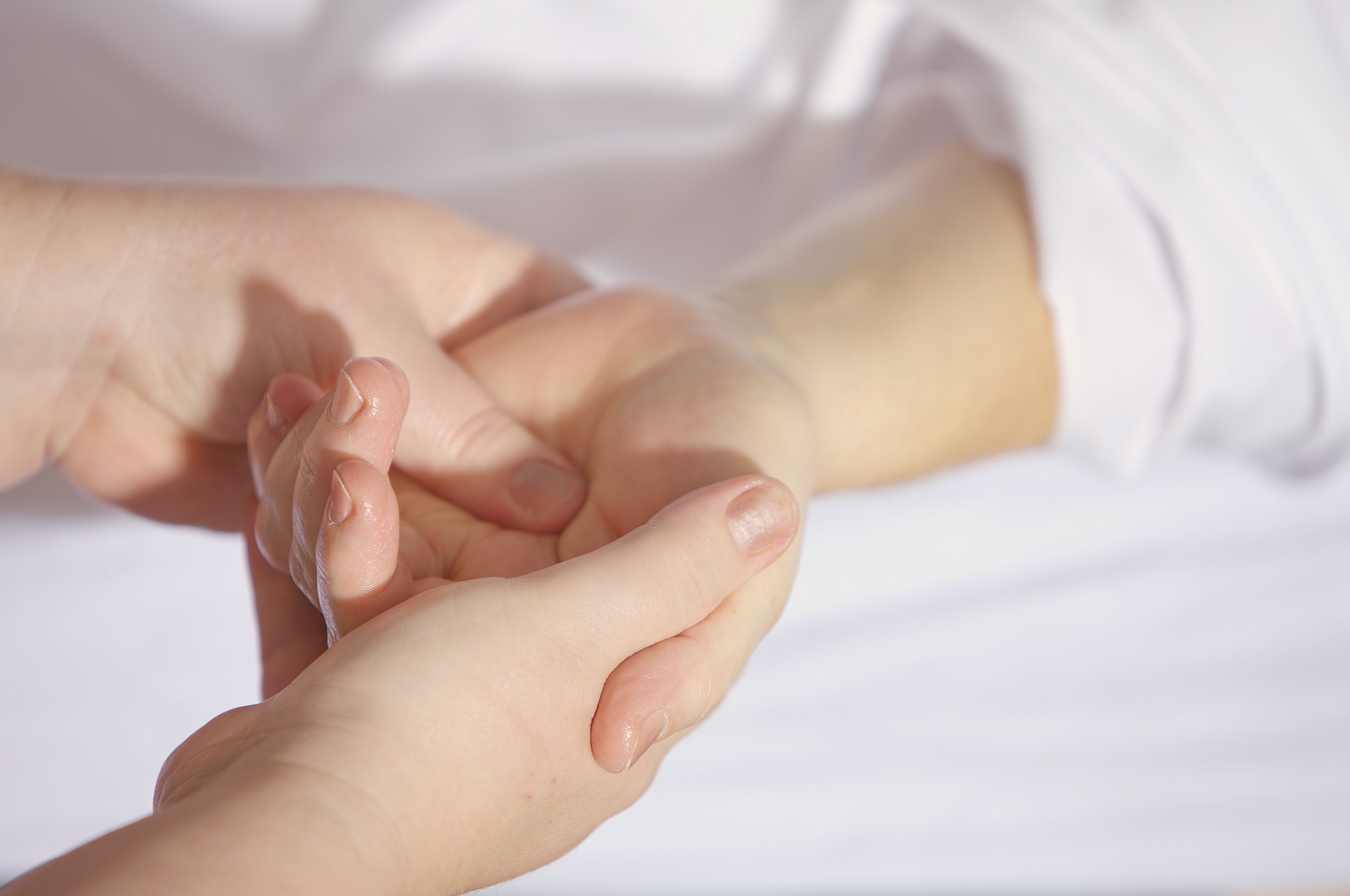
Then the events happened very quickly. I received an e-mail from Sr. Margaret with the remark that the operation may not be needed on Monday, on Tuesday we were with my daughter at a new physiotherapist, who at one point asked her to show what exercises she had previously performed on her hand, because due to nerve damage she was not able to bring, lead away and straighten IV and V fingers. Imagine my surprise when Mary freely spread all the fingers of her hand, which were almost completely straight. In addition, I was touched by the fact that the physiotherapist at that moment remarked: “It’s not so bad with your hand, Someone is watching over you, because after such accidents it is often worse”. Before the operation, I looked at my daughter’s hand almost every day, I asked her to show me how to straighten and withdraw my fingers, because I was afraid of a deterioration before the operation. Mary was unable to make such easy movements.
After leaving the physiotherapist, I examined my daughter’s hand and confirmed that there was a clear improvement, which would also indicate an improvement in the condition of the nerve itself. But considering that both my daughter and I had already seen things – sometimes we saw some progress and then research didn’t confirm it, I approached the whole event with caution. I decided to wait another day or two and then repeat the nerve examination with the neurologist. Mary herself was not convinced whether to repeat this test, because as she said – probably nothing has changed, and I am not supposed to talk about the fact that perhaps an operation will not be needed, because the operation will certainly be.
On Thursday, we registered for another EMG examination by a neurologist. I entered the office with the proverbial “soul on my shoulder” because I was afraid of the disappointment associated with an unfavorable diagnosis. However, to our great luck, the examination showed a significant improvement in the condition of the damaged nerve, so large and quick enough (only a month has passed since the previous examination, which was an indication for surgery), that the doctor immediately said that he advised against surgery, because the nerve had started successfully regenerate. Also, the consultation with the neurosurgeon who was supposed to operate on the daughter confirmed that in this situation the operation is absolutely inadvisable, and the nerve should be given time for further regeneration.
Actually, all the time we do not fully understand not so much the improvement of the damaged nerve, but the circumstances in which it happened. We have already visited the grave of Sr. Dulcissima with the whole family to thank for the favors received and we also share with others a little “our” beloved Sr. Dulcissima. She herself came to us, ignited our hearts with great sympathy for herself and the faith that she could help us and in a few days changed our lives by 180 degrees. Thank you Sr. Dulcissima!
Beata with her family
May 12, 2021 | NEWS
It allows me to see God’s providence at work in how I found myself in Pompeii.
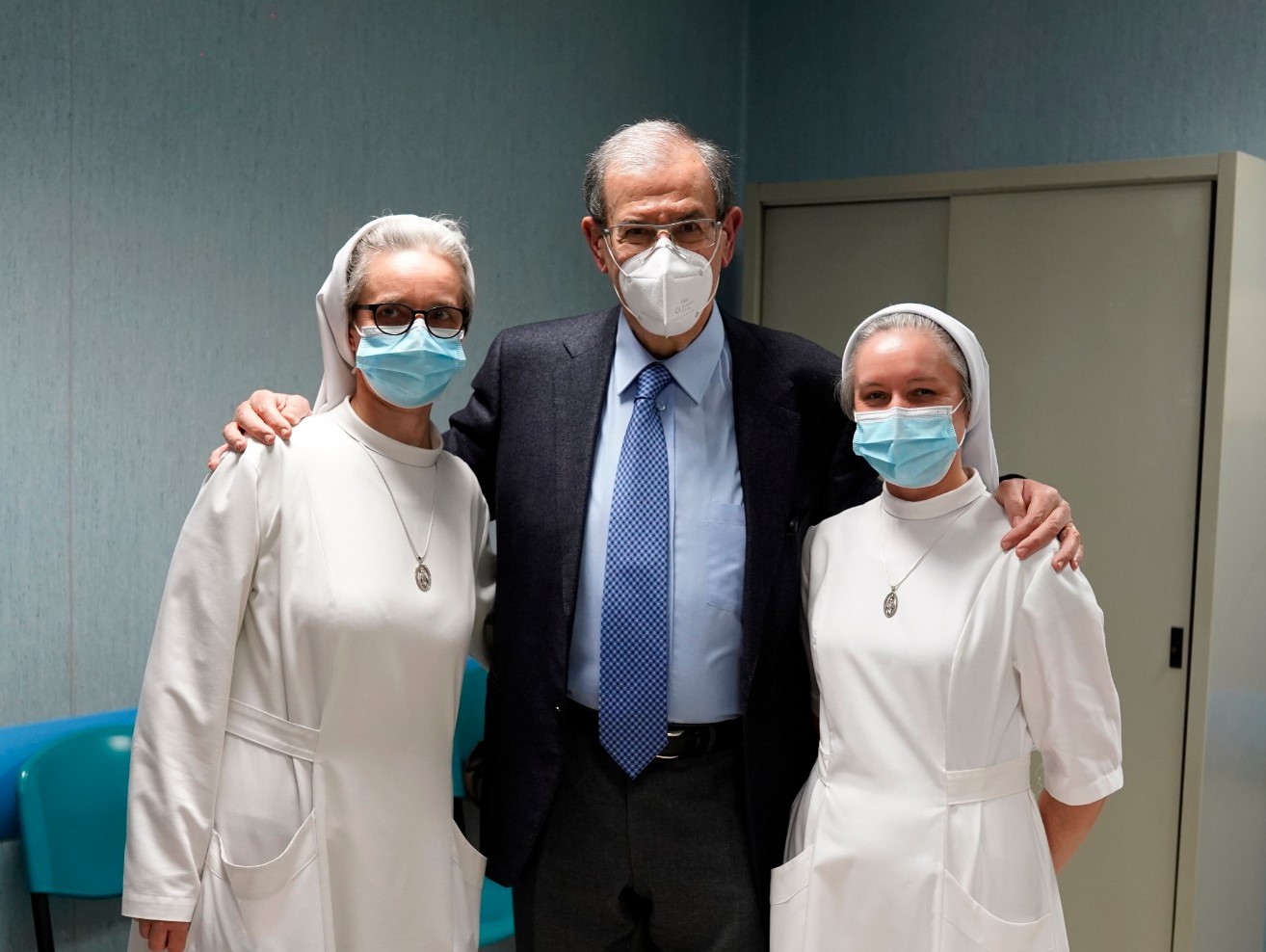
Soon it will be 6 years since, thanks to the trust of the Mother General and the Provincial Sister of the time, I was able to undertake this nursing mission here in the world-famous Sanctuary of Our Lady of the Rosary. Providence, thanks to Sr. Immakulata and the sisters from Jaszkotle and my friends from the ZOL where I worked, a few years earlier I graduated with a bachelor’s degree in nursing. Over a year of hard work allowed me to apply for service in this sunny Italy, where a place awaited me at the dispensary of Our Lady of the Rosary.
To be here, however, the only thing that was missing was the administrative approval of the ministry in Italian. I did not know the Italian language. So I started my first steps in the center of the cradle of Christianity – in Rome with my mission of learning the language. Great emotions, but also fears – will I be able to learn the language, culture, and especially medical nomenclature within a few months. Permanent formation and mutual support as a sister allowed me to find myself in the international community, as well as to realize the meaning of the words of Creed: I believe in the One, Holy and Apostolic Church for which the martyrs shed their blood in the Colosseum arena.
Finding Sisterhood Unity in our small Polish-German-African community began with common prayer, Holy Mass, recreation, work and celebration of common meals. Our mutual trust made the gifts of the Holy Spirit bear fruit. Then I started learning the language in a “larger” international community at a language school. Also, going to Corsica and working with my sisters there helped me “polish” my acquired Italian language skills.
After 6 months of experience, the time has finally come to start the next and final stage of religious life, and to start nursing in Pompeii.
I started my work in the hospital with a 3-month volunteer work so that I could get to know everything. Unfortunately, after my arrival, it turned out that my language learning is obviously not enough and people speak fast and they have their own dialect. In fact, I started to learn from scratch, being among people, learning new professional vocabulary, often in the Neapolitan dialect. Fortunately, everyone was very nice and open, and responded to mine with great kindness linguistic mishaps or complete lack of words and incomprehension. I spent every free moment after volunteering learning all these professional names of equipment and tools, because I was waiting for an exam at the Nursing Chambers. I received great support from Sr. Goretti, who at that time was in surgery ward. She patiently tried to show me everything, explain what I am very grateful for. I remember the day of the ward exam, I was afraid, but I entrusted it to God through Mary. As the sisters could not come with me, Rosaria and Mario (friends from the hospital) accompanied me. Thanks to God’s help, I was able to pass it positively and from December I started working full-time.
People welcomed me very warmly. Their openness, willingness to help and cooperation built me up and uplifted me in the moments of total misunderstanding of the mentality and needs of the local type of patients. Despite all the cultural, linguistic and characterological differences, we all join in prayer for our families (sorrows and joys are intertwined everywhere) for our religious family.
Every day we experience kindness from the owners of the dispensary, openness from employees and patients, thanks to whom we bravely stay in the designated section of work – Sr. Goretti currently as a gynecology and obstetrics department, and I work in all departments depending on the needs: surgery, gynecology , nephrology, ophthalmology, endoscopy, geriatrics.
We start our day at 6:00 with common prayer in the hospital chapel: breviary, meditation and Holy Mass at the Sanctuary of Our Lady of the Rosary. We start working at 8:00 am because I often have afternoon shifts. We also end the day with a common prayer at 8 pm. On Sunday we usually have a day off from work, which we can spend in permanent formation under the mantle of Our Lady and taking advantage of the spiritual care of the Franciscan Fathers.
I think that the most effective form of proclaiming the Good News is by giving witness with your own life. We can show the “practical” dimension of faith, which manifests itself mainly in serving the sick.
Despite the many difficulties related to the language barrier, cultural differences and mentality, I found myself in the reality of this country.
My mission is to meet a specific person, with his illness, with his life history, with everything that hurts him and what is important to him.
My mission is to stay close to man, it is an attempt to bestow on him a selfless love, the love of God.
I am very lucky that I can work and do what I really love, that I can be in a place where Mary is present in a special way and entrust myself to her and the people with whom I have come to work and serve.
S.M. Magdalena Delczyk
