Oct 26, 2020 | NEWS
Pope John Paul II in the Encyclical on missions; “Redemptoris Missio” wrote such words: “The testimony of Christian life is the first and irreplaceable form of mission.”
“The evangelical witness to which the world is more sensitive is paying attention to people and love shown to the poor and the little ones who suffer. ” (R.M., point 42)
So each of us is a missionary in our environment in which we live and fulfill our apostolate.
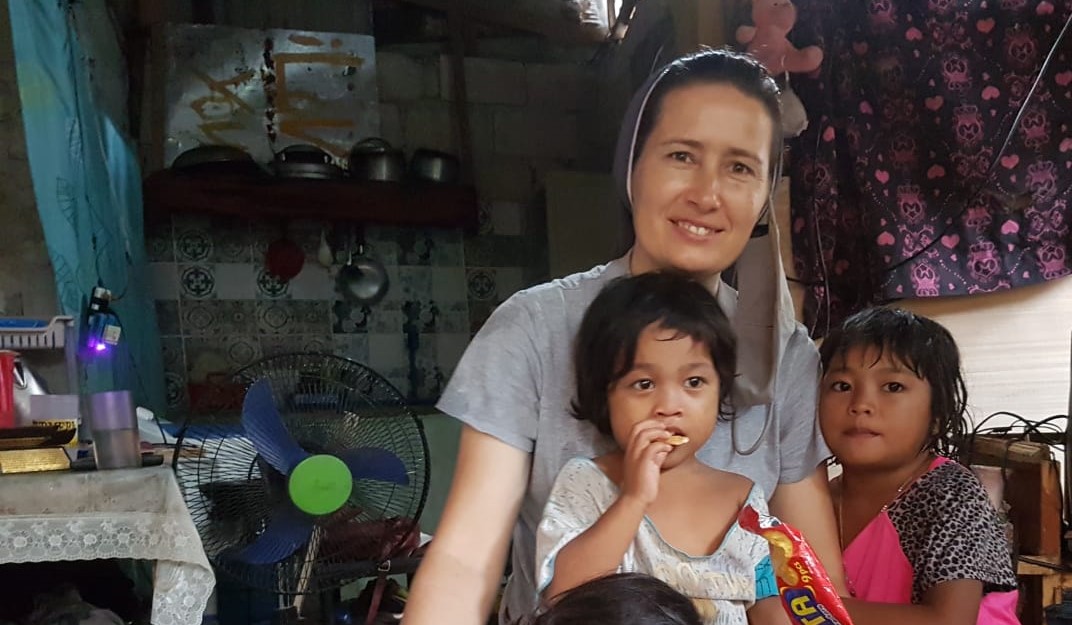
I am grateful to God that again after a 3-year break, I can serve in missions of our Congregation and Church, this time in the Philippines, in the capital of the country, Manila.
It is a huge city of 20 million people created from the merger of 16 adjacent cities. I think that here, more than anywhere else, you can observe the existing contrasts on various levels.The first is both conspicuous wealth and poverty – often extreme.
You can see beautiful rich houses, shopping malls, skyscrapers and streets like from movies of American districts, and a few kilometers away shantytowns and slums, people living in barracks – huts made of leftovers found in a garbage can, without access to water, electricity and current, in an area that looks like one huge garbage can.
Some families with children live directly on the street or under a tree or bridge or in the cemetery.The second contrast is Filipino Catholicism. On the one hand, over 90 percent of people are Catholics and you can see religiosity outside, e.g. in a supermarket at noon through megaphones the Angelus prayer is conducted, and at 3 p.m. prayer to the Divine Mercy, each motorbike and cars you will find a rosary, almost every house has figurines and religious paintings, and on the other hand, a small percentage of Catholics attend Mass, almost all of them.They receive Holy Communion, and confession is hardly ever said, as evidenced by it no confessions in a typical parish church. LGBT propaganda stayed that way strongly accepted by society that people with a different sexual orientation manifest their otherness completely freely and are not even heard in the church Christian teaching on the subject. Many couples live without getting married and quickly break up, creating new relationships. And in civil law, divorce is not granted, only one can apply for marriage annulment. The abortion law is also restrictive, i.e. a total ban. Until some 15 years ago, the Philippines was full of priestly and religious vocations, and nowadays there is a huge vocational crisis. A lot of religious congregations – especially there are no completely new pleasures for women, and what is worse, many Filipino sisters are leaving religious life.Unfortunately, our Congregation also has not yet lived to see local slowdowns, though strenuous prayers and participation in numerous vocational activities on various islands of the country. We are currently waiting for the arrival of candidate Rachel, who is unable to travel due to the pandemic. Our sisters here in Manila have undertaken various missions and apostolates as a center tutorial for girls, kindergarten, catechesis at school and other activities for the benefit of the local society. When I joined the community two years ago, sister Martyna introduced me to for several years she has been carrying out an apostolate in one of the poorest neighborhoods in Manila – Payatas, just a few kilometers from our home.
It is a trash district where rubbish is brought from all over the city and a large proportion of the people living in the city, segregates rubbish in conditions that degrade people dignity, too meager, the lowest wage, enough for a little rice for the family. That is why in this district a large number of people, especially children, are malnourished, which results in high mortality – especially in children. For this reason, the sisters considered it right to start the so-called feeding programs for children,which is also run by the parish under which this poor area inhabited by 100 people. Using the experience of the local parish, we first choose the place where it is most poor families with children, often it is an ordinary square or chapel area, we visit these families, at the same time enrolling children in the program, it is a group of up to 50 children – depending on the funds obtained for a given program. Every day from mothers of these children prepare a warm, nutritious meal from Monday to Friday fruits, thus learning how to properly nourish these children, and we coordinate this work and give the children vitamins. Such programs also include, in addition to the meal, which is the main focus, also educational activities for children and catechesis. We first conduct a prayer with the children, often sung, then a short catechesis on a selected topic, and then educational activities depending on the age of children: pre-school, school, learning English. Children eagerly participate in the activities, because it is a time for them, where they are surrounded by care, attention and love that they often don’t have in the family. Mothers also help us with organization of classes and meals. Such a program lasts 6 months, then we look for a nother places to look after and help as many families as possible. Through close contact with children, we also get to know their families and problems by visiting often their homes. This is an opportunity to come to the rescue as far as possible specific, difficult situation. It is often help with getting medicine or getting to hospital.Sister Barbara was very moved by the conditions in which these families often live -wet, dirty barracks, without water and light, with a group of small children, she collected from her own friends some money and managed to buy 3 houses for 3 families with children. Now that we visit these families you can see a big difference in the lives of these families. They hope for a better future, they also try to take care of the family more, children go to school, they are there clean and tidy, the house becomes beautiful and the joy of guests is on their faces. We collect funds for this apostolate from benefactors from Poland, Germany and other countries and church organizations. Every Saturday we organize meetings for children from the neighborhood at our house.The Main goal is to teach children Christian values, catechesis and spending profitable and joyful time. About 50 children come, sometimes more.
We are assisted in these activities by the vicar priest from our parish, who leads catechesis in .local language – Tagalog. Children have a multimedia presentation and drawing classes connected with catechesis, then various games and activities, and finally a modest, warm meal, without which in the Philippines it is impossible to conduct a successful meeting. We also provide assistance in education to a small group of high school youth, leading the so-called scholarship (something like a scholarship). They are the poorest youth from the area families. In return for this help, they volunteer during Saturday meetings with children and help with various housework. They have also been provided by us for spiritual formation. The current time of the pandemic has forced us to limit our external action, but I trust that everything is in God’s Hands and that everything will soon be back to normal. Through prayer and sacrifice, as Jesus teaches us, we can sometimes do more than with our hands. May God be glorified in everything! Please pray for the missions, including those in the Philippines, that we can continue here in the Philippines and God grant to other Asia countries the missionary work of Koscius and our Congregation.
With greetings and prayer for all mission friends
Sr. Klaudia Olejniczak
Oct 23, 2020 | NEWS
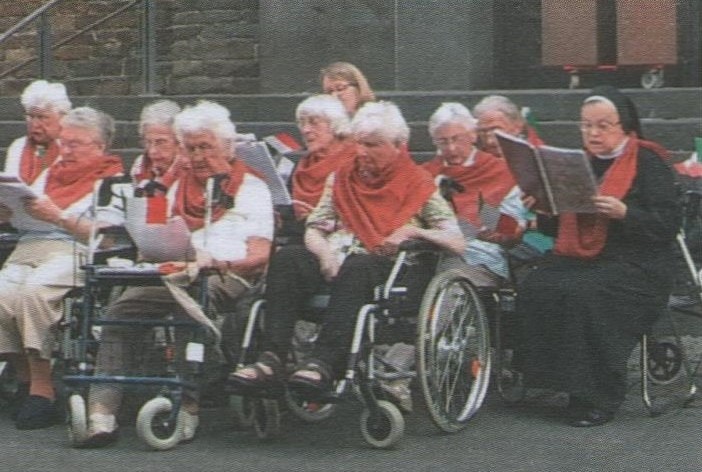
In the retirement home St. Katharina in Treis-Karden the choir director, Sr. M. Ursula Potulski, tells the story of how this came about extraordinary choirs:
„The rusty throats“ were created at the suggestion of an employee at one Advent celebration 2013. It took until September 2014 until we got on 14.09.2014 with 16 residents of our senior citizens house and the daughter-in-law of a resident, Mrs. Löhr, who was able to hold the 1st choir rehearsal. We rehearsed autumn songs for the autumn festival and had success. When we went for the rehearsal of Advent celebrations, it was harder to find beautiful songs than it should be Advent and not yet Christmas chorus. Mrs. Löhr really liked helping me. She played our wish songs from CD’s and copied the texts. Also the employees of the administration and the social service have always supported me. I could always come and ask if they’d read lyrics from songs for me, print among other things .. The employees even designed and helped us with the song folders Cover sheet and empty sleeves provided so that I always have the old songs taken out and insert the new sheets. During various times, Ms. Löhr directed the choir on hospital stays or rehabilitation of mine, otherwise it would not have continued. Our repertoire includes film Melodies from the 20s – 60s, operetta melodies and musicals and of course also folk songs. For Mother’s Day 2015 we gave a one-hour concert and everyone was very excited. This year our 6th Mother’s Day concert should have taken place, but Corona has interrupted our plans. Our last choir rehearsal was on March 9th, 2020. Of course we also sang at Holy Mass on some public holidays and the Singers have always been very proud of it. A special event for us was when we recorded a CD. It was very exciting for us, because 2 employees from the recording studio came to us. 12 Songs were recorded and we had to sing each song twice. It was very exhausting for the singers, but they were very proud when the people praised them for their perseverance and clear pronunciation.
The television was also with us and broadcast for 1 minute through our choir. 3 years ago we sang at the parish festival, where we had a “musical Italy trip “, with songs like:” Come with me to Italy “, “O mia bella Napoli”, “Wenn bei Capri ..” etc. with the song “Arrivederci Roma” all singers waved an Italian flag. It was a great success.
By the way, when we perform in choirs we wear reddish-brown scarves to match the names. Our nursing manager got us these scarves. Our names were created by the residents themselves, who said their voice was now rusty.
Yes, and now we are not allowed to sing at all, neither choir rehearsals nor singing circles in worship. It’s a shame and the residents always ask: when we are finally singing again.
Sr. Ursula Potulski

Oct 9, 2020 | NEWS
Dear Mission friends,
Best warm regards from Tanzania. Six years have passed in my missionary work in Tanzania, where I was sent by my Congregation of the Sisters of Mary Immaculate. I currently live and work in Dar es Salaam. I am involved in the kindergarten, ST. ANGELS DAY CARE CENTER, I take care of the supply and the economic side of the facility by working with the Tanzanian, Sister Angela who is the director.
Dar es Salaam is a port city that is still developing. Since I came to this country, I notice new roads, more and more cars. Rail transport for both passengers and luggage is developing. Not only our city, but the whole country is developing dynamically. Our Congregation has been present in Tanzania since 1973. Our concern is directed primarily to children, young people and women, but also to all those in need. We have been in Dar es Salaam since 2001. At first it was only catechesis in nearby schools and work in the parish. In 2006, the construction of a nursery was started in order to take care of children and thus enable young mothers to work. Before the construction was completed, it turned out that a kindergarten was more needed. And so it happened, a kindergarten was built, which is still functioning today.
The first group of children was only seven, but the school year ended with 36. Every year the number of children increases. This year we have 120 preschoolers. They are children of different kinds of life and faith.
Some children live at a considerable distance from the kindergarten, so they use the transport offered by our school. The school means of transport is an old bus that breaks down frequently. This makes the organization of school activities difficult and is also very expensive. The kindergarten is increasingly feeling the obstacles related to vehicle repair. We’re trying to raise funds for a newer bus.
The cost of the new car is $ 40,000.
I applied to MIVA POLSKA for funding ($ 15,000) and to the Polish Embassy in Tanzania ($ 12,000). For our goal to be reached, we need another $ 13,000. We save on expenses, but it is still not enough, we count on the gift of the heart and the support of our friends. Together we can do more, give Tanzanian children an opportunity for education.
With cordial greetings, remembrance in prayer
Sr. M. Monika Kowarsz SM
Oct 7, 2020 | POSITIVE IMPULSES
Complaining is an attitude. It is not same as sharing the difficulties. Complaining is sharing with an attitude of inertia and discontent. Our complaints are about everything, weather, life, health, people and things that have not gone right. Before things that you don’t like, focus on what you can change or do to make things right or better. Even if you are having a really bad day, put things into perspective. See the silver lining of the cloud. Live in a state of appreciation. See the positive side of that happened using your intelligence and creativity. There is always something positive in everything because God is present always and everywhere. The No ‘Complaining Rule’ will work wonders for you and the people around you. It is a lot easier for people who have to listen to you. You will be surprised by how much better life is.
Don Giorgio
Sep 27, 2020 | FORUM
This book by Joan Chittister, an American Benedictine nun, is a provocative book, which wants to shake up, awake and restless. The author deals with the problems of the Church, orders and spiritual communities of today because they are diverging and looking for new ones. It is not always easy to bear reading this book and I have sometimes found myself as described in the foreword: “The gesture of” angry-laying-out-of-hand, the-in-the-corner- throwing can be entirely appropriate to this reading. “But I didn’t do it, I read it to the end and I’m grateful for it to this day because while reading this book, it is becoming increasingly clear: The author is not writing the book to criticize, complain or to blame. It is characterized by high esteem for religious life and looking for ways to rid it of incrustations and indurations and create new, lively ones to find life forms. The book literally breathes the author’s love for religious life: “… it is about the godly burning passion that is required to form a present of religious life to find that between the cherished old and the emerging new, which paves new paths and develops in a world that is the turning point in history is shaken by constant change. ”
It is not easy to write a review of this book because every page is filled with this passion. Therefore we think it is good to also think about it in sections which we will send you gradually.
So I would like to invite you in this first article, together with the author, to seek the meaning and mission of medals. For Sr. Joan, the most essential option for emergence is and the reason for orders in the search for God. She writes: “In truth it has never given a good reason to enter religious life at all, except ‘for looking to God ‘.” In this context, she describes clearly and critically the situation of the orders and Congregations of our time and goes into historical contexts and developments and the influence of the Church and society. She clearly sees that what was meaningful and necessary in the beginning of the formation of communities is often only today is still preserving tradition and sticking to the familiar.
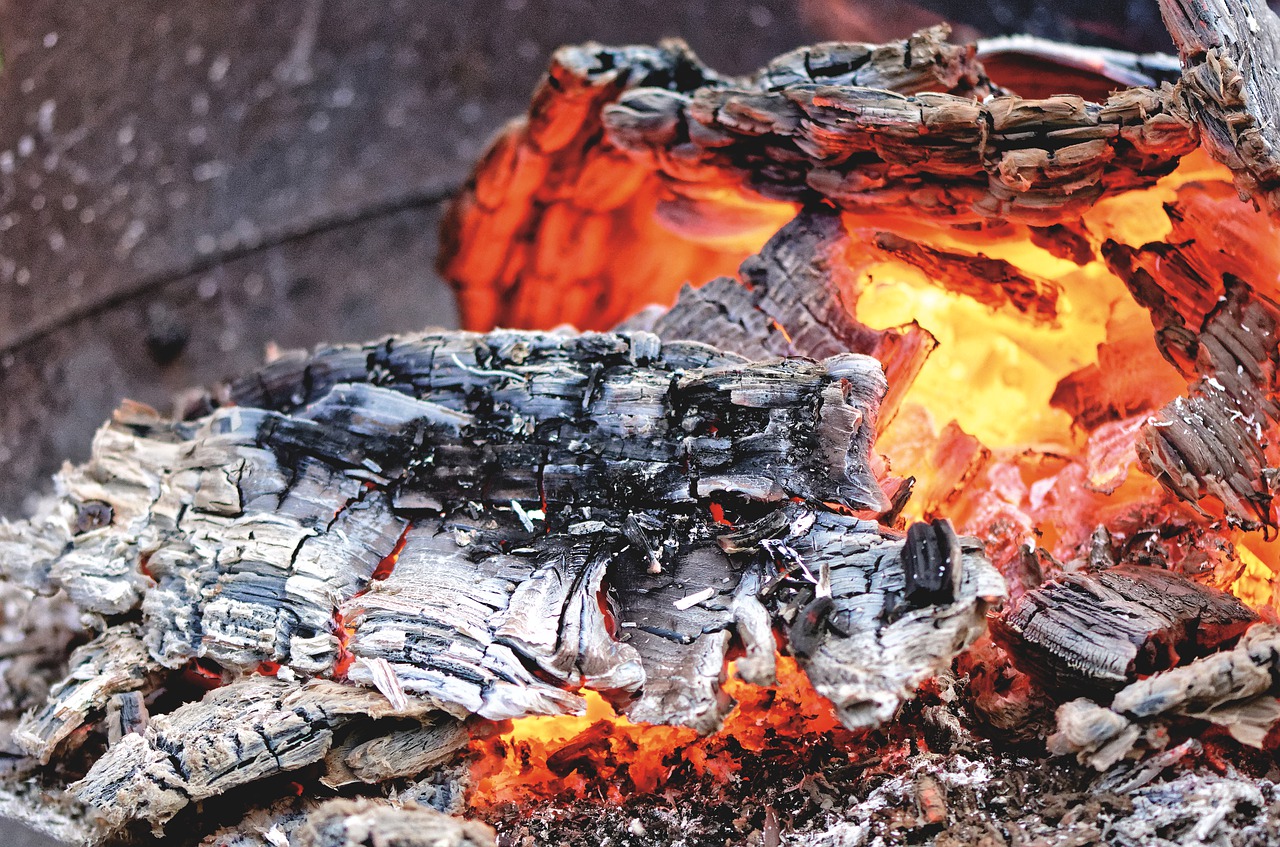
Most of us entered the congregation when religious life was primarily shaped of apostolic activity, self-sacrificing service, and common prayer as a strict daily structure. That was all well and good at the time, but here the development of society is probably outdated. Sr. Joan writes: “The spirituality of productivity is over.”. And elsewhere: “If our main interest is in the work, the religious do, the religious life itself is consequently questioned as soon as their work – out of which whatever reason – becomes less important. ”Whereas in the past, medals went to the places where the State failed, i.e. to the sick, the elderly, the disabled, the poor, the dying, etc., the Society caught up a lot here. The pioneering work of the orders is done and now they are “as that needs what they should always be: a spiritual voice, a sign of a counterculture, a prophetic presence in culture. “At this point it is slowly becoming clear why the author uses the title “Under the ashes a secret fire” for her book. The image of fire and ashes reappearson. She herself is completely fulfilled, yes burns from this inner fire, but she experiences it.
Religious communities often as groups that are internally extinguished and now only ashes preserve. And now it is up to us to keep the embers and rekindle the fire. But how? Sr. Joan warns, “If the fire is to be saved for another generation, it must keep the voice of God alive in religious life in this time.. ”And that is today, in one largely secularized and indifferent to religious life, often not light. On the one hand, it demands from us an intensive spiritual search, deepening in that Gospel, but at the same time, and that is the other side, a translation and transmission of the words and texts of Holy Scripture in the lives of people today. And it demands one dealing with the problems of people today, who are often so different than they were before 30 years ago. Our actions, our reactions and answers must be different. There are no ready-made, permanent solutions, everything is changing and in constant change.Also and especially religious life. Because if the external forms and circumstances also change, our inner mission always remains the same! And that is why religious are there at all times called to be prophets, i.e. the present with all its needs and problems in the light to see God and from this point of view to offer answers and solutions, often are not understood, ridiculed or even fought. But the world is waiting for it and she also expects from us: “The task of religious life … is to translate the great questions of life in the language of all areas of life … Is religious life itself religious enough to get you back to the gospel instead of going to the institutions focus, which certainly characterized it most in the past, but in this new era anchored elsewhere and are more part of the culture than acting prophetically towards it.”
(to be continued….)
Sr.M. Petra Ladig
