Nov 21, 2026 | NEWS
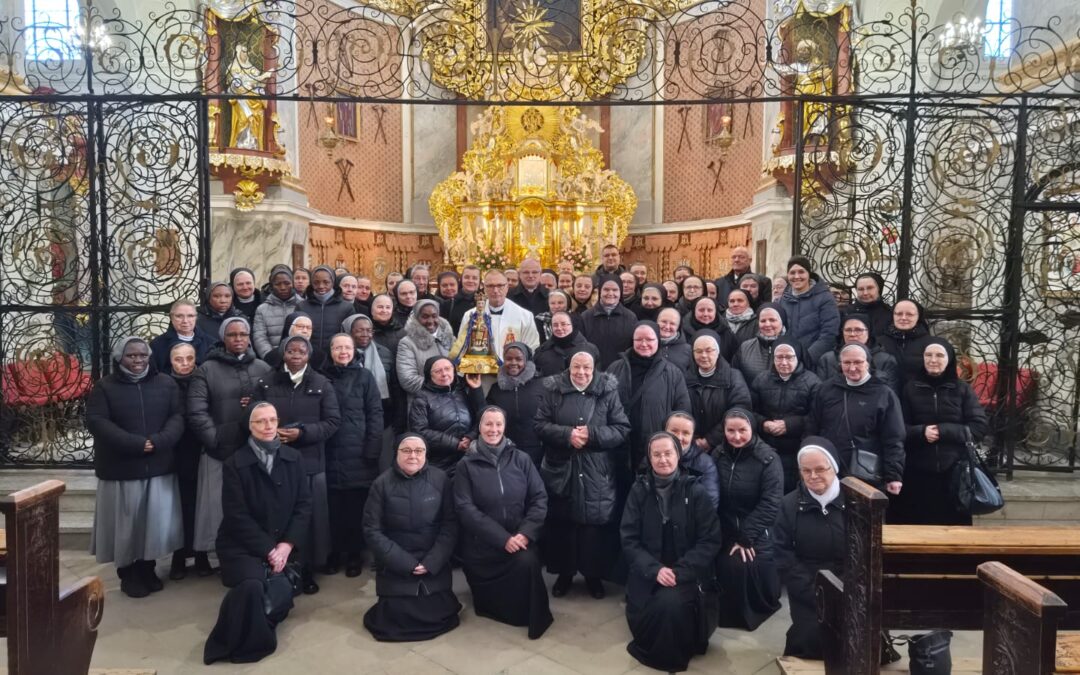
On November 21, as we do every year, our religious community gathered at the Shrine of Our Lady, Guardian of the Faith, in Bardo for our annual pilgrimage of thanksgiving. This year’s gathering had a particularly solemn, jubilee character—it was our 100th pilgrimage to the Bardo Shrine, and we celebrated the thanksgiving itself for the 150th time.
More than 80 sisters and invited guests took part in the celebration. The joint celebration began with a talk by Sr. Elżbieta Cińcio, who explained to the participants the history and reasons behind this long-standing pilgrimage, which dates back to the very beginnings of our Congregation. Afterward, everyone gathered to pray the Rosary together.
The highlight of the day was a solemn Holy Mass presided over by Bishop Marek Mendyk. The Eucharist was concelebrated by numerous priests in attendance, as well as the Redemptorist fathers, the hosts of the shrine.
At the conclusion of the ceremony, just before the traditional kissing of the miraculous statue of Our Lady of Bardz and before gathering for a meal together, Mother General Sybilla Kołtan—in accordance with a long-standing tradition—read the act of entrustment of the entire Congregation to Mary’s care. Excerpts from this act are provided below:
“Immaculate Mary, our Mother and Patroness! We stand before You today as Your daughters, with hearts full of gratitude and trust. We come to You along the same path of faith that our first sisters walked 150 years ago. They brought to You their fear for the future of the young Congregation, their helplessness in the face of danger, and their hope that God would not allow the work—born of love for Him and for those most in need—to perish. You accepted their prayer. Today, 150 years later, we are here as a living witness to that grace. Mary, we thank You for not abandoning our Congregation! We thank You for its preservation, for the faith of our Founder, Father John Schneider, for the courage of the first sisters, and for all the generations who faithfully carried on the charism entrusted to them (…). Our Mother, today we entrust our entire Congregation to You once again. We entrust to You all our sisters, our communities, and our works—those that are flourishing and those facing difficulties; those that look to the future with hope, and those where weariness, uncertainty, and fear are setting in (…). Mary, you know our concerns about the future. You see our limitations, our weaknesses, and our uncertainty about tomorrow. We do not ask you for a life without difficulties, but for a faith stronger than fear. We do not ask for greatness in the eyes of the world, but for fidelity to the Gospel (…). Teach us to love one another, to forgive, to listen, and to seek together the good of the Congregation. Mary, help us to rekindle in our hearts the fire that burned in the heart of our Founder. Grant us his sensitivity to human poverty, his courage in doing good, his perseverance in the face of difficulties, and his boundless trust in Divine Providence (…). Mother of God, Guardian of the Faith! 150 years ago, our first sisters entrusted to you the future of the Congregation, which they could not see. Today we do the same. We do not know the paths along which God will lead us. We do not know what tasks, trials, and graces await future generations. But we believe that He who began a good work in us will carry it on, if we remain faithful to His love. Therefore, with complete trust, we place our past, present, and future in Your motherly hands. Mary, take our Congregation under Your protection. Lead us to Jesus. Teach us to listen to His word. Help us to courageously say our daily “FIAT” (…). Mary Immaculate, our Mother, our Hope, and our Patroness, to You we entrust all that we are, all that we have, and all that, by God’s grace, we may yet become. Remain with us on the paths that lie ahead in our history. Amen.”

Nov 21, 2026 | DAILY BREAD
Our Lord Jesus Christ, King of the Universe – Solemnity, Readings: Ezekiel 34:11–12, 15–17; Psalm 23; 1 Corinthians 15:20–26, 28; Matthew 25:31–46
On this Solemnity of Christ the King, the readings invite us to discover a King who loves us as a Shepherd, gives meaning to our destiny, and comes to us through the most vulnerable. In the Book of Ezekiel, God promises to search for His scattered sheep, care for the wounded, and strengthen the weak. His kingship is not expressed through domination, but through loving attention to each person. The Psalmist responds with beautiful confidence: “The Lord is my shepherd; there is nothing I shall want.” When we live in communion with Him, we discover that our deepest needs are fulfilled not by what we possess, but by the One to whom we belong. Saint Paul reminds us that Christ has conquered death and opened the way to resurrection. In Christ, every human life discovers its ultimate destiny: eternal communion with God. Our present life, therefore, is not a journey without direction, but a journey towards the fullness of His love. In the Gospel, Jesus reveals something extraordinary about His kingship: He identifies Himself with the hungry, the thirsty, the stranger, the sick, and the imprisoned. Our relationship with Christ the King is inseparable from our relationship with the most vulnerable people around us. We cannot claim to honour the King while ignoring those in whom He chooses to be present. Every act of compassion becomes an encounter with Christ Himself. This gives extraordinary dignity to the simplest gestures of love. We do not need to accomplish great things to enter His Kingdom; we need to recognize Him and love Him in those who need us. The King who cares for us as His sheep invites us to become shepherds of one another. How beautiful it is to belong to a Kingdom where love is the measure of greatness, mercy is the expression of power, and eternal life is the fulfilment of our hope. Let's reflect: Do I experience Christ as the loving Shepherd who gives meaning and direction to my life, and do I recognize and serve Him with the same love in the vulnerable people He places along my path?
Don Giorgio
Nov 20, 2026 | POSITIVE IMPULSES
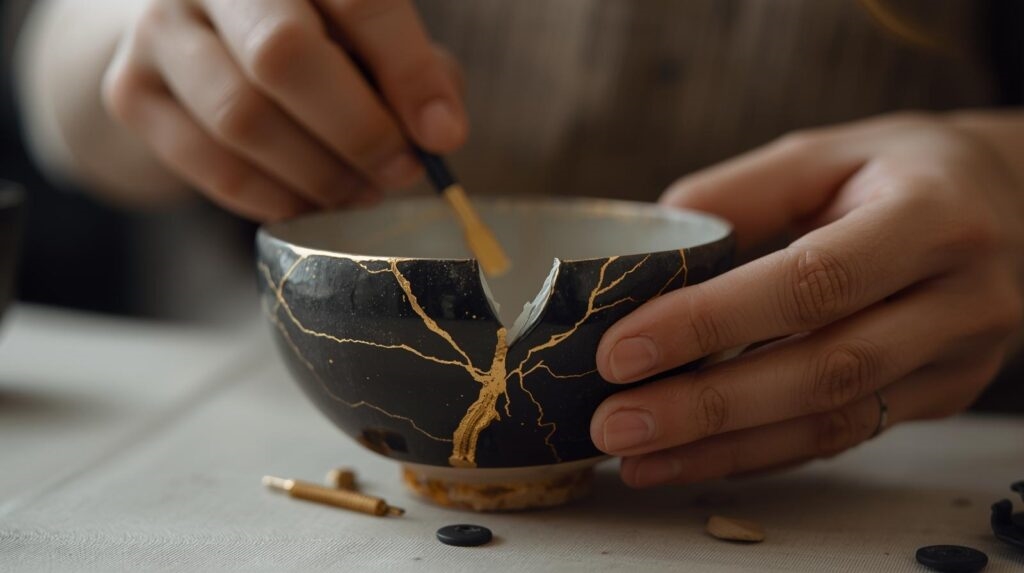
Restarting is one of the most beautiful expressions of reconciliation, because it allows us to give a relationship a new beginning without denying its past. Reconciliation is not about pretending that nothing happened, but about refusing to let what happened determine everything that follows. Sometimes we become so attached to old disappointments, painful memories, and unfinished arguments that we forget the possibility of beginning again. A genuine restart does not erase the lessons of yesterday; it carries them into tomorrow with greater understanding and renewed goodwill. It is a courageous decision to allow trust to be rebuilt, affection to find new expressions, and relationships to discover possibilities beyond their wounds. The beauty of reconciliation lies not in returning to what we once were, but in discovering what we can become together.
Don Giorgio
Nov 20, 2026 | DAILY BREAD
The Presentation of the Blessed Virgin Mary, Saturday of week 33 in Ordinary Time, Gospel: Luke 20:27-40
In today’s Gospel, Jesus reveals a beautiful truth about our relationship with God: “He is God, not of the dead, but of the living; for to Him all are alive.” How beautiful it is to have a living and loving God! Our faith is not simply an adherence to a set of teachings or the observance of religious traditions. It is a living relationship with Someone who knows us, loves us, and desires to share His eternal life with us. The Sadducees tried to understand the resurrection within the limitations of earthly existence. Jesus invites them to look beyond these limitations and discover the greatness of God’s promise. Because God is alive, our relationship with Him is always alive, and not even death can put an end to it. This conviction gives us the courage to face the uncertainties of life with serenity and hope. Today, as we celebrate the Presentation of the Blessed Virgin Mary, we contemplate a life entirely dedicated to the living God. Mary’s relationship with God was not merely a part of her life; it was the very foundation of her existence. Her joy came from belonging to Him and allowing His presence to guide her entire journey. We too are invited to experience the beauty of belonging to a God who is constantly present and active in our lives. Eternal life begins when we enter into communion with the living and loving God. What a consolation it is to know that we are loved by Someone whose love has no end! Let’s reflect: Do I experience my relationship with God as a living and loving encounter that fills my daily life with joy, serenity, and the hope of eternity?
Don Giorgio
Nov 19, 2026 | DAILY BREAD
Friday of week 33 in Ordinary Time, Gospel: Luke 19:45-48
In today’s Gospel, Jesus enters the Temple and drives out those who are selling things, declaring: “My house will be a house of prayer. But you have turned it into a robbers’ den.” Jesus reminds us of the importance of protecting what is sacred from everything that compromises its true purpose. Through Baptism, we have become temples of the Holy Spirit, dwelling places of God. Therefore, we have a responsibility to keep our inner temple safe. Just as commercial activities gradually occupied the sacred space of the Temple, worldly concerns, excessive ambitions, resentment, selfishness, and distractions can gradually occupy the sacred space of our hearts. Often, these things enter unnoticed and eventually leave little room for prayer, silence, and communion with God. Keeping our inner temple safe does not mean withdrawing from the world or neglecting our daily responsibilities. Rather, it means ensuring that nothing takes the place that belongs to God. We need to examine regularly what we allow to enter, occupy, and influence our hearts. The Gospel also tells us that Jesus taught in the Temple every day. It is not enough to remove what is harmful from our hearts; we must fill them with the presence and the Word of Christ. Through prayer, the Eucharist, and sincere examination of conscience, we allow Jesus to purify and protect our inner sanctuary. The more we preserve this sacred space, the more our lives become places where others can encounter God’s love and peace. Let’s reflect: Am I protecting the sacred space of my heart from everything that could compromise my relationship with God, and am I allowing Jesus to make His dwelling within me a true house of prayer?
Don Giorgio
