
Oct 19, 2026 | DAILY BREAD
Tuesday of week 29 in Ordinary Time, Gospel: Luke 12:35-38
“Be dressed for action and have your lamps lit.” With these words, Jesus describes the essential spirit of discipleship: a heart always ready to act and a life always illuminated by His presence. Being dressed for action means that discipleship is not a passive condition but a constant readiness to respond to God’s will. A disciple cannot remain indefinitely in the comfort of good intentions, waiting for the perfect moment to love, serve, forgive, or fulfil a responsibility. The call of Christ requires availability, generosity, and the courage to act when the moment arrives. But Jesus adds something equally important: “Have your lamps lit.” Action alone is not enough. We can be extremely active and yet lose the light that gives meaning and direction to everything we do. The disciple needs both the readiness of the hands and the light of the heart. Our lamps remain lit through prayer, intimacy with Christ, attention to His Word, and the grace of the Holy Spirit. Without this interior light, our activity risks becoming mere busyness; without readiness for action, our spiritual life risks becoming an empty contemplation. Jesus then reveals something extraordinary: the master who finds his servants awake will himself put on an apron, make them sit at table, and wait on them. The Lord whom we are waiting to serve is already preparing to serve us with His infinite love. Discipleship is therefore not simply waiting for Christ to come, but living every moment in such a way that we are ready to welcome Him whenever and however He comes. He may come through an unexpected responsibility, a person who needs our attention, an opportunity to do good, or a moment that demands fidelity. The true disciple is neither distracted by inactivity nor exhausted by activity, but remains peacefully vigilant, with hands ready to serve and a heart burning with the light of Christ. Let’s reflect: Am I living with the spirit of a true disciple, always ready to act when Christ calls, while keeping the lamp of my heart burning through prayer, faith, and intimacy with Him?
Don Giorgio
Oct 19, 2026 | NEWS
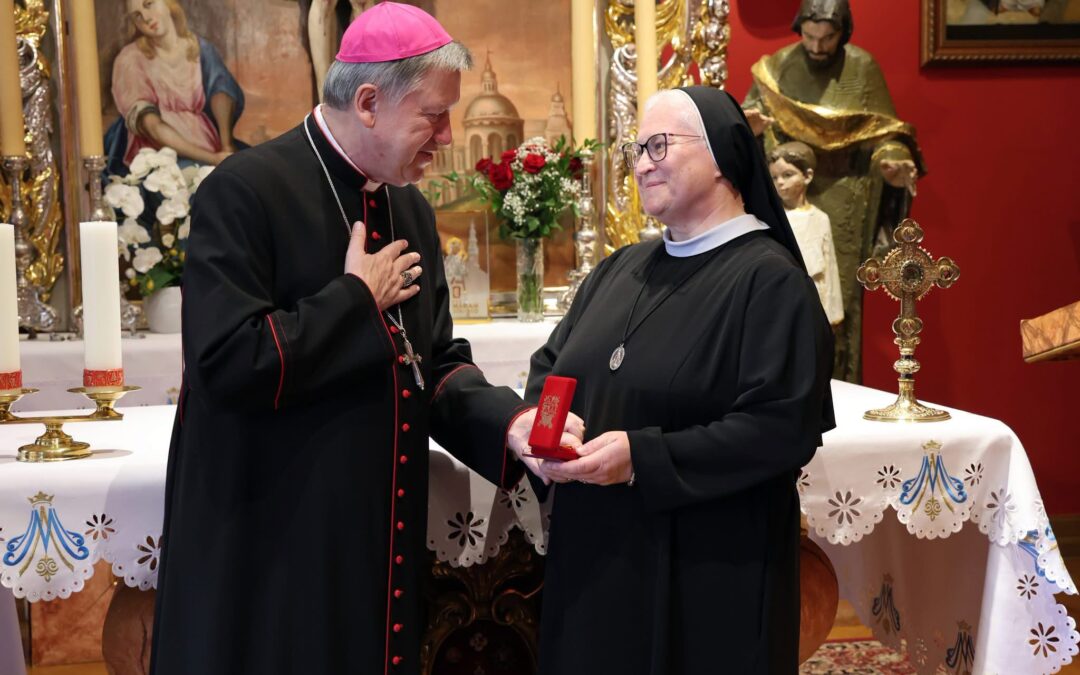
It was a source of great pride and joy for the Congregation to learn that our John Paul II Children’s Care and Treatment Center in Jaszkotl had been honored with the Medal of Saint Hedwig of Silesia, awarded by the Metropolitan Archbishop of Wrocław. The Medal of Saint Hedwig of Silesia was established in 2017 to mark the 750th anniversary of the canonization of this Silesian saint. It is an expression of recognition for contributions to building the Kingdom of God in the Archdiocese of Wrocław. It is awarded to laypeople and consecrated persons, as well as to institutions and legal entities, for their active involvement in religious, pastoral, catechetical, and cultural life, with particular emphasis on charitable activities. Sister Sylwia Borowska, the center’s director, accepted the medal on behalf of the facility. This award is a special expression of recognition for our facility’s mission—caring for children who require specialized care, therapeutic support, and the constant presence of another person. The facility’s daily operations are based on respect for the dignity of every child, sensitivity to their needs, and the cultivation of relationships filled with care, respect, and love. Professional care, commitment, and a willingness to serve others are essential elements of this facility’s mission. We view this award as recognition of the work of the entire community at the facility—the Sisters of Mary Immaculate, the staff, and all those who support the facility’s activities and help create a child-friendly environment. We accept this honor with gratitude and humility, as a commitment to continue fulfilling our mission and to help those who need it most. May the example of Saint Hedwig of Silesia, the patron saint of mercy and sensitivity to the needs of others, remain an inspiration for us to continue serving others.
Sr. Magdalena Zabłotna

Oct 18, 2026 | DAILY BREAD
Saints John de Brébeuf and Isaac Jogues, priests, and their Companions, Martyrs, Monday of week 29 in Ordinary Time, Gospel: Luke 12:13-21
In today’s Gospel, Jesus warns us against greed through the parable of the rich man who places his security entirely in his abundant possessions. His mistake is not that he has accumulated wealth, but that he has allowed wealth to determine the meaning and direction of his life. He plans everything around what he owns, forgetting the One to whom his life belongs. Jesus reminds us that “a man’s life is not made secure by what he owns.” This teaches us an essential truth: the place we give to God in our lives must never depend on our possessions, whether we have much or little. God is not simply the One who provides what we need, protects what we possess, or helps us acquire more. He is the very source, meaning, and ultimate destination of our existence. When we associate God’s goodness only with material prosperity, we risk losing our trust in Him when possessions disappear. Likewise, when we have everything we need, we may begin to feel that we no longer need Him. True spiritual freedom begins when our relationship with God is independent of what we possess or lack. Saints John de Brébeuf, Isaac Jogues, and their companions witnessed this freedom by giving up security and eventually their lives for the mission of Christ. They understood that the greatest treasure is not something we can accumulate, but Someone to whom we can belong. The message of Christ invites us to become rich in the sight of God through faith, gratitude, generosity, and love. Possessions can support our lives, but only God can give our lives their ultimate meaning. Let’s reflect: Is my relationship with God influenced by what I possess or lack, or have I discovered the freedom of loving and trusting Him as my greatest treasure, independently of my material circumstances?
Don Giorgio

Oct 17, 2026 | DAILY BREAD
29th Sunday in Ordinary Time, World Mission Sunday – 100th Anniversary, Saint Luke, Evangelist, Readings: Isaiah 45:1, 4–6; 1 Thessalonians 1:1–5b; Matthew 22:15–21
On this World Mission Sunday, as the Church celebrates the centenary of this important missionary observance, Pope Leo XIV invites us to reflect on the theme “One in Christ, united in mission.” His message reminds us of three essential dimensions of our missionary vocation: union with Christ, communion with one another, and the proclamation of God’s love. These three dimensions find a beautiful expression in today’s readings. Through the prophet Isaiah, God declares: “I am the Lord, and there is no other.” The mission of the Church begins with this conviction: God is the Lord of all humanity, and His saving love is meant to reach every person, without distinction. Saint Paul reminds the Thessalonians that the Gospel came to them “not in word alone, but also in power and in the Holy Spirit.” Mission, therefore, is not simply the transmission of religious ideas; it is the communication of a living experience of Christ through faith, love, hope, and the transforming power of the Holy Spirit. In the Gospel, Jesus says: “Give back to Caesar what belongs to Caesar, and to God what belongs to God.” If a coin bears the image of Caesar, every human person bears the image of God and therefore belongs to Him. This gives missionary activity its deepest meaning: to help every person rediscover the dignity of belonging to God and the joy of encountering Jesus Christ. Pope Leo XIV reminds us that missionary fruitfulness begins with our union with Christ, grows through communion among His disciples, and reaches others through the witness of love. We cannot proclaim convincingly a Christ with whom we are not united; we cannot announce reconciliation while remaining divided; and we cannot communicate God’s love without becoming instruments of that love ourselves. Saint Luke, the Evangelist whom we remember today, dedicated his Gospel and the Acts of the Apostles to showing how the saving message of Christ reaches beyond every geographical, cultural, and human boundary. His witness reminds us that the mission continues through each of us. Mission is not simply going somewhere; it is allowing Christ, who lives within us, to reach someone through us. Every encounter, every act of kindness, every word of encouragement, every gesture of reconciliation, and every sacrifice offered with love can become an opportunity for evangelization. On this Mission Sunday, let us renew our commitment to be one in Christ, united in mission, and generous in making His love known to the world. Let’s reflect: Am I living so deeply united with Christ that my words, relationships, actions, and daily responsibilities become a living proclamation of His love, helping others discover that they too bear God’s image and belong to Him?
Don Giorgio

Oct 17, 2026 | DAILY BREAD
Saint Ignatius of Antioch, Bishop, Martyr, Saturday of week 28 in Ordinary Time, Gospel: Luke 12:8-12
In today’s Gospel, Jesus speaks about the courage to acknowledge Him before others, the seriousness of rejecting the Holy Spirit, and the assurance that the Spirit Himself will teach His disciples what to say when they face persecution. These teachings reveal one essential truth: openness to the Holy Spirit is everything in the life of a disciple. We cannot truly confess Christ, remain faithful to Him, understand His message, or bear witness to His love through our own strength alone. It is the Holy Spirit who opens our hearts to recognize Jesus as Lord, gives us the courage to proclaim Him, enlightens our minds to understand His truth, and strengthens us when our human resources seem insufficient. Jesus warns against blasphemy against the Holy Spirit because deliberately closing our hearts to His action means refusing the very grace through which God desires to forgive, heal, and transform us. The greatest obstacle to God’s work in our lives is not our weakness, but our refusal to allow His Spirit to act within us. Saint Ignatius of Antioch understood this profoundly. On his journey towards martyrdom, he did not rely merely on human courage, but on his intimate union with Christ and the strength of the Holy Spirit. His extraordinary witness reminds us that openness to the Spirit can transform even fear and suffering into fidelity and love. The message of Christ invites us to cultivate an interior attitude of docility: to listen when the Spirit inspires us, to respond when He calls us to conversion, to trust when He leads us beyond our understanding, and to remain available when He asks us to bear witness. Holiness is not primarily the result of what we accomplish for God, but of what we allow the Holy Spirit to accomplish within us. When our hearts remain open to Him, even our limitations can become instruments of grace, and our ordinary lives can become a courageous testimony to Christ. Let’s reflect: Am I truly open and docile to the Holy Spirit, allowing Him to guide my thoughts, words, decisions, and actions, or do I still rely more on my own understanding and strength than on His transforming presence?
Don Giorgio
