
Nov 5, 2026 | DAILY BREAD
Thursday of week 31 in Ordinary Time, Gospel: Luke 15:1-10
In today’s Gospel, Jesus presents the parables of the lost sheep and the lost coin, revealing a beautiful truth about God’s love: no one is insignificant, and no one can be ignored. The shepherd leaves the ninety-nine sheep to search for the one that is lost, while the woman carefully searches her house until she finds the missing coin. Both parables show that God’s love is not satisfied simply because the majority are safe; it remains concerned about the one who is missing. This challenges our tendency to evaluate people according to their usefulness, importance, achievements, or closeness to us. We may easily overlook those who are difficult, distant, forgotten, or seemingly unimportant. Yet Jesus teaches us that every person has an irreplaceable value before God. The lost sheep is not abandoned because it wandered away, and the lost coin does not lose its worth because it is missing. A person’s dignity does not disappear because of weakness, failure, distance, or sin. Moreover, Jesus does not merely wait for the lost to return; He reveals a God who actively searches, welcomes, and rejoices. This is the heart of the message of Christ: mercy that reaches beyond our boundaries and refuses to exclude anyone. Our discipleship must reflect this same attitude. We cannot claim to love God while remaining indifferent to those whom He continues to seek. Sometimes the person most in need of our attention is precisely the one we find easiest to ignore. True love is not measured only by how well we care for those already close to us, but also by our willingness to reach out to those who are missing, forgotten, or excluded. In God’s heart, every person matters, and the joy of heaven is renewed whenever even one person is brought back into the embrace of His love. Let’s reflect: Is there someone in my life whom I have overlooked, avoided, or considered unimportant, and am I willing to take the first step towards that person with the same attention, mercy, and love that God shows to each of us?
Don Giorgio

Nov 3, 2026 | DAILY BREAD
Saint Charles Borromeo, Bishop, Wednesday of week 31 in Ordinary Time, Gospel: Luke 14:25-33
In today’s Gospel, Jesus declares: “Anyone who does not carry his cross and come after me cannot be my disciple.” These words invite us to recognize the Cross as the greatest expression of God’s love and the fundamental value of our discipleship. To value the Cross above everything else is to place the love of Christ above every other attachment, ambition, and personal interest. The Cross is not simply a symbol of suffering; it is the revelation of a love that gives everything without holding anything back. Jesus does not ask us to reject our families, responsibilities, or the goodness of life, but to love them in the light of His own total self-giving. Carrying our cross does not mean seeking suffering or accepting injustice passively. Rather, it means remaining faithful to love, truth, and goodness even when they demand sacrifice. Saint Charles Borromeo understood this profoundly. As a bishop, he embraced personal sacrifices, pastoral difficulties, and the dangers of the plague in order to serve the people entrusted to him. His life reminds us that the Cross becomes precious not because suffering is desirable, but because love makes sacrifice meaningful. Jesus also asks us to calculate the cost of discipleship, reminding us that following Him requires conscious and generous commitment. When the Cross becomes our highest value, success is no longer measured merely by what we gain, but by how faithfully we love. The Cross teaches us that the greatest achievement in life is not possessing everything, but being willing to give everything for what truly matters. Let’s reflect: Do I value the Cross of Christ above my personal comfort, ambitions, and attachments, allowing His self-giving love to guide my choices and give meaning to the sacrifices of my daily life?
Don Giorgio
Nov 3, 2026 | NEWS
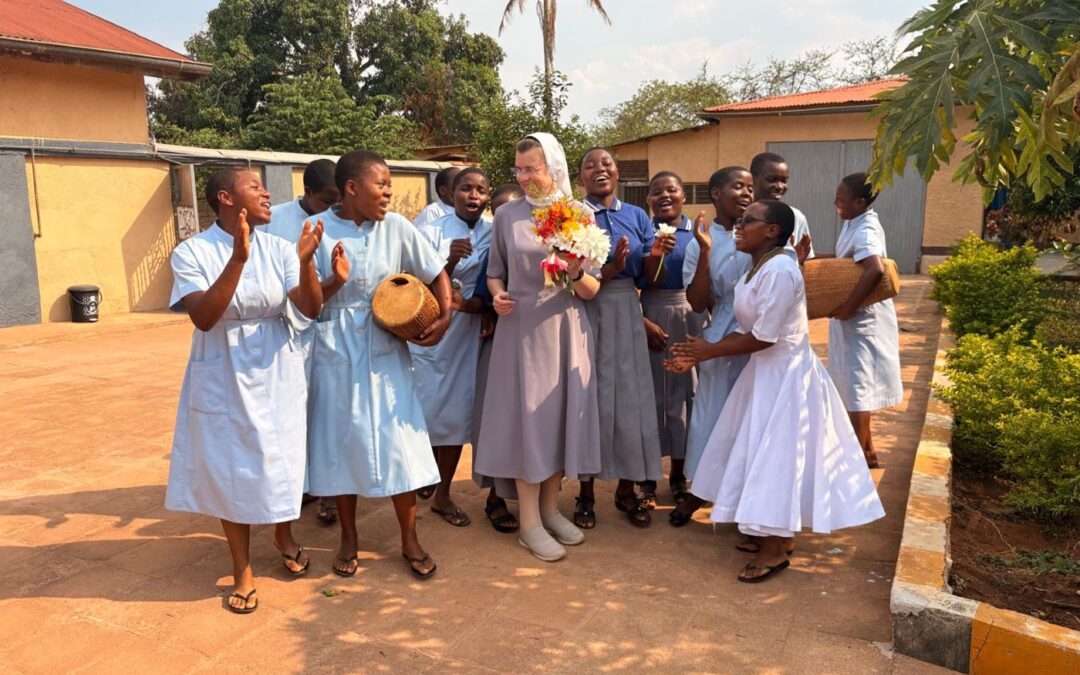
News is coming in from Tanzania about further steps in the development of the Region and the formation of our Congregation. Yesterday, November 2, Mother General visited the house in Nanjota as part of her visit to Tanzania. This place is bustling with young religious life, serving as a formation house for our candidates and postulants, of whom there are currently 14. The visit provided an opportunity to give thanks together for the visible fruits of the local community’s growth—in material, educational, and spiritual terms. One of the highlights of the Mother General’s visit was a tour of the newly built library, which was officially opened in August for use by the Sisters and the girls in formation. It will not be merely a place for catechetical education; the plans for this space extend further. In the near future, the new space will also serve as a venue for computer training for our candidates. In this way, the Congregation wishes to equip young Sisters with the digital skills necessary for contemporary evangelization and educational work. The visit coincided with an important diocesan event. The final diocesan exam took place in Nanjota, officially concluding the two-year educational cycle at the catechetical school. The first class to complete the course—initiated by our Congregation—graduated. In the original plans, the catechetical courses were intended solely for internal use—as part of the formation of our postulants and candidates. God, however, had a broader plan for this work. Over time, recognizing the great desire and needs of the local Church, the school opened its doors to outsiders who also wished to deepen their theological knowledge and prepare for ministry. Thanks to the Sisters’ dedication, the local Church has gained a new group of well-prepared catechists, ready to share their faith in the local parish communities.
Nanjota is just the beginning of an intensive period that the Mother General is spending among the Sisters in Africa. Her journey through the Tanzanian Region is still underway, and her schedule for the coming days is filled with lectures and meetings with the Sisters.

Nov 2, 2026 | DAILY BREAD
Tuesday of week 31 in Ordinary Time, Saint Martin de Porres, Religious, Gospel: Luke 14:15-24
In today’s Gospel, Jesus tells the parable of the great banquet, where those who were invited begin to make excuses. One has bought a field, another has purchased oxen, and another has just married. None of these activities is wrong in itself, but their mistake is allowing good things to take priority over the greatest good: responding to God’s invitation. This parable reminds us that our choices reveal our priorities. We often claim that God is important in our lives, yet our daily decisions may tell a different story. Responsibilities, relationships, work, possessions, and personal ambitions can gradually occupy the place that belongs to Him. Making God our first priority does not mean neglecting our other responsibilities; it means allowing our relationship with Him to give meaning, direction, and value to everything else. When God comes first, we become more faithful in our duties, more generous in our relationships, and more attentive to those in need. Saint Martin de Porres beautifully demonstrated this through his humble service, especially to the poor, the sick, and the forgotten. His love for God was not separated from his daily activities; it transformed them into expressions of charity. The invitation to the banquet also reveals God’s generosity: when some refuse, He welcomes the poor, the crippled, the blind, and the lame. God’s invitation is always generous, but our response requires a deliberate choice. The message of Christ encourages us to examine not merely what we consider important, but what we actually choose when different priorities compete for our attention. Our spiritual life is shaped not simply by what we believe matters most, but by what we consistently place first. Let’s reflect: When I make my daily choices, does my relationship with God truly guide my priorities, or do I allow other concerns, even legitimate and good ones, to take the first place that belongs to Him?
Don Giorgio

Nov 1, 2026 | DAILY BREAD
The Commemoration of All the Faithful Departed – All Souls’ Day , Readings: Wisdom 3:1–9; Psalm 23; Romans 8:14–23; John 11:17–27
Today, on All Souls’ Day, we remember our beloved departed ones, not simply with sadness, but with love that continues beyond death and hope that reaches into eternity. The Book of Wisdom assures us: “The souls of the just are in the hand of God, and no torment will ever touch them.” This is precisely what we desire for those we have loved and lost: that they may rest peacefully in the loving hands of God. Our prayers for them are an expression of a love that death cannot destroy. The Psalmist declares, “The Lord is my shepherd; there is nothing I shall want.” Paradise begins here when we discover that belonging to God is our greatest security and deepest happiness. Saint Paul reminds us that through Baptism we become sons and daughters of God, sharing in the destiny of His only Son, Jesus Christ, who passed through death into the glory of the Resurrection. Death, therefore, is not the destruction of our relationship with God, but the passage towards its fulfilment. In the Gospel, Jesus enters the grieving family of Bethany, where Martha and Mary are mourning their brother Lazarus. He does not dismiss their sorrow; instead, He transforms their encounter with death into an encounter with hope, declaring: “I am the resurrection and the life.” Jesus does not merely promise resurrection as a future event; He reveals that resurrection is rooted in His own person. Our hope is not simply that something awaits us after death, but that Someone awaits us: Jesus Christ, who loves us eternally. This is why we pray for the departed. Our prayers entrust them to God’s mercy and express our enduring communion with them in Christ. Death may interrupt our conversations, our embraces, and our earthly companionship, but it cannot bring an end to love sustained by God. Today, as we remember our departed loved ones, may our sorrow be softened by gratitude, our memories strengthened by prayer, and our hearts filled with the peaceful assurance that those we love remain in the hands of the God who is the Resurrection and the Life. Let’s reflect: When I remember my beloved departed ones, do I allow my love to become a prayer, trusting that they remain in God’s merciful hands and that, through the Resurrection of Christ, our communion in love has a future beyond death?
Don Giorgio
