
Nov 23, 2024 | DAILY BREAD
Christ the King – Solemnity
Gospel – John 18:33-37
Jesus is the King. Three reasons. Jesus loves us. Jesus knows us. Jesus saves us. Jesus’ kingship is unlike any worldly rule—it is grounded in self-giving love. A King who loves so profoundly invites us into a relationship where love rules over fear. Unlike worldly rulers who often seek to dominate, Jesus rules with a heart that seeks to serve and sacrifice for others. His love is unconditional and transformative, drawing us into a relationship where love overcomes fear. Jesus is a King who knows His people intimately. He knows our joys, struggles, strengths, and weaknesses. In His dialogue with Pilate, Jesus reveals His purpose: to bear witness to the truth. He knows the truth about our lives and calls us to live authentically, embracing our identity as children of God. Above all, Jesus is our Savior. His kingdom is not of this world because it is a kingdom of salvation. By His life, death, and resurrection, He has conquered sin and death, offering us the gift of eternal life. His saving power restores hope and opens the doors to God’s everlasting kingdom. On the Cross, He showed the ultimate act of love, laying down His life for each of us. Let’s reflect: In what ways do I allow Jesus' self-giving love to rule over my fears, and how can I deepen my trust in His intimate knowledge of my life and His saving power so that He becomes the King of my life?
Don Giorgio

Nov 23, 2024 | POSITIVE IMPULSES
The kingship of Jesus gives us a totally different concept of power. Power to be powerless to serve. In human terms, power often signifies dominance, control, and the ability to impose one’s will. But Jesus reveals a power that is paradoxical: the power to become powerless in order to serve others. This is not a relinquishment of strength but a deliberate act of love, humility, and self-sacrifice. In Jesus’ model of kingship, power is no longer about authority over others but about the capacity to lift others up. It is the strength to kneel and wash feet, the courage to embrace the marginalized, and the willingness to suffer for the sake of love and justice. This servant kingship invites us into a new understanding of greatness—not as achieving status or accumulating influence but as laying down one’s life for others. Jesus’ example empowers us to reimagine our own relationships with power. It challenges us to view influence not as a privilege to exploit but as an opportunity to serve. This concept transforms leadership into an act of stewardship, where power is directed outward to bless, heal, and uplift. In embracing this model, we find a deeper sense of purpose and fulfillment, discovering that true power is love expressed through service. Power is the power to serve.
Don Giorgio

Nov 23, 2024 | DAILY BREAD
Saturday of week 33 in Ordinary Time
Saint Clement I, Pope, Martyr
Saint Columbanus, Abbot and Missionary
Saturday memorial of the Blessed Virgin Mary
Gospel Luke 20:27-40
“Now he is God, not of the dead, but of the living; for to him all men are in fact alive.” The passage highlights a profound truth about life, death, and eternity. When Jesus addresses the Sadducees, who deny the resurrection, He reveals a deeper understanding of God’s nature and His relationship with humanity. He emphasizes that God is not the God of the dead, but of the living, for to Him all are alive. This teaching invites us to see death not as an end but as a transformation—a passage into the fullness of life in God. It assures us that life is eternal because our souls are eternal, rooted in the infinite love of God. While our earthly life begins in time, it culminates in the timelessness of eternity. Moreover, Jesus' words remind us of the centrality of God’s love. It is this divine love that gives us life, sustains us, and ultimately transforms us. In the face of death, we are called to trust in this love, which promises not an end, but a new beginning. This understanding can inspire hope and a deeper appreciation for the eternal nature of our souls and our connection to God. Let’s reflect: How does my understanding of God’s eternal love shape the way I live my life today, especially in moments when I face fear, loss, or uncertainty?
Don Giorgio
Nov 22, 2024 | NEWS
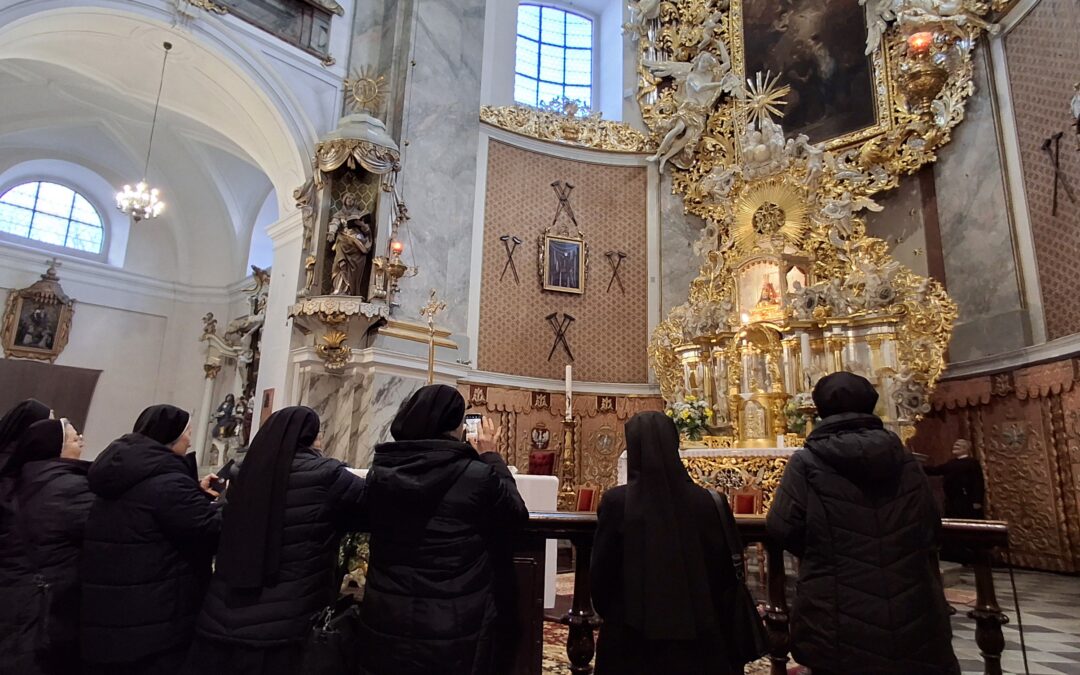
On November 21, the liturgical commemoration of the Presentation of the Blessed Virgin Mary, we made a pilgrimage to Our Lady Guardian of Faith in Bardo.
The 98th Thanksgiving pilgrimage of the Congregation of the Sisters of Mary Immaculate gathered sisters from many Polish missions; sisters from Rome and Germany were also present. We prayed together with the sisters of the general and provincial boards, and were spiritually united with us by the elderly and sick sisters, including those who stayed at home. At the Sanctuary of Our Lady Guardian of the Holy Faith at 10:30 a.m., we began praying the rosary, which spiritually introduced us to the Eucharist.
The Mass, celebrated under the presidency of parish priest Father Piotr Wisniewski CSsR and the co-celebrating priests, was a heartfelt thanksgiving offering for each of us.
During his homily, Father Pastor encouraged everyone to have good memories of the past years, when each of us wanted to offer our lives to God, to offer so seriously and without reservation.
Provincial Superior Sr. M. Magdalena Zablotna, in the Act of Entrustment, placed the Congregation of the Sisters of Mary Immaculate under the protection of the Guardian of the Holy Faith The Sister Choir, under the watchful eye of Sr. Barbara Mroziak, made. That the liturgy had a beautiful solemn character.
The Magnificat, sung from the heart, opened our souls to praise God here and now, for great things the Almighty has done for us, and holy is His Name.
S.Małgorzata Cur SMI

Nov 22, 2024 | DAILY BREAD
Saint Cecilia, Virgin, Martyr
Friday of week 33 in Ordinary Time
Gospel – Luke 19:45-48
“‘According to scripture,’ he said ‘my house will be a house of prayer. But you have turned it into a robbers’ den.’” We transform the house of prayer into a robbers’ den when we approach even prayer for our selfish interests. Indeed, this passage from Luke highlights the importance of purity in our intentions, especially in the sacred act of prayer and worship. Jesus' indignation at the temple being used for selfish gain reflects a deeper message about the purpose of spiritual spaces and practices: they are meant for communion with God, not for personal profit or ulterior motives. When we reduce prayer to a tool for solely obtaining what we want, we risk losing the essence of true connection with God. Genuine prayer is not about bargaining or solely presenting a list of desires; it is about opening our hearts to God, seeking His will, and aligning ourselves with His purpose. This passage challenges us to reflect on the authenticity of our spiritual practices. By approaching prayer with humility and selflessness, we honor the sacredness of God's "house"—not just the physical church but also the temple of our hearts. In doing so, we transform our spiritual life into what it is meant to be: a true house of prayer, not a robbers' den. Let’s reflect: In what ways have I approached prayer or worship with selfish intentions, and how can I shift my heart toward seeking genuine communion with God and His purpose?
Don Giorgio
