May 25, 2026 | NEWS
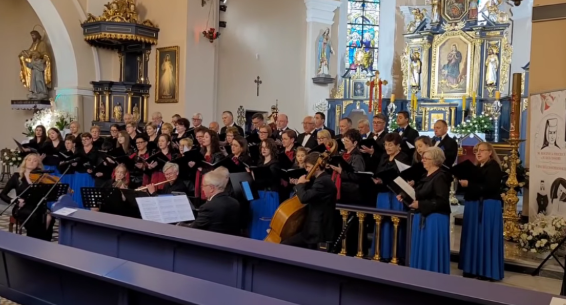
Music filled the Church of Sts. Matthew and James the Apostles in Racibórz-Brzezie, offering not only an artistic experience but also a prayer and a moment of spiritual reflection. On Sunday, May 17, 2026, the May Concert of Sacred Music took place, organized as part of the 5th Dulcissimian Days, commemorating the 90th anniversary of the death of the Servant of God, Sister Maria Dulcissima Hoffmann. From the very first notes, the church was filled with an atmosphere of contemplation and reflection. The church became a place where music, faith, and community came together. Performing before the assembled audience were the St. Anne Choir from Krzyżanowice, conducted by Leonard Fulneczek, and the Brzezie Choir, led by Aleksandra Gamrot. The repertoire included sacred music pieces whose sound harmonized perfectly with the unique character of the venue. The concert was further enriched by solo performances. The vocal parts were performed by Mateusz Łyżwa (bass), Michalina Gardzielik played the organ, and Paweł Muszkieta presented the subtle and light flute parts. The ensemble was complemented by the Instrumental Ensemble conducted by Andrzej Rosoł, creating a harmonious musical backdrop for the event. A special moment of the concert was the performance of “Ave Maria,” which moved the audience and immersed them in an atmosphere of deep contemplation. The music echoing beneath the church’s vaulted ceiling echoed the words of Sister Maria Dulcissima Hoffmann: “I would like to be a singer, to sing in gratitude for all of God’s blessings.” This quote became the symbolic motto of the event, whose character transcended the artistic dimension. The May Sacred Music Concert was not only an opportunity to experience the beauty of choral and instrumental music, but also a space for collectively commemorating the Racibórz mystic. The evening left the participants with a sense of spiritual closeness, gratitude, and inner peace, demonstrating that sacred music is still capable of touching the deepest chords of human sensitivity.
S. Małgorzata Cur
May 25, 2026 | NEWS
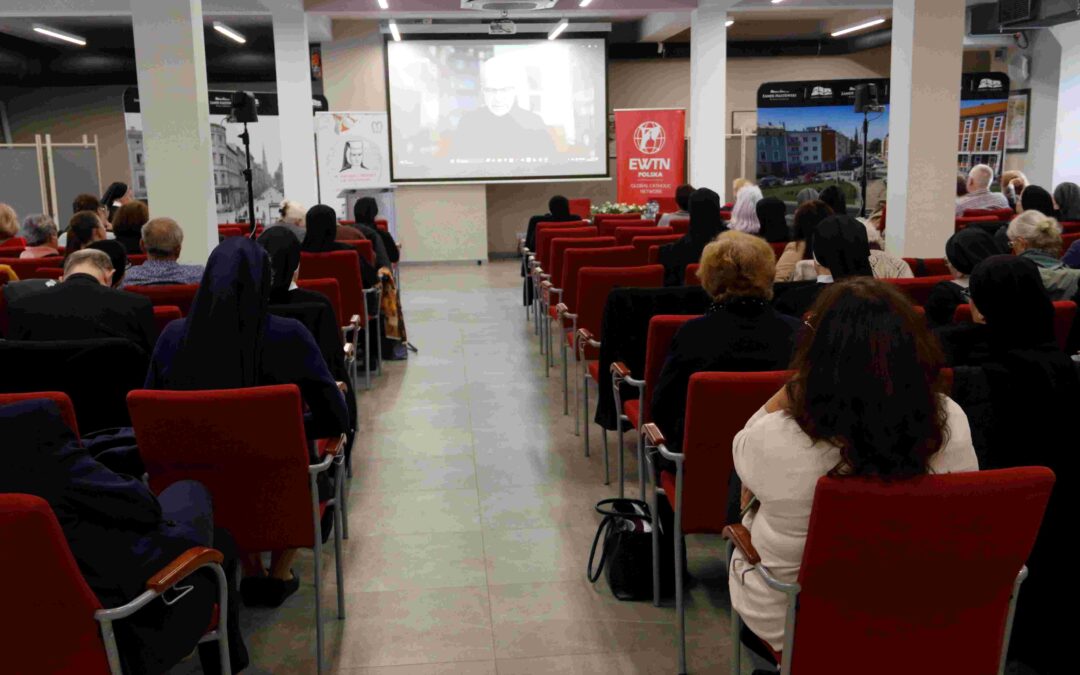
From May 15 to 17, 2026, Racibórz hosted the 5th Dulcissimian Days, a unique religious and cultural event dedicated to the memory of the Servant of God Maria Dulcissima Hoffmann. This year’s edition was particularly special, as it marked the 90th anniversary of Dulcissima’s death, who passed away in the odor of sanctity on May 18, 1936, in Racibórz-Brzezie. For several years now, the Dulcissimian Days have been a fixture on the region’s calendar of important spiritual and cultural events. They combine prayer, scholarly reflection, public debate, and the integration of the local community. The event was organized by the Sisters of Mary Immaculate of the Polish Province, together with the Racibórz County and the management of the Piast Castle in Racibórz.
The celebrations began on Friday with a prayer vigil at the Church of Sts. Matthew and James the Apostles in Racibórz-Brzezie, a place connected with the life and death of Sr. Dulcissima. It is in Brzezie that her grave is located, visited for years by pilgrims and the faithful seeking her intercession. A key highlight of the celebrations was an academic symposium titled “Sister Maria Dulcissima Hoffmann SMI: Teacher of Life and Death,” held at the Piast Castle in Racibórz. Speakers included clergy, theologians, and representatives from the academic world, who addressed the themes of suffering, death, and Christian spirituality. The lectures covered, among other things, the hospice experience, the spirituality of Polish mystics, and reflections on eternal life.
The first lecture was delivered by Rev. Prof. Antoni Bartoszek of the University of Silesia. The lecture, titled “The Mystery of Suffering and Dying in the Experience of Hospice Ministry,” focused on accompanying terminally ill patients. The speaker noted that the modern world often avoids talking about death, while the hospice experience reveals a profound need for presence, dignity, and spiritual support for a person at the end of life. The lecture had not only a theological dimension but also a very practical and humanistic one. The lecture by Fr. Przemysław Krakowczyk, SAC, titled “Becoming the Living Host: The Imitation of Christ in the Experience of the Polish Mystics St. Faustina Kowalska and the Servant of God Sr. Dulcissima Hoffmann” also generated significant interest. The speaker compared the spirituality of St. Faustina Kowalska and Sr. Maria Dulcissima Hoffmann, highlighting similarities in their experience of suffering and their total surrender to God. He emphasized that both mystics viewed daily hardship and illness as a path of spiritual maturation and service to others. In conclusion, he stated that: “Both mystics took up the same challenge: to become a living host for the Church and for the world.” In the third presentation, Regina Przyłucka introduced Sr. Dulcissima “among the young saints.” It was a reflection on the young people of the Church who, despite their short lives, left behind a unique witness of faith. The speaker pointed out that today’s youth need authentic spiritual role models, and the figure of the young Silesian nun can be an inspiration to many. The next lecture, by Fr. Dr. Aleksander Radecki, concerned preparing oneself for the moment of death. The topic “Readiness for Death: Dulcissima Prepares Us to Cross Over to the Other Side of Life” was deeply spiritual in nature and prompted participants to reflect on transience and the meaning of life. The priest emphasized that the Christian view of death should not be based on fear, but on hope and faith in eternal life. The final lecture was delivered by Fr. Prof. Marek Chmielewski of the Catholic University of Lublin. The lecture focused on the experience of death and life after death as depicted in the Holy Scriptures and the writings of the Church’s mystics. The professor cited the testimonies of individuals who, in their spiritual writings, described experiences of suffering, encounters with God, and the hope of eternal life. The lecture served as a sort of summary of the entire symposium, giving it the dimension of a theological reflection on the meaning of human life and transience.
On Saturday afternoon, during the Eucharist, Bishop Andrzej Czaja of the Diocese of Opole spoke in his homily primarily about the need to cultivate a deep relationship with Christ within oneself and about the spiritual legacy of Sister Maria Dulcissima Hoffmann. He emphasized that the life of the Silesian mystic was “a beautiful testimony to zealous cooperation with Christ’s work.” Bishop Czaja pointed out that Sister Dulcissima’s life shows us that even suffering and illness can become a path to spiritual maturity and a testimony of faith.
Another important element of the event was a discussion titled “How to Live in Order to Die Well? Death as a Stage of Life.” The participants in the discussion highlighted the need to regain a deeper perspective on the meaning of life, suffering, and transience in the modern world.
Sunday’s celebrations culminated in a Mass presided over by Bishop Adam Wodarczyk, auxiliary bishop of the Archdiocese of Katowice. After the Mass, the sisters invited all parishioners and guests to a family picnic in the convent garden. The day concluded with a magnificent May Concert of Sacred Music.
The Dulcissima Days are not only a way to commemorate Sr. Maria Dulcissima Hoffmann, but also an opportunity to build community and deepen spiritual life. Each successive edition attracts people interested in both the history of the Silesian mystic and reflection on faith, suffering, and the meaning of human life. The figure of Sister Dulcissima has for years aroused great interest among the faithful, clergy, and scholars of spirituality. Despite her severe illness, this young nun was able to maintain a cheerful spirit and deep trust in God, which is why she remains a model of perseverance and spiritual strength for many today. The ongoing beatification process ensures that the memory of her continues to grow stronger, and Racibórz-Brzezie is increasingly marking its presence on the map of Poland’s important pilgrimage sites.
S. Małgorzata Cur
May 25, 2026 | SPIRITUALITY
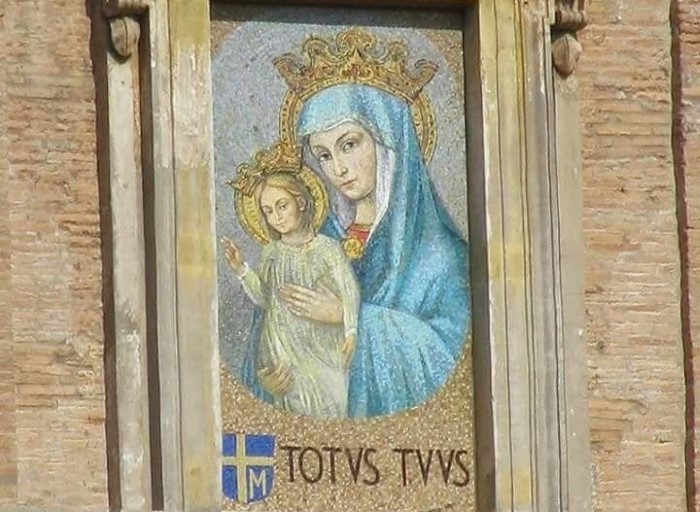
“The mystery of the Church is also reflected in the Blessed Virgin Mary: in her, the People of God finds an image of its origin, its model, and its homeland. In the Mother of the Lord, the Church contemplates her own mystery—not only because she finds in her a model of virginal faith, maternal love, and the spousal covenant to which she herself is called, but also—and indeed above all—because she recognizes in her her archetype, the ideal image of what she is to become. As we can see, the reflections on Mary—Virgin and Mother—contained in *Lumen gentium* teach us to love the Church and to serve in it the fulfillment of the Kingdom of God, which is coming and which will be fully realized in glory. Let us therefore allow this sublime model, Mary, Virgin and Mother, to speak to us, and let us ask her to help us, through her intercession, to respond to the call that flows from her example: Do I live out my belonging to the Church with humble and active faith? Do I recognize in it the covenant community that God has given me so that I may respond to His infinite love? Do I feel myself to be a living part of the Church, obedient to the shepherds given by God? Do I look to Mary as a model, as the most perfect member and Mother of the Church, and ask her to help me be a faithful disciple of her Son?” /Leo XIV, May 13, 2026/ Mary, Mother of the Church—pray for us
May 24, 2026 | DAILY BREAD
Pentecost Readings: Acts 2:1–11; Corinthians 12:3b–7, 12–13; John 20:19–23. On the Solemnity of Pentecost, the Church celebrates the fullness of the promise of the Risen Christ: the coming of the Holy Spirit. In the Acts of the Apostles (2:1–11), the Spirit descends upon the disciples, and each person hears the message of God “in his own language.” The Holy Spirit does not destroy human diversity, but enters into it and transforms it into communion. God speaks to every heart personally and intimately. In the First Letter to the Corinthians (12:3b–7, 12–13), Saint Paul teaches that the Holy Spirit makes us part of the one Body of Christ. Though we are many and different, the Spirit unites us into one living communion where every gift becomes service for the good of all. Unity in the Church is therefore not uniformity, but harmony created by the Spirit. In the Gospel (John 20:19–23), the Risen Jesus breathes the Holy Spirit upon the disciples. The Spirit flows from Christ Himself; Pentecost is therefore inseparable from the Resurrection. The same breath that raised Christ from the dead now gives life to the Church. Fear is transformed into mission, division into communion, and closed hearts into witnesses of mercy and truth. Pentecost reveals that the Christian life is impossible without the Holy Spirit, because it is the Spirit who makes Christ alive in us and through us in the world. Let’s reflect: Am I truly open to the Holy Spirit so that Christ may live in me, unite me with others as one body, and make me a witness who speaks God’s love to every person in their own language of life?
Don Giorgio
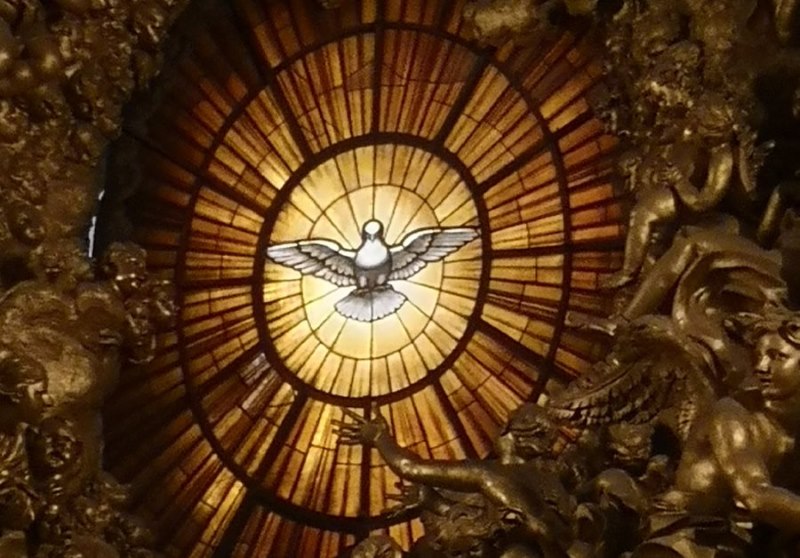
May 24, 2026 | SPIRITUALITY
“In one of its most beautiful descriptions of Mary, the Second Vatican Council tells us that she is ‘as it were formed by the Holy Spirit’ (quasi a Spiritu Sancto plasmata; LG 56).” /W. Stinissen OCD/ “There is a bond between the Holy Spirit and the Mother of Jesus, the mystery of which we seek to express by calling Mary the Tabernacle of the Holy Spirit or His Bride.”In those who have entrusted themselves to her, Mary “does nothing of her own accord; she does not employ her own methods of upbringing or her own way of loving. She loves and teaches just as she herself was loved and taught by the Holy Spirit. In the life of a person who entrusts themselves to her, she acts like fire – purifying their heart, enlightening it and uniting it with her Son, just as fire binds iron together. She acts like the wind – directing the events of life in an incomprehensible and mysterious way, but always with the aim of achieving the highest good. Finally, she acts like a dove – surrounding us with tender and loving care.” /Jerzy Zieliński OCD/Mary, we entrust ourselves to your care and guidance with even greater trust. Teach us not only to receive the gifts of the Spirit and to possess them, but also to develop them within ourselves and to make full use of them, for the glory of God. May the work of the Holy Spirit in us and through us become ever more visible and fruitful as the days, months and years pass, moment by moment – for the good of those whom God has entrusted to us.
