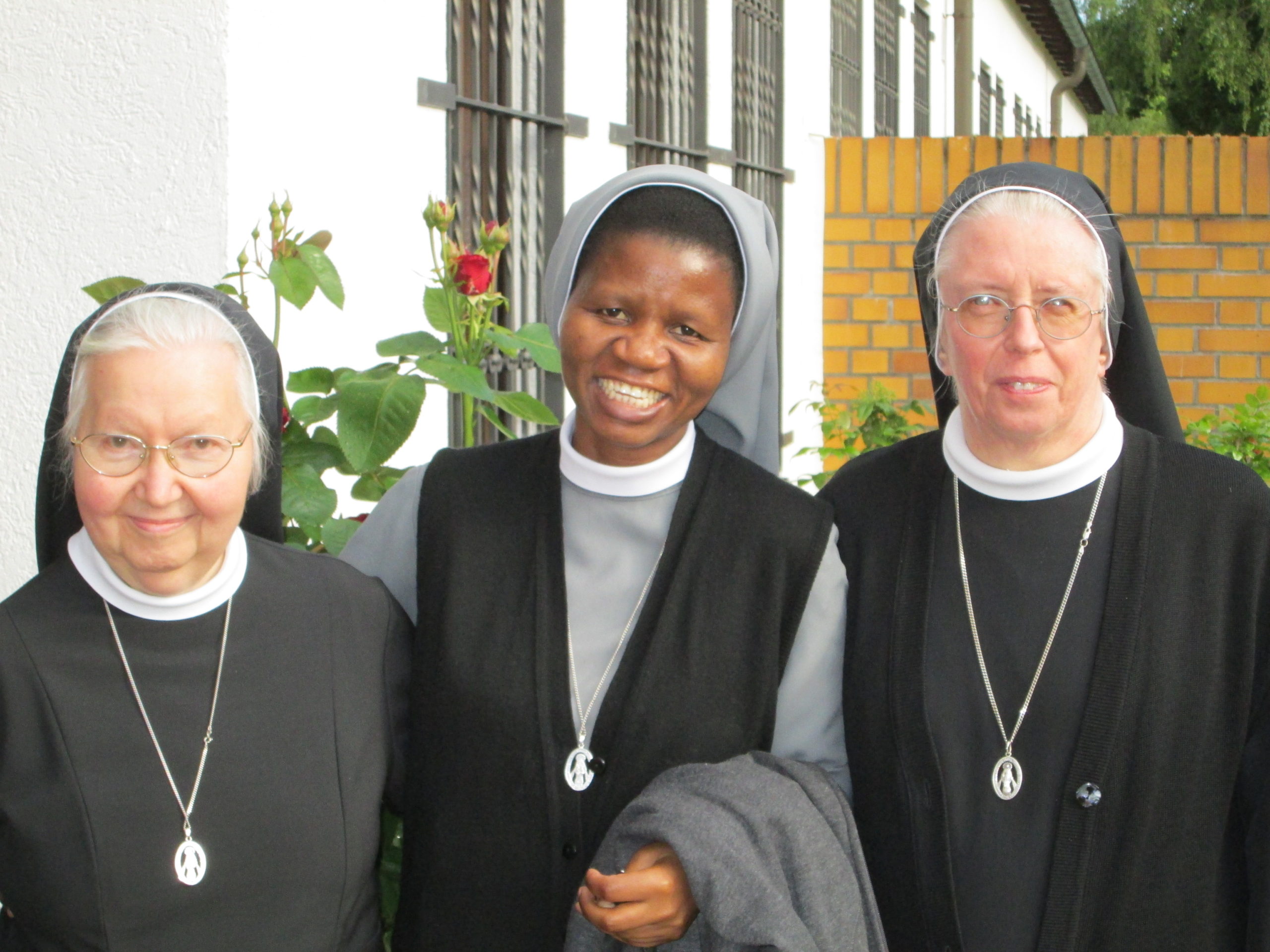
Sister Borgia’s account of the sisters’ displacement in 1954 to Otorowo
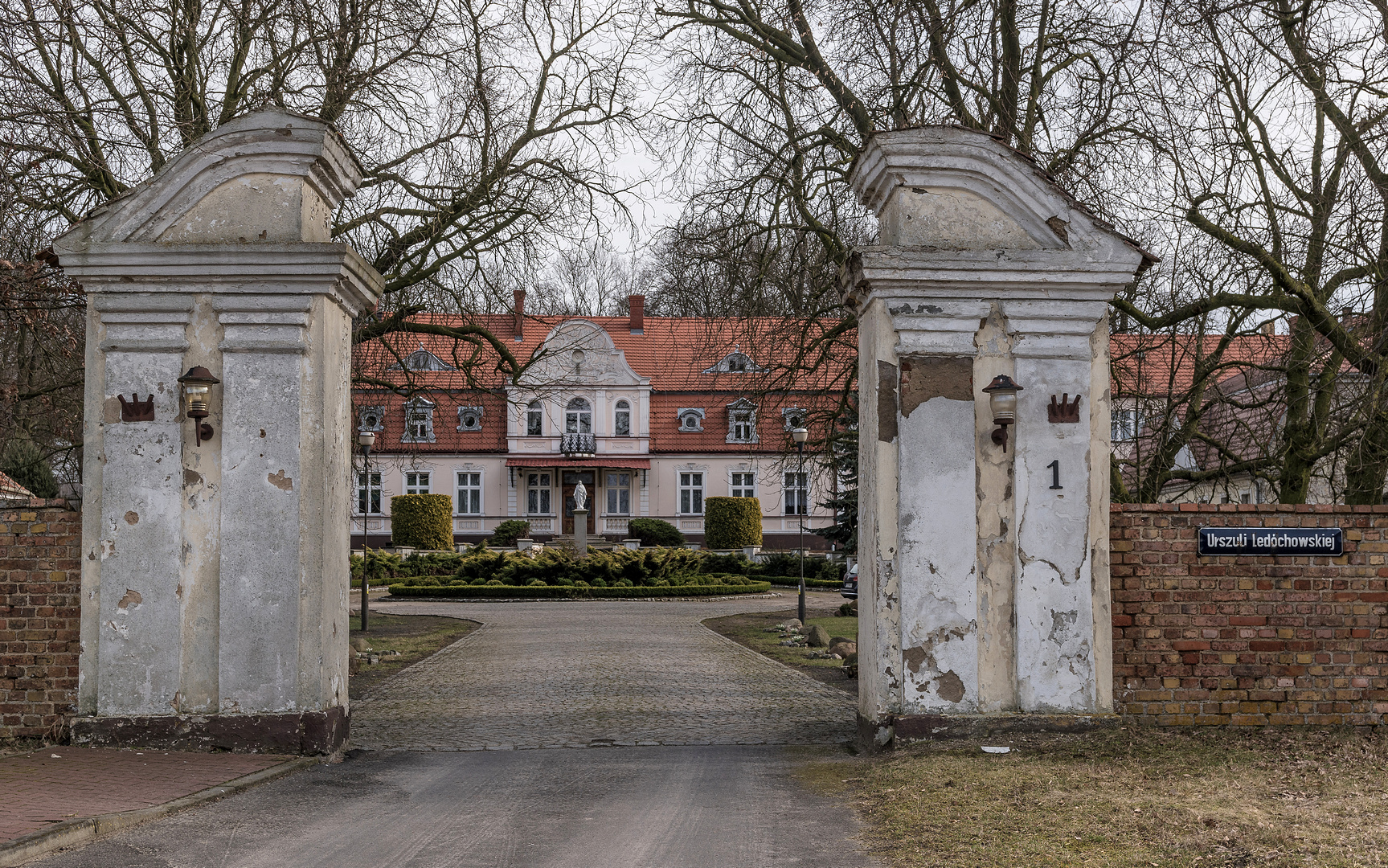
It is 1954. At that time, I was at the post in Ścinawka Średnia. There were seven sisters in the community: six sisters dealt with the care of the sick in the health center, work in the delivery ward, care for the elderly in the center and work in the field, one sister was a sacristan. I will remember August 2, 1954 for the rest of my life. It was the day we found out about the deportation. At 5:30 a.m. the military arrived in their cars to our house, at that time we were in the chapel. We had to pack right away, we had about 2 hours to do it. We were scared and didn't know where they were taking us. We were packing up in a hurry. We felt panic and uncertainty. We asked the policemen where they were taking us, but the only answer we heard was that we were going "on vacation". We had to pack all our things: furniture and livestock (two cows, two pigs, chickens, ducks). They ordered us to take the Blessed Sacrament to the church. I would like to add that at that time the elderly who were with us in the health center were taken to another home. A few hours after the arrival of the police, we were on our way to Wrocław. We were brought to our motherhouse, where we spent the night. The next day, they drove us to Karłowice (a district of Wrocław) to the Franciscan Fathers, where we stayed overnight. There we met our sisters from other institutions. The next day, we were loaded onto three buses marked "TRIP". We still did not know where they were taking us and for what reason, so we tried again to ask the policemen who were guarding us, but we only received an answer that "we are going to our destination", and later said that to Siberia. So we thought they would really take us there, and we prayed fervently for survival. During the trip, we made a few stops in the woods for a short break. These stops were under the control of the security authorities because they were afraid that one of us would escape. We arrived in Otorowo in the evening of August 4, 1954. It was a convent of the Ursuline nuns, but for that time the sisters left their convent. When we arrived some of our sisters were there. There were 153 of us in total. They told us to look for rooms and take places. They showed us a park nearby where we could take the cattle out. For the first three months, we were dependent on the state authorities. The conditions were like in prison - we could not leave the camp grounds, beyond the gate, we were under the control of the police all the time, at the beginning there was no electricity, heating or hot water. Our food was very modest, the sanitary conditions were not the best, it was cramped (a dozen or so of us slept in one room). There was a chapel in the camp, where we prayed together every day, morning and evening. The chaplain lived there and celebrated Holy Mass and evening services every day. In addition, we were under the spiritual protection of a local priest, dean from Pniewy, from the convent of the Ursuline nuns. After 3 months, we were ordered to work for the state under the supervision of officials under the so-called productivization. Sewing rooms were created and I was ordered to sew in the piece, shift and band system. We sewed underwear, shirts, pajamas, chutes, we embroidered "tabs" for railway uniforms as well as hats and caps that I sewed. We were tearing the feathers. We worked from 7 am to 4 pm with an hour break. We worked all the time under the supervision of the guards. We received money for the work, thanks to which we could survive until the camp was dissolved. During our stay in Otorowo, we had no contact with our family or people from the area, because the camp was closed. Some of us worked in state farms during harvesting, digging, grooming cows, pigs, spreading manure, it was work performed only under the control of security office officers. There were secular officials working in the camp, who dealt with supplies and issued us passes. On December 8, 1954, in camp conditions, we celebrated the centenary of our Congregation. Throughout this time, religious vows and anniversaries were normally held. At the end of 1956, the civil authorities of the Szamotuły district informed us about the dissolution of the camp and the possibility of returning to the place of our previous stay. So I returned to my post in Ścinawka Średnia. During our absence, our house was still a health center with a delivery room. Initially, we only received one room, we had to recover the next rooms with great effort, because they were inhabited by lay workers. The caretaker of the house turned out to be particularly unpleasant, even cruel, who stubbornly refused to leave the premises. The rooms we recovered were devastated, dirty, there were bugs everywhere (all rooms had to be decontaminated). We had to renovate everything ourselves because nobody wanted to help us. We worked day and night to bring the house back into a state of living. This work affected our health, but we thanked God every day for being with us, for giving us the strength to bear it all. S.M. Borgia Drobina
Are we a burden for the other?
Are we a burden for the other? It’s good to ask this question because, sometimes the way we are, it could be like that especially when we are lazy. But actually, before we become a burden to the other, we are a burden to ourselves. What is projecting to the other, is just a reflection of what you are to yourselves. Unfulfilled aspirations, failed projects or other disappointments can create the burden in you which you eventually push over others. So, don’t let the failures or shortcomings become a burden in you. Trash it and liberate yourself, so that you can work hard not to be burden for the other. Don Giorgio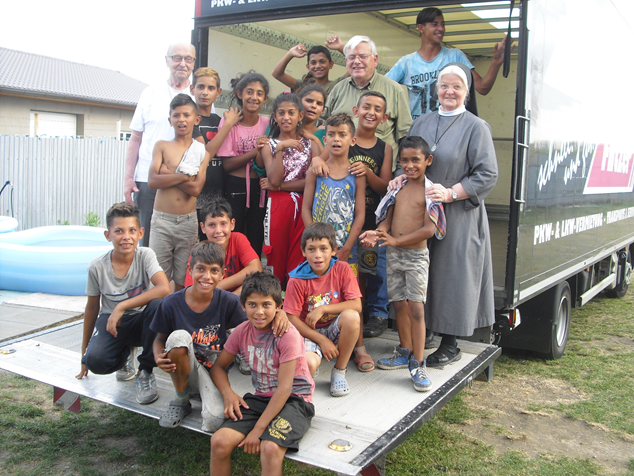
The summer trip 2021 – from Maria Laach to the Rome Habes camp
and I was there ... how did that happen? Five years ago I took part in a retreat in Maria Laach and then I saw the appeal for donations for the Roma camp in Slovakia by P. Basilius. Among other things, I read - that mattresses are needed and I became aware ... because it was precisely at this time that the mattresses had to be replaced in our senior citizen center in Cochem - "only - because they no longer corresponded" to the norm - therefore they should be disposed of. But they were rescued and taken into the camp. Yes, that was my first contact with this project and I was and still am thrilled with the commitment - the Benedictines, especially Father Basilius, campaigned for this cause. It was clear to me from the start that we, the Sisters of Mary, would like to support that. I got more information so I could get in here Tell about it in our house, in the women's community and with my friends. At our Advent, Spring and Autumn Bazaars and all the other events in the house, there was always a stand - with a wide variety of things. The proceeds were then intended for "my Rome children". Of course, this further strengthened the connection and every time a transport was planned, I started a call on site and I am overwhelmed by how donation-happy the employees and the Cochemers are. So we can do something for these people in our prosperity. After each tour everything was reported in detail and it became clear to me - I have to go there too. I had already planned to be there for the summer tour last year ... but ... Corona thwarted my planning, also in autumn. But now the time had come…. Mr. Lingenthal informed me in June that a trip is planned for the end of July. Of course I was enthusiastic about it and even more - that Father Basilius is going with me. But I had to do a lot for my absence in my convent with my fellow sisters who had grown old plan - and organize - because they cannot be alone. But I thought ... if it should be that I should go with you - this cannot be a problem and so it was. A co-sister came to represent and started on July 27th. Arrived in Maria Laach, the Cologne runabout was already in front of the camp and it was already invited. After P. Basilius The travel prayer and travel blessing had given - our journey - which was so professionally planned and prepared by Mr. Michael Lingenthal - started. I was just curious what to expect…. the long drive, the border controls, vaccination control ... .. traffic jam ... etc. We were all surprised that there were no complications on the whole trip (there and back). After an overnight stay at the Inn - there was a meeting with the ambassador in Bratislava. Yes, and on July 29th we got closer and closer to our goal and the tension increased. In the communication center of Caritas we were expected and welcomed happily by the team of employees and the children. After unloading, there was a little candy for the hard-working helpers and only bright children's eyes. The children soon went home. In the evening we met with the staff there in the center, talked and of course ate together. Mr. Rado was the interpreter - not just me but everyone felt comfortable - you could feel it. The next day our ways parted - because Mr. Lingenthal and Mr. Rado had a conversation with the mayor in Secovce. Father Basilius and I were picked up by Sister Bernadetta (Redeemer Sisters) and the interpreter, Mrs. Kristina, in Trebisov - we were with the mayor there - Sister Bernadetta knows well and is very Rome-friendly. After this meeting we went to Sister Bernadetta's convent - something completely new for me, because the 3 sisters do not live in a convent - but in a prefabricated building on the 5th floor. The hospitality with them could be felt immediately - because it smelled of fresh cake, which was then served immediately. It was a very good atmosphere - we couldn't speak Slovenian and the sisters couldn't speak German - but we still got on very well. Sister Bernadetta then showed us briefly the Rome camp in which she works. For lunch we went back to the Caritas center. Soon the children came and the bathing fun began for them. Very disciplined and happy children That afternoon we also went to the camp on site. Some children have accompanied us because they live there with their families. On the way there I became very different, because something like that - in my whole life I have not seen yet For me they were decisive encounters - with this poverty and the people. I imagined the situation there was bad but the reality was much more extreme - you can't imagine it ... you have to see it ... I am very happy that I was able to take the opportunity and ride with them. Yes, I have been newly motivated to be grateful myself and I will continue to contribute to these people in the future - even if it is only : A drop in the bucket is up. It is worth it….!!!! I would like to take this opportunity to express my special thanks To the wonderful tour company - Father Basilius, Michael Lingenthal And all the many, who accompanied us with their prayers. Thank you very much !!! Sister M. Felicitas (from Cochem)