I became a nurse from a seamstress and the miracle of Madonna dell’Arco

I became a nurse from a seamstress and the miracle of Madonna dell’Arco

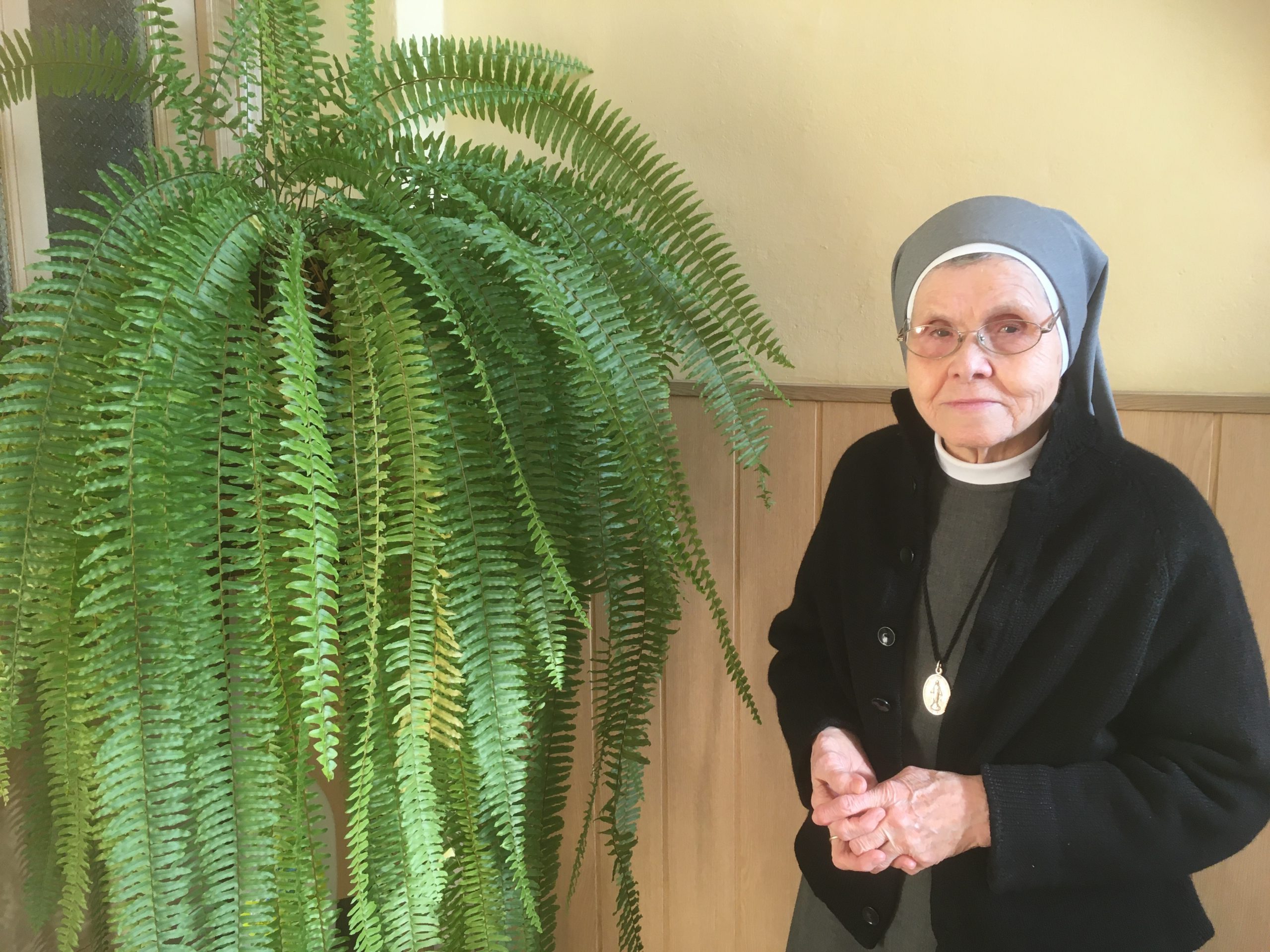
I would like to share a story that happened while I was working in a hospital in Naples. I will start my story with how it happened that I became a nurse, went to Italy and at a miracle in the hospital ward. I entered the Congregation when I was 20 years old. I started my candidacy. I remember very well one of the first words that Mother superior (Mother General representative in Poland) said to me then: "The candidate will be a nurse". These words were very memorable to me, but with time I had to forget about them…. but Mother superior did not forget them. I started my novitiate. We had various lectures during this time. There was also one sister from Katowice (I don't remember her name) who taught us how to give injections and how to perform basic nursing activities for the sick. When I was in the second year of the novitiate, we were informed that the sisters were to be transported to Otorów near Szamotuły, to a labor camp. I remember when Mother superior made the decision to strip the novices from their sisters in order to protect them from deportation. They were to take their personal belongings to their family homes. I was also supposed to pack my things, take them to my family home and come in secular clothes to the sisters' community in Nysa. And so I did. The sisters in Nysa welcomed me kindly. Soon they put me in the habit that was left by my deceased sister. Although it did not fit me and was too big for me, I was happy to be able to wear it again. Unfortunately, I did not enjoy it for long, because soon at the gate, someone dropped us a letter informing us that they wanted to take us to a labor camp, so they ordered me to undress again. It must have happened about three times when they dressed and undressed me like this, but I knew it was the only way to save me from deportation. Herezwit's sister was in Nysa, she ran a tailoring course for girls. Since I was already studying sewing as a teenager in business school, I started helping her learn sewing. After a year in Nysa, Mother superior "remembered" what she told me when I was a candidate and that is why she moved me to Jaszkotle. There, in addition to working in the house, I visted the sick in the villages and gave them injections. I went from Jaszkotle to a nursing school in Warsaw for two years. After graduating from school, she returned to Jaszkotle. Then I was transferred to Ścinawa, where the sisters worked in the Health Center: in the delivery room, in the vaccination center and in the surgery room. There I was supposed to be a superior. I remember how I felt sorry to leave Jaszkotle and when we got off the train with my sister Helena, who was taking me away, she noticed that I was sad because I was going into the unknown, I did not know who I was going to work with. She started showing me the advantages of this place, saying: "look how nice it is here, the stream flows here, the birds sing so nicely" and then I replied: "but it's so strange". But God was with me. I started working at a vaccination point and traveled to the villages to visit sick people. There were 15 villages to handle. I worked there for 10 years.  
  1. To this day, I can hear the ringing of the telephone and a voice in the receiver that says: "Sister Vincentia, you will go to Italy. Get ready and quickly because the director of the hospital wants one sister to come to work in the hospital ward ”. I must admit that I felt sorry to leave because I got close to my sisters and people. After all, I didn't know Italian and I was going again into the unknown.
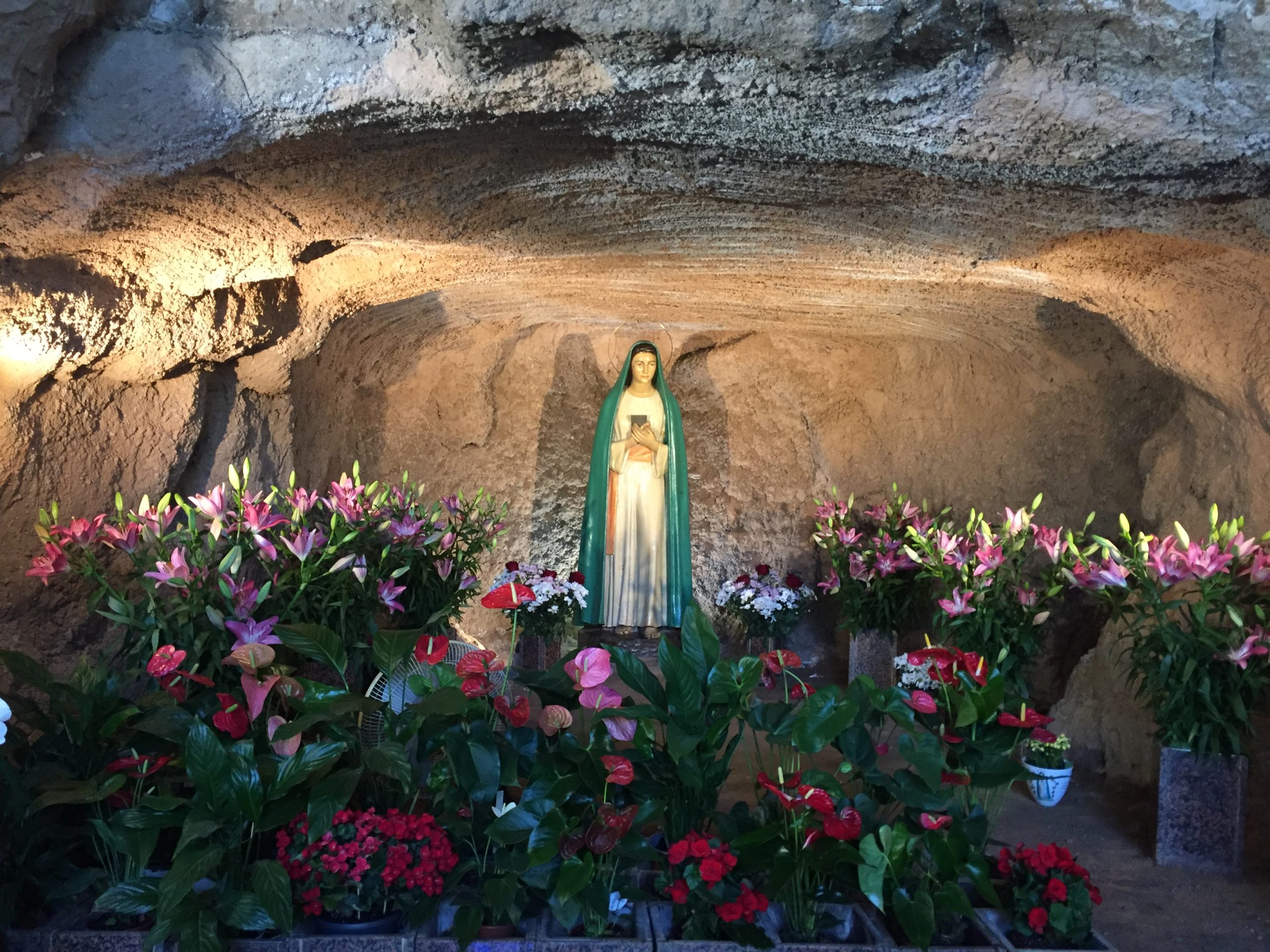
As I have already mentioned, I came to Naples without knowing the Italian language. I started working in a hospital, people welcomed me very kindly. They supported me not to worry about the language, but to learn patiently, at least two words a day and in some time I will be speaking perfectly. And so I did. Despite the unfamiliarity with the language, I started working in the ward right away and only thanks to God's care and help I did not make any mistakes. People from the hospital liked to work with us - sisters, they made us feel it more than once. They trusted us. They confided in us with their various family and marriage problems, and we gave all these matters to God in prayer. During my work in the hospital, a miracle happened that I would like to tell you about. One day, in the ward where I was working, there was a woman who gave birth to a baby boy. After giving birth, her health began to deteriorate. She had the so-called eclampsia (this is eclampsia that occurs as seizures or loss of consciousness in pregnant or postnatal women). This condition lasted for two weeks, she felt into a coma, she did not react to anything. Doctors did not give her a chance to survive. I felt very sorry for this woman, she had just given birth to her first child and was going to die soon. Every day she was visited by a midwife who performed nursing activities for her. One day I met her in this lady's room. I asked "will this patient really die?" She replied that "there is no salvation for her anymore." Then I told the midwife that I had the oil from the wonderful place of Saint Anastasia with the painting of Our Lady dell'Arco, and I wanted to anoint the patient  with it. (Let me just mention that the Dominican fathers who look after this sanctuary on the day of the indulgence always bless the oils that people can take away.) I also proposed a joint prayer for: either God give her a peaceful death or restore her health. She responded to it willingly. I remember how I knelt on one side of the bed and the midwife on the other. And just as it is done in the anointing of the sick, I made this sick woman a cross with this oil on the forehead, on the hands and on the feet. Our prayer did not last long. After a while the lady opened her eyes and sat down on the bed. We cried out. After a few days, she returned home with the baby. Our Lady saved her! It was one of the most moving events that I experienced in my 21 years working in a Neapolitan hospital. I remember that time very well and with great sentiment. S.M.  Vincencia Wróbel     * * * The beginning of the cult of the Virgin Mary with the title of Madonna dell'Arco is associated with the episode that took place on April 6, 1450, on Easter Monday, in Saint Anastasia (today in the Province of Naples). At the edge of the field, there was a chapel with a painting (hence the names Madonna dell'Arco and Pomigliano d'Arco) under the arch of the aqueduct, with a painting of our Lady with Baby Jesus. During a village festival, young men played "palla a maglio" (ball with a hammer) on the field. The game consisted in hitting a wooden ball with a hammer, the one who made the ball fly further won. One of them missed and lost the game, so the ball hit the linden tree, whose branches partially obscured the wall covered with the image of our Lady with the Baby Jesus. The loser in a fit of anger, picked up the ball and, cursing, threw it violently at the sacred image, hitting it on the left cheek, which began to bleed as if it were a living body. The news of the miracle quickly spread across the country, reaching Count Sarno, a local nobleman, the Great Executioner of the Kingdom of Naples. He released the young man, but after observing the miracle and carrying out a shortened trial, he sentenced him to be hanged, on the same July that sheltered the image of the Mother of God. After twenty-four hours, the tree was withered These miraculous events sparked the cult of the Madonna dell'Arco, which immediately spread throughout southern Italy. Crowds of believers poured into the miracle site, so it was necessary to build a small church out of the offers received to protect the holy image from the elements. http://www.santiebeati.it/dettaglio/91177 https://www.fanpage.it/napoli/la-storia-della-madonna-dellarco-e-dei-suoi-miracoli/
The three Fountain Springs – little known history

The three Fountain Springs – little known history

The  Three Fountain (Three Springs) on Via Laurentina in Rome is a well-known place, because it is  the place where the martyrdom of St. Paul took place. Legend has it that when St. Paul was beheaded as a result of the persecution of Nero, his head bounced off the ground three times before stopping. Suddenly, three springs gushed out of the ground, that is why this place is called "Le Tre Fontane", or "Three fountains". Near the place of the martyrdom of St. Paul, the Mother of God appeared, but let's start at the beginning; In 1913, in a stable on the outskirts of Rome, Bruno Cornacchiola was born. He was not baptized until his father returned from prison. He grew up and grew up in the godless environment of Roman slums, where almost all criminals and prostitutes lived. There were constant arguments, curses and beatings in Bruno's house. The older ones ran away from home at night. One day, when Bruno was wandering around the building, a monk became interested in him and took him to a convent. He was fed and washed there. The sisters started teaching him the catechism. After 40 days of preparation, sixteen-year-old Bruno received his First Communion and the sacrament of confirmation. At the age of 20, he was drafted into the army. After leaving the military service, Bruno Cornacchiola married a girl he had known from childhood and only thanks to her insistence, he agreed to a church wedding. Then Bruno joined the Communist Party. He went with the Italian army to Spain for the civil war, where he began to spy for the communists. In Zaragoza he met a German soldier who had impressed him a lot, he belonged to a Protestant sect and breathed hatred towards the Pope and the Catholic Church. Since then, hatred of the Catholic Church in Bruno grew to such an extent that he bought himself a dagger and wrote "Death to the Pope" on it. After the end of the war, he returned to Rome and began to  work as a tram conductor. It was during this time that he made contact with Seventh-day Adventists. Bruno was very committed and zealous in fighting the Catholic Church, the cult of the Mother of God and the Pope, and did his best to convince as many people as possible and make them adhere to the Adventist sect. This prompted him to deliver a speech in Piazza della Croce Rossa, in which he was supposed to ridicule the worship of the Eucharist, the dogma of the Immaculate Conception of the Blessed Virgin Mary. It was a great honor and an opportunity for him to become a pastor. For this reason, on Saturday, April 12, 1947, were going to Ostia with his children;  10-year-old Isola, 7-year-old Carlo and 4-year-old Gianfranco. They missed the train, so he decided to go to ‘’Via Laurentina alle Tre Fontane’’ the three fountains’’ to prepare his speech in peace. It was  a beautiful sunny day, the children started to play in the eucalyptus forest and Bruno was preparing his speech. There was a grotto near where they were. Bruno checked from time to time where the children are and what they are doing. One moment he did not hear the answer of the youngest son, he started looking for him very concerned. He reached a nearby grotto and found a child kneeling with his hands folded in prayer. Bruno called the other children. Upon arriving, they also kneeled in front of the "beautiful lady" who was in the grotto and whom only Bruno could not see. Bruno was terrified, his children were pale and motionless, he did not know what to do, he worried about his children, in his helplessness for the first time in a long time he asked for the Lord's help with all his heart. At this point, the darkness of the grotto brightened and he also saw a "beautiful lady". She was about five to seven feet, had a white dress with a pink band around her hips, dark brown hair and a green cloak around her head and hips, and hold a Bible in her hands. The Lady introduced herself as the "Virgin of Revelation." She said: "I am the Virgin of Revelation, and Revelation is the words of God that speak of Me as well. You are persecuting me, but it is high time you stop this. Come back to the holy communion of the Catholic Church. ”The first Fridays of the Month offered to the Sacred Heart of Jesus, which you celebrated, encouraged by your concerned, faithful spouse, before you finally embarked on the path of error, saved you. She talked to Bruno for an hour and a quarter: she explained to him the meaning of prayer, invited him to confession and delivered a message to the Pope. Finally, she smiled, bowed and gradually disappeared, leaving only a beautiful scent in the grotto. Before she left, the Virgin of Revelation left him a sign, dispelling his doubts, confirming the credibility of God's message, and rejecting Satan's actions. The sign was about the announcement of Bruno Cornacchiola's future meeting with the priest, who would verify the truth of the apparition. After returning home, Bruno told his wife what happened and asked her forgiveness for his earlier behavior. Bruno Cornacchiola had subsequent apparitions on May 6, 23, and 30. On October 5, 1947, on the feast of Our Lady of the Rosary, the largest rosary procession in the history of Rome took place. It began in St. Peter and walked through the streets of the city to the grotto of Tre Fontane. Three pairs of white horses pulled a cart with a large statue of the Virgin of the Revelation blessed by Pope Pius XII. At that time, the Holy Father consented to the public worship in Tre Fontane and entrusted the Conventual Franciscans with pastoral care over pilgrims coming to the place of the apparitions. This place became a destination for pilgrimages, where many healings and conversions took place. On April 12, 1980, the 33rd anniversary of the apparitions, 3,000 people witnessed the solar miracle. This phenomenon repeated itself two years later .. Bruno Cornacchiola also met with successive popes: on July 8, 1959, he was received in private audience by Pope John XXIII, and on October 17, 1973, he met with Paul VI. He was also at a private audience with John Paul II. Thanks to the decision of Pope John Paul II, on March 17, 1994, Cardinal Camillo Ruini issued a decree ordering the construction of a church on the site of the apparitions, and on April 2, 1997, St. John Paul II gave this church the title "Holy Mary of the Third Millennium in Tre Fontane". Sr. Weronika Wojciechowska
Unity of hearts is challenging

Unity of hearts is challenging

Unity of hearts is challenging because it is where my uniqueness meets the uniqueness of the other. Often the uniqueness of the other is presented as a threat to me. Especially if I fail to see the good in the uniqueness of the other which will enrich me. And there is no real unity if I fail to see the uniqueness in the other. So, this is challenge. Only the Spirit of God who is the cause of our uniqueness can bring the real unity where you see the uniqueness of the other and welcome it as complementing your uniqueness. Realize the need of the Spirit of God in between persons and make sure the presence of the Spirit of God in between you and the other for a perfect unity. Creating unity is creating heaven for you and for the other. Don Giorgio
The value of a community

The value of a community

Start with a spiritual exercise. Ask yourself: What is the value of a community for you, or more specifically: what is the value for you of this community in which you now live or in which you previously lived? And I'll tell you right away: Don't just look at this question in theory, but in everyday practical life. I think that the pursuit of unity depends largely on the value you place on community. If the community is of value to you (and not only on paper in a constitution, but in everyday life), then you will also want to meet the concerns of the founder, Rev. Johannes Schneider, and seek and deepen the unity.   1 + 1 + 1 = 3 Why do people form a community? There are many good reasons for joining a community: - Strength in togetherness Men and women can very quickly be overwhelmed by tasks, difficulties and hardship. The experience of not being alone strengthens everyone in what they do. You can achieve more together than alone. - Difference in diversity Creativity plays a big role in our lives. This applies to the design of everyday life as well as to solving problems. Working groups are therefore often formed. A community is a good space in which ideas can grow and develop. - Joy in the community By joining forces (e.g. when doing sports and games, experiencing nature, making music and singing, while traveling) people experience a lot of joy. All of these experiences can be summed up briefly: Community strengthens and helps the individual. Or expressed mathematically: 1 + 1 + 1 = 3   More than the sum of the individuals The criteria just mentioned speak in favor of a community, but are not necessarily mandatory for such a community. Each individual could also live a spiritual life without belonging to a community. You can also see and experience that: that a community is only sought and lived when I have a need (e.g. need for support). - But I dare to say that this alone is not enough to strive for unity. That is only possible if I see something “more” in the community that is valuable and worth striving for to me.   The value of communication The following exercises were carried out at marriage seminars: Each couple should build a house with already labeled blocks. What was important to them was put in the foundation, what seemed unimportant to them was put on the rubble. The houses were then presented. Many couples have reported that it was not the presentation of the finished house that was decisive, but that the communication that took place during the construction of the house was particularly valuable.   The value of the superfluous There is a great temptation to distinguish what is necessary from what is not necessary in life and to separate yourself from everything that is not necessary: ​​I do not need that, it is superfluous. An interesting experiment in addition. To stand you need a few square centimeters of earth on which you have placed your feet. But if the earth (or better: the ground) were withdrawn from you all around, you would quickly get dizzy and scared. Even if I don't need the floor around me to stand, they give me support and are important. Spiritual exercise: collect in a table (with 2 columns) what is absolutely necessary and what is not absolutely necessary at first. And then go to the second column (not necessary) and see what value these things have for you.   The value of others The strongest motivation for the value of the community still seems to me to be the appreciation of the individual. Joining a community is often shaped by the appreciation of another. Incidentally, calling stories also often have their origins in the fact that I learned to appreciate and love someone.   Search and deepen the unity The value I see in the community is a good motivation to strive for and deepen unity. To put it provocatively: whoever sees the community as merely a functional association will use every opportunity to step out of the community internally and perhaps also externally. Conversely, however, the value that a community has for me can promote my own identification with the community and deepen my contribution to unity. Or again expressed mathematically: 1 + 1 + 1 = 4.   Prelate Dr. Stefan Dybowski June 17th, 2021 monthly lecture St. Augustinus Monastery, Berlin-Lankwitz
“”Under the ashes a secret fire” (part 2)

“”Under the ashes a secret fire” (part 2)

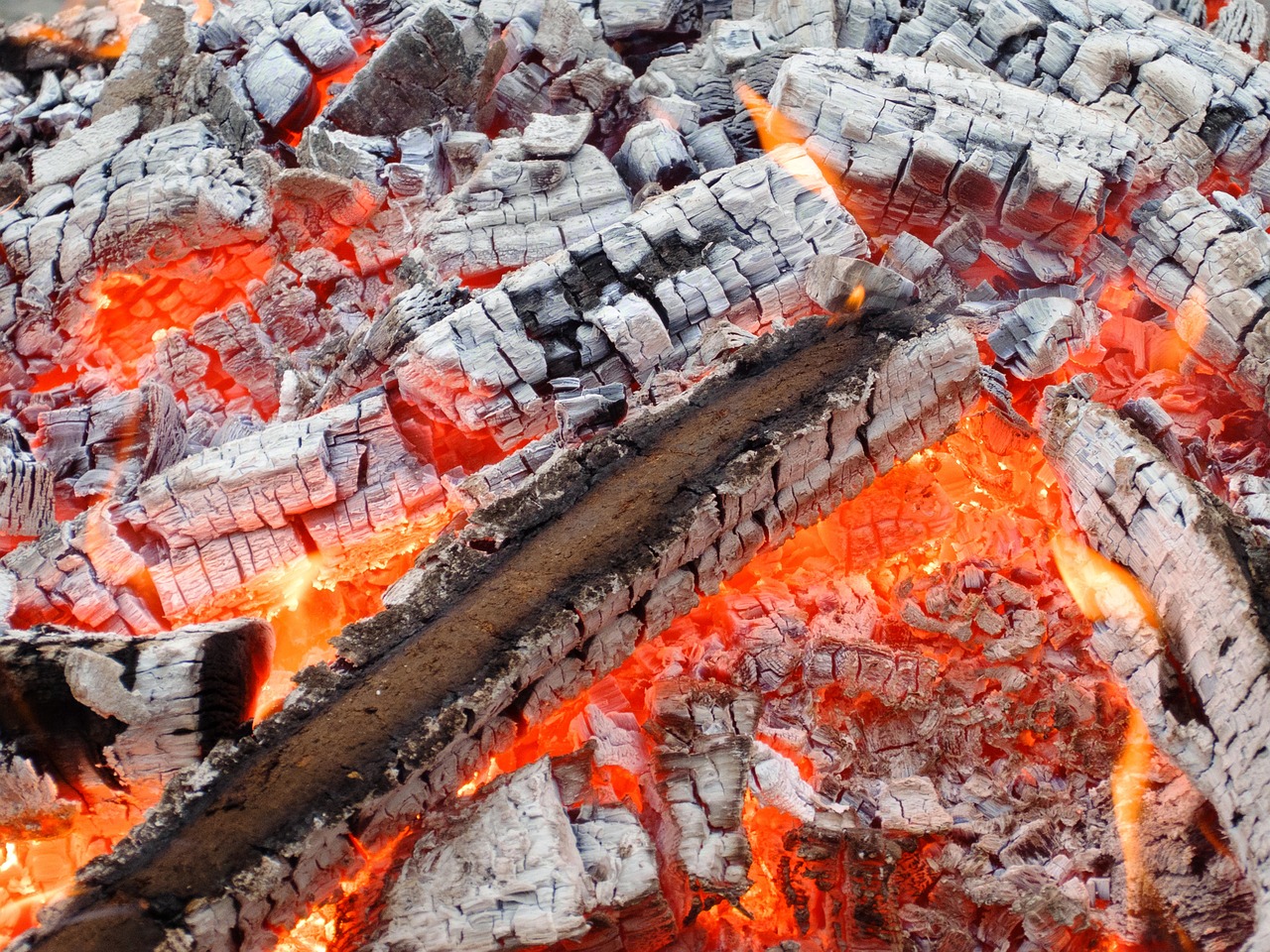
In this 2nd article on Sr. Joan Chittister's book, I would like to invite you to reflect on religious vows, specifically the vow of chastity that Sr. Joan made in chapter 11 of her book in the context of sexuality, perfection and devotion describes. Sr. Joan has given this chapter the title “Call for Love”. And again I have to say that these pages, like the entire book, are a kind of explosive, a challenge and provocation that force you to rethink principles that have been lived and believed up to now. But those who face this challenge can experience a vastness and liberation, especially in this vow, which is often seen as a restriction, which enriches life and makes it worth living. Sr. Joan describes, among other things, how chastity was lived and understood over centuries, especially in women's communities: “Religious life became an exercise of disembodiment, a spirituality of genderlessness, distance, security and fear ... In such a climate the encounter between people was at the bottom of the ladder of spiritual development. Friendships in the communities were limited to fleeting contacts ... Life was there to be denied ... Work replaced human relationships. Community life became a life in which strangers learned to be lonely with one another. " The author describes the situation as it was common in most women's communities until a few decades ago. And even if we have been trying, at least since the 2nd Vatican Council, to open ourselves to a new and contemporary order theology and to revise our constitutions and rules of life accordingly, this centuries-old thinking is still written down in our heads in many ways. And a traditional thought pattern to change a mentality is one of the most difficult and tedious tasks and challenges. But the author also shows what vision she has for life as a religious and how it can succeed in integrating chastity, sexuality, love and the ability to love in religious life: “A chastity that makes love and friendship impossible, that distrusts privacy and refusing to allow personal feelings, misses the point of chastity. Chastity is not about not loving. It teaches us to love well, to love generously, to love energetically. ”And elsewhere:“ The ability to show feelings is a gift. If she is circumcised ... she will corner people. If it is released, the soul gets wings…. Without love, life dies away and leaves us empty-handed. " In this context, I remembered a meeting with fellow sisters on the subject of chastity and sexuality in religious life. We talked about the fact that our body, even our sexuality, is a gift from God, nothing unclean and bad and that we, as women religious, must also become aware of these gifts. Even if we do not live out sexuality, we have to accept it and channel its energy, tenderness and the ability to love and give it to all the people we serve. In this way, it helps and enables us to love ourselves and others without tying us to one person. For many sisters (all of them at an advanced age) this was a revelation and liberation. One sister said: We should have been told that years ago. Sr. Joan put this in a nutshell: “Love without sexual practice, wonderful because of its tireless attention, teaches us the beauty of the loving soul and the fulfillment that accompanies the overwriting of the self, the I-am, for the sake of others . To teach chastity without love means as much as teaching spiritual exercises without God. " I want to end my remarks with the opening quotation of Chapter 11 “Call for Love”. In my opinion, this quote from Henry Ward Beecher sums up everything the author has written on the subject: "I did not know how to worship and worship God until I knew how to love." I hope I have made at least some of you want to read Sr. Joan's book not just in part, but in full. It's worth it, even if it makes us uneasy at first. But it leads further, broadens our horizons and gives us an idea of ​​the beauty of religious life, which we often overlook or cannot see in our everyday life because its beauty is encrusted and hidden under the ashes. May the book help us to rekindle the embers, indeed the fire, in us! Sr. Petra Ladig