


SMALL CHRISTIAN COMMUNITY AND SACRAMENT IN AFRICA
First of all, it is better to know the background. What is the Christian community? It is the connection and solidarity that families share in order to help each other in any way of life such as their problems, joy, love, peace, and humility in their Christian life in the church (Act 2:42-47) The church in Africa, especially the countries of AMECEA (Southern and Eastern countries), have a system to simplify evangelization. Namely, to invite the Christian near by the apostolic activities and to share the ministries of the church. This begins with small communities and even individual families. When we speak about the needs of small, Roman Catholic communities, we include the sacraments and other needs as Roman Catholics. There are some orders to follow: first, they should contact the leaders of the small community of his or her local zone to see if there are any needs; second, they offer a letter of introduction to the parish priest and other local, church leaders. That is the standard way of getting to know the community, leaders, and its needs. So, the catechist and the priest are those who confirm if the correct order has been followed, if the faith and regulations of the church has been followed, and simply, if the relationship is beneficial to the local community. If this is indeed the case, the distribution and reception of sacraments and other important services, should begin. This is a good evangelizing model for the People of God. According to my experience of evangelization, this small community model is a good way to help the all the People of God, the local parish and also trains students trained teach the sacraments. Happily, a good example of this occurred in 2020-21. We had 110 students receive their first Holy communion. Prepared by Sr Teresia Mgwilanga
To be like Enoch
“And Enoch lived in intimacy with God. Then he disappeared because God took him. " (Genesis 5:24). The literal translation of this text is: "Enoch walked with God, and then he was gone, because God took him." "... walked with God ..." that's right. But what does that actually mean to me? Well, recently this short phrase has become the basis of my relationship with Jesus, because I discover the beauty of being constantly in His presence. It seems to be obvious for a nun, but I must honestly admit that it was not always like that for me. I mean, of course, the awareness of his constant presence, not on the basis of fear and the feeling of being trapped. On the contrary - on the basis of freedom and an awakened desire to "live abundantly". This "walking with God" is characterized by simplicity of expression, simple gestures. For me, staying in His presence means, for example, not dividing my time during the day into pieces such as: now it's time for work, now for prayer, and now "for myself", etc. If my life were to be cut, I risked that I would not want to invite Him everywhere … Because I find that some part of my world is not "holy" enough to accept His presence. But it is He who sanctifies with His PRESENCE. And I don't want to share this anymore. And most of all, I am aware that He does not want it. He, on the other hand, wants to share every time with me… literally. On this occasion, I will reveal my, maybe a little funny, habit of drinking tea. When the circumstance causes me to do it myself (which I generally dislike), I put two mugs on top and invite Jesus. Sometimes we drink in silence, but most of the time He just listens… and that's enough. It may be strange or banal, but such a gesture helps me a lot to remind myself that time belongs to Him. And if I would spare 15 minutes for Him now over a cup of tea, what will I do with Him for all eternity? The feeling of being constantly before God's face helps when temptations come. It is easier and faster to reflect then and ask Jesus: "Do you like what I did?" "Walking with God" is also the basis of a mindful and simple life, living in the present. If I walk "by the hand" with God, I am focused on the signs of His presence in my life, in the world around me. Then I don't need a lot of things, experiences, crowds of people around me. On the contrary - I can "settle for little", because I have HIM with me… so I have everything (I do not try to feed myself with just anything when I have SENS with me). And I live in the present, because God is in it (not in dwelling on the past and not in worrying about tomorrow). Every now and then I ask myself a question that verifies and sets me up spiritually: do you see that my heart is really already occupied? (i.e. am I really the bride? Is it known that I am already "walking" with Someone? Is there a recognizable sign of being a "woman of God" in me apart from my habit?). My answers are painful, but they help us return to the trodden path with Him. “By faith Enoch was taken away so that he would not see death, and he was not found because God had taken him. Before he was taken away, however, he received a testimony that he was pleasing to God. " (Hebrews 11: 5) Oh, how much I would like to receive such a testimony from God ... Sr. Franciszka Jarnot
Keep watch, simple things make life beautiful!
It happens that a certain contradiction creates a particular situation, where looking for the big you lose sight of the small, looking for great you lose hold of the simple... Busy preparing a seminar on “loving the neighbor”, you forget to love the ones who live with you! Busy reading a book on “patience”, you lose patience when someone interrupts you! Concentrated on finding a way to help the poor, you lose sight of the person who is near to you and needs a kind word from you! These contradictions take away the natural beauty of your life. Keep watch, simple things make life beautiful! Don Giorgio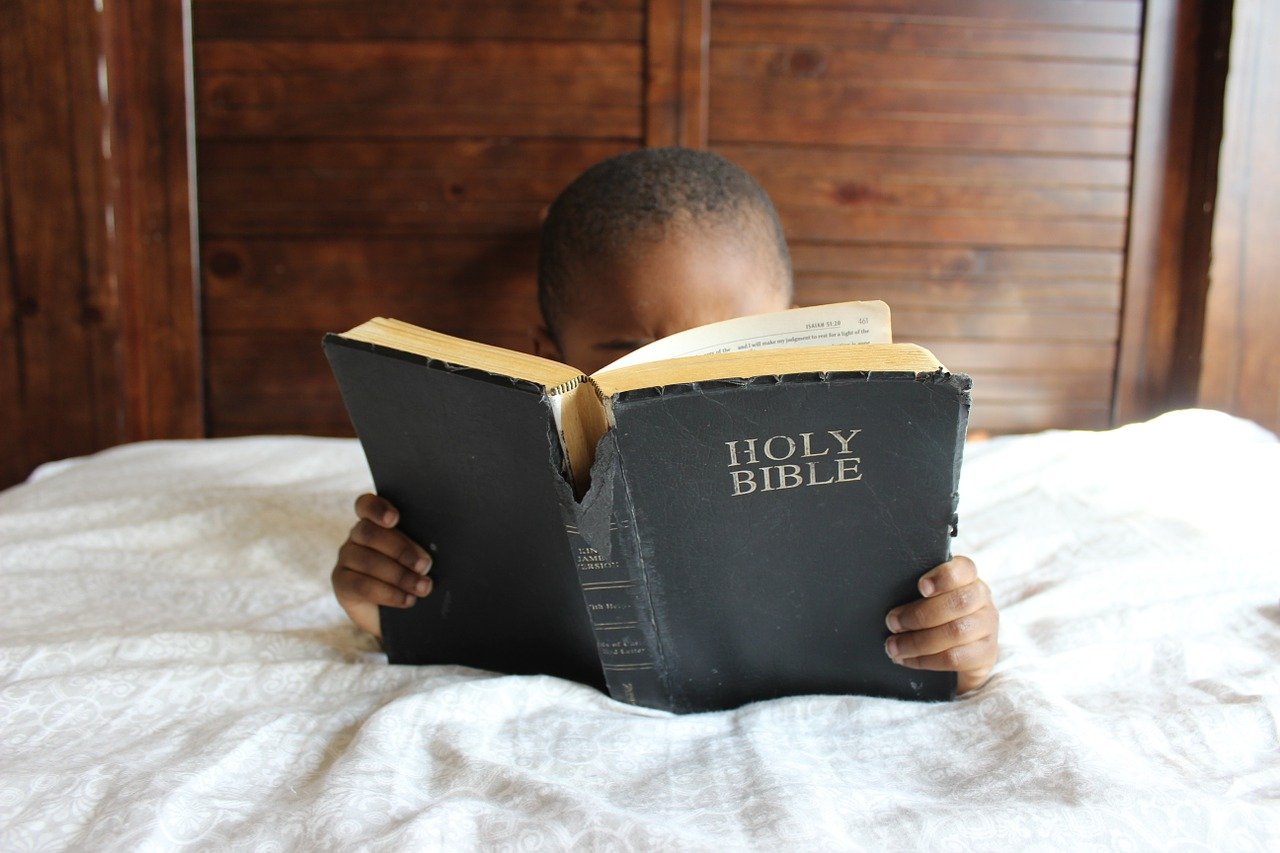
The word of God has no lockdown
On the occasion of the "Day of the Word of God", which Pope Francis introduced in 2019 and set for the 3rd Sunday of the annual cycle (this year it is January 24th), I would like to tell you how we have been in our convent, for some time Design Bible meetings. We meet once every week and in Advent 2020 we started a new form of Bible sharing, which at first seemed a bit strange to us, but increasingly we like it more and, above all, is spiritually enriched. The special thing about these meetings is that the sister who takes over the leadership (each time a different sister is on it) does not have to prepare especially for it and read comments on the chosen Bible text. She only leads the sisters through the meeting step by step and, like everyone else, lets herself be guided and inspired by the Holy Spirit. When we first met this new method, we decided to work through the Gospel of Matthew section by section so that each sister knows where to go next. And it is already clear to us, although we are still in the initial phase of this form of work, that through this we better and more deeply understand the fullness of the intention of Matthew, who wrote his Gospel primarily for Jewish Christians and therefore refers a lot to the Old Testament teaching. We sense something of God's plan of salvation with us humans. The steps of this method are simple:- As with any Bible sharing, we begin with prayer
- 2. Reading the text
- I would like to explain this third step in more detail, as it is a little unfamiliar. The participants are invited to ask questions about the text. It can be questions of understanding, but above all questions that seem simple-minded or not very useful at first glance. For example, during the Christmas story in Mathew we asked ourselves: What did Mary think when Joseph was told in a dream to flee to Egypt. Didn't their faith in the love and providence of God waver? Or what did Joseph feel when the angel told him to take the pregnant Mary as a wife. Wasn't that an imposition to a young, unmarried man? Or: What did Mary and Joseph do with the gifts of the three wise men ...
- Division of the text into sections of meaning - This step also requires some explanations. You can divide the chosen section according to chronological order, for example in the case of Joseph's dream that he should take Mary to himself, the division into what happened before, during and after the dream would be possible. But you can also use the people involved as a classification criterion or other criteria ...
- In this step, the individual text sections are processed. Here you will find that some of the questions you asked in step 3 are answered, while others have become unimportant. - I would like to use a picture here: The individual steps are like a ditch in the earth. You start on the surface and step by step you get more in depth and a personal encounter with the word of God.
- 6. What does God mean to me today with this passage? - At this point we are able to experience that in the course of the meeting each sister becomes naturally clear where in this passage of the text the call of God is for her.
- 7. The conclusion of the meeting develops naturally with a prayer formulated personally by each sister. This can be a thank you, a request for strength and help in the near future, a prize or something similar.