
Our school in Mwanga/Kilimanjaro/Tanzania
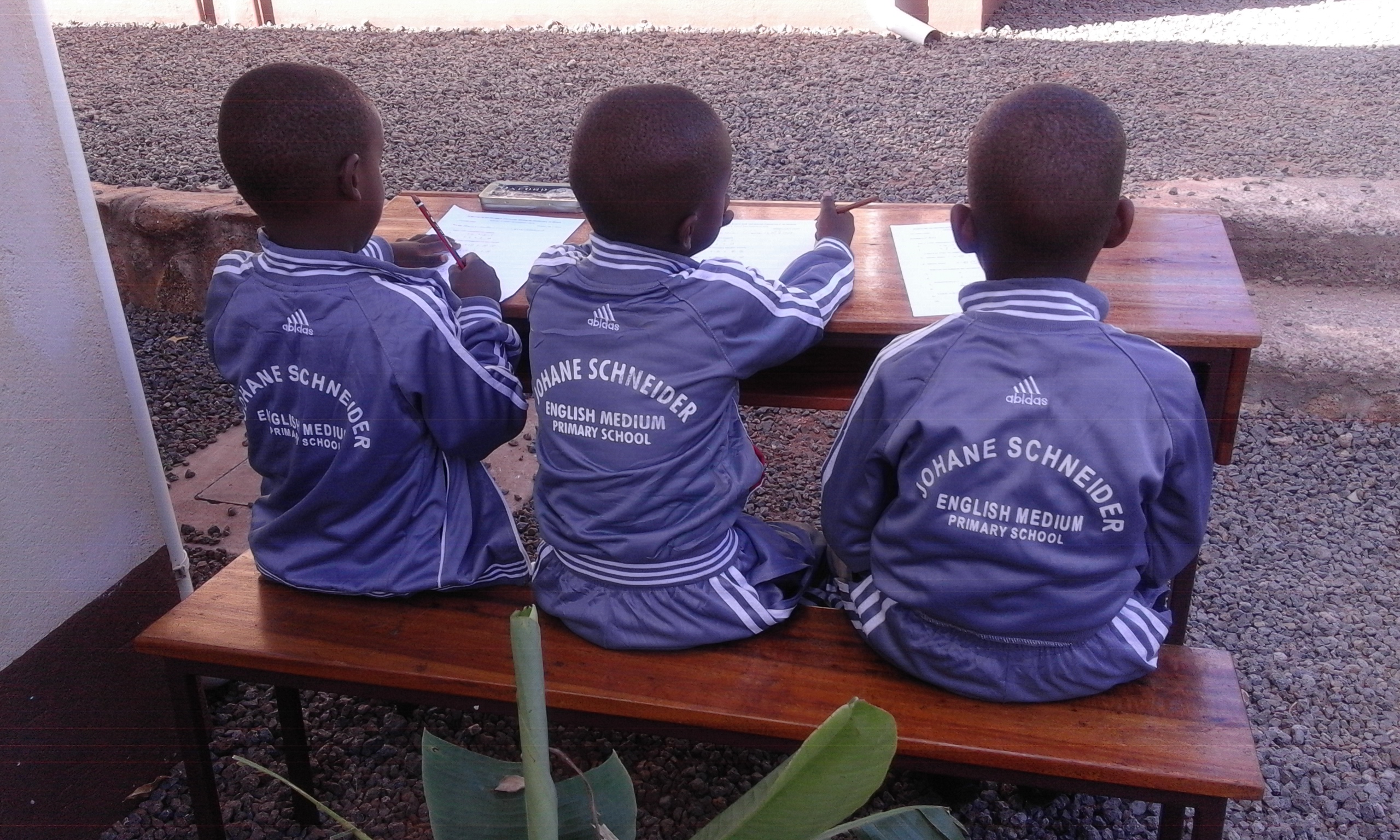
Johannes Schneider English medium school is one of the biggest fruits of our mission in Tanzania. It is run by sisters and also lay teachers. Some years back the congregation wanted to expand our apostolical work of dealing with the children in school, in Mwanga Kilimanjaro and thus the construction process started but due to some challenges including land tittle deed and later school administration number, it took time to start. We could not wait for all this construction process thus we decided to ask for one room in Mwanga parish so that we can start admitting children for class one and in January 2018 we were lucky to have 25 pupils who could start Johannes Schneider English Medium primary school. This one room served as class for lessons as well as a dining room for one year. During this one year the construction was rapidly growing and also the number of the children increased and after a short time the school was given the administration number and the children started using the new facility. One of the things God blessed these children from the beginning is that they are proud of being in this school, very zealous and competitive in learning, none of them could accept to be defeated and this made the class so lively and cheerful. We can say these 25 pupils were the foundation of Johannes Schneider school and they have set a very good example even to the new comers and due to this many loved the school. The school is now rapidly growing with almost 300 pupils and five classes, these twenty five children are now in the top level (class five). as education curriculum in Tanzania, every year all the pupils in class four do national examination in order to step to the next level which is (class five) and for the first time in our school, last year we had our first class four group who sat for the national examination whereby they did a very amazing work by being number 1 out 89 schools in municipality of Mwanga, number 1 out 567 schools in Kilimanjaro region and number 45 out of 3997 schools national wide. Congratulations to them and their teachers and for all those who support us (our benefactors) and the people of good will for the good job. By doing this marvelous work they have advertised our school and due to this we are expecting many more children from all over the country to join our school from this year. Sr. Teresia Mukumu
Tanzania (since 1972) Part 1
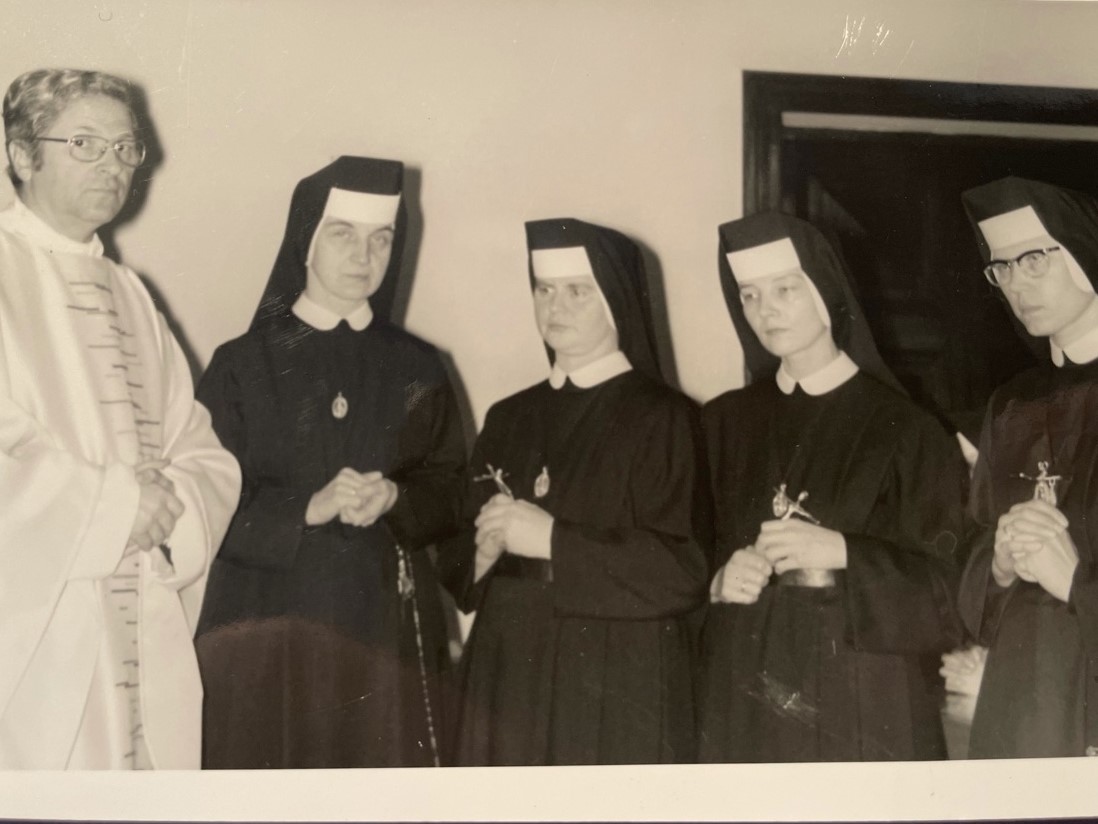
Decision to do missionary work At the General Chapter of 1963, the Polish sisters suggested that the missionary idea be given more prominence in the congregation. The topic was discussed in detail and offers from Africa and Brazil had already been received. However, the sisters were warned from various quarters against hasty deployment in an unfamiliar culture and pointed out the importance of good training and preparation. For the time being, therefore, they only included the missionary concern in the new version of the constitutions. They did not see this as a new field of work, but wanted to continue the original task of their founder, to take care of women and girls as well as people in need in the mission. The next general chapter in 1969 took up this concern again and made the decision to send sisters to Africa. Tanzania Three years later, sisters from the three Polish provinces began missionary work in Tanzania. The first station in Kilimarondo, which opened in 1972 and closed again after almost 20 years, was followed by two more in Nanjota and Chikukwe, which still exist today. In 1990 the congregation opened a novitiate, from which 15 African professed sisters emerged by 1998. In 1988, it obtained state registration, which enabled it to own the land and houses of its branches in Nanjota and Chikukwe. Dioceses The branches of the Sisters of Mary Immaculate were in different dioceses. When they were founded, the first two stations in Kilimarondo and Nanjota belonged to the Nachingwea diocese, of which the Salvatorian Father Arnold Cotey was bishop. In February 1984, Polykarp Pengo became the first local bishop to take over the Nachingwea diocese. He was ordained bishop on January 6, 1984 in St. Peter's Basilica by Pope John Paul II. During his stay in Rome he also visited the Generalate and asked for more Sisters of Mary to be sent to Tanzania. He pointed out that the problem of young women in Africa was a burning one. In the mid-1980s, the dioceses in Tanzania were reorganized, and the Nachingwea diocese was dissolved. Kilimarondo now belonged to the diocese of Lindi, led by Bishop Maurus Libaba and since 1991 Bishop Bruno Ngonyani. Nanjota and Chikukwe belonged to the diocese of Tunduru-Masasi, which Bishop Pengo took over. In 1992 Pengo became Archbishop of Dar es Salaam and in 1998 Cardinal. Since 1992, Bishop Magnus Mwalunyungu had been the new head of his former diocese of Tunduru-Masasi. Regional superiors In order to represent the common concerns of the branches in Tanzania vis-à-vis the church and state authorities and to maintain contact with the general administration in Rome, a regional superior was required. On December 8, 1990, Sister M. Viannea Parchatko was appointed Regional Superior. On July 1, 1997, after returning to Poland, Sister M. Vianneya Rogowska took over this position. (Johannes Mertens, “Geschichte der Kongregation der Marienschwestern von der Unbefleckten Empfängnis“, Volume 2, pp. 622-624)
Portrait of Sister Dulcissima – testimony
One day, Sr. Małgorzata Cur from the Congregation of the Sisters of Mary Immaculate from Brzezie called me. She expressed her desire for a picture of the handmaid of God, Sr. Dulcissima, to be created, because only a few photos are preserved, and only on some of them Sr. Dulcissima is in her monastic habit. The photos were of very poor quality, but I figured I had painted various portraits so many times that I wouldn't have a problem with that either. I know that preparing a portrait of saints or blessed is a deep, spiritual adventure and an invitation to an exceptional friendship. Painting is also a spiritual journey into oneself. This was also the case with the work on the portraits of Saint Teresa of the Child Jesus, Blessed Cardinal Stefan Wyszyński or Blessed Chiara Luce Badano. Together with Małgorzata, we chose one photo, which was supposed to be a model for painting the portrait. As always, I started my work by making a drawing, a sketch that I had to stick to when painting. However, problems have already started here. The photo showed a dozen of sisters standing in one shot and despite the large magnification, it was very blurry ... The faces were illegible and even blurry ... the religious habits were visible only in the general outline. I was wondering how to work on something like this? After all, it's impossible to take a portrait of the person I see in a fog. I did not want to be discouraged at the very beginning, I tried to continue drawing ... In the meantime, Sister Małgorzata sent me pictures of sisters in religious habit from those times, so that I could better see the details of the veil, habit and their elements ... However, my priority was the eyes. It's just that the eyes were in the shadow in the photo and in addition all the photos were of course black and white ... I started to get nervous ... At the beginning of my contact with my sister, it seemed to me that it was a problem to make another portrait, now I had a problem, and a serious one. The work went on, but it was very slow and not very effective. I rescued myself with other photos of Sister Dulcissima, taken before she entered the congregation. Some of Helena Hoffmann's photos were a bit clearer and the eyes could be seen better. However, I know that the gaze changes with human maturity, especially spiritual ... and with suffering that ennobles the soul. After all, the eyes are the mirror of the soul. I wanted to get to know God's handmaid better. It was a turning point. I started reading materials about Sister Dulcissima and ... I asked her to let me paint herself and to help me with that ... The portrait was almost ready ... I took two steps back and ... I was sad to see that the nun I painted is not Helena Hoffmann, she is not Sister Maria Dulcissima ... I was helpless ... What was there to be done? Desperate, I asked Sister Małgorzata to pray. The sisters prayed and even ordered a mass. for the personal painter Sr. Dulcissima - that's what Sr. Małgorzata called me. Personal? It was the first time that I had tears of emotion ... I felt that I was undergoing some inner cleansing and that Sr. Dulcissima became very close to me ... I started working on the face of God's servant all over again. Then I had an impression, which turned into such a conviction that all the time Sister Dulcissima kept her hand on mine and helped me paint herself. It was an experience I had never had before. It was liberating from the artist's own ego, who first and foremost trusts in his artistic abilities ... and here we had to trust the intercession of the one whose beatification process is underway ... I painted the canvas white and made a sketch with a brush again ... It was a brave and risky move ... but it paid off ... The canvas was very vivid, although it is only a sketch of a portrait of Dulcissima's sister. And it is surprising that already in this sketch - the eyes appeared alive! I breathed a sigh of relief and gratitude. The work was progressing smoothly ... The portrait was completed just before Christmas. This experience helped me understand how powerful the intercession of the saints is, especially in times that are humanly hopeless. Sr. Maria Dulcissima helped me paint herself and I feel honored by this fact. She is not only a candidate for altars, whom I am asking for various intentions but she is also a holy companion of ordinary and extraordinary matters in which I adore the Love of God for us, expressed every day in many ways. Sister Dulcissima - please pray for us! Tomasz Wachowicz Trzcianka, 02/01/2022
Christmas
The real happiness we are looking for It is usually different than we imagine it. It is a mystery that transcends Human imaginations. [Fr. Jan Twardowski] Behold, the King of the universe was born in a poor stable. God came to earth as a helpless child. Power manifested in weakness. May the mystery of Christmas bring us certainty That God is born wherever there are our worries, poverty and anxiety. Where in a difficult situation we can trust Him without any conditions. May he be born in our hearts! Mary Immaculate Sisters