
Mar 23, 2023 | DAILY BREAD
Friday of the 4th week of Lent
First reading - Wisdom 2:1,12-22
The book of wisdom says, “The godless say to themselves, with their misguided reasoning”. It’s interesting to analyze these words. The godless are those who take the place of God. Don’t care so much about anything else other than themselves - their interests and their world. In fact, there is nobody else in their life. That’s why they are talking to themselves. And how are they talking, they are talking with misguided reasoning. They are misguided by their ego and pride. They are misguided by their selfish interests. They are misguided by their blindness caused by their malice. Because malice is the only way to save your ego always. Because they don’t see anything else than themselves. There are moments in our life when we tend to become like these. Those moments in which we fail to see the importance of holiness over our own interests. Those moments we fail to embrace the rewards of holiness by choosing the rewards of selfishness. Those moments in which we drop our selflessness to achieve something with greed. Let’s reflect: Lent is the time to examine how much our ego misguides our reasoning.

Mar 22, 2023 | DAILY BREAD
Thursday of the 4th week of Lent
Saint Turibius of Mongrovejo, Bishop
“But Moses pleaded with the Lord his God” for the people who did a great sin. This is something we have to learn very much in our life. To plead with the Lord our God for others, especially for the mistakes of others. This is very good for our relationship with God. This shows our openness to God. This shows our trust in the Lord. This shows our freedom with the Lord. Not only that, but it is also the best way to deal with the sins and mistakes of others. Instead of getting irritated, or instead of getting angry, we must learn from Moses to plead with the Lord for others who are in mistakes. There is something more important in the prayer of Moses. That is his self-sacrifice. We read that the Lord wanted to destroy the people who sinned and make a great nation out of Moses. That was a big opportunity to Moses to become the father of a great nation and take the place of Abraham. Moses did not accept this offer to make himself something bigger. He chose to plead mercy for the people. That is why the pleading of Moses is special because he pleaded in his sacrifice, he pleaded in his self-denial. We must learn to plead for others before the Lord with our sacrifices and self-denial. Let’s reflect: Lent is the time to learn to plead for others with our self-sacrifices.

Mar 21, 2023 | DAILY BREAD
Wednesday of the 4th week of Lent
First reading - Isaiah 49:8-15
“I will never forget you”. How consoling is this Word of God! God will never forget me. And He describes that His relationship to me is better than the relationship of a mother to her child. So how much personal and intimate is the relationship of God to us! This is the reality that should be the driving force of our life. His love is very concrete as we can see in the words of the prophet. He will answer when we call. He will help me when I am in need. I will be freed from the prison of my darkness. I will never be hungry or thirsty. Wind or sun will never plague us. And He leads us to the springs of water. And He will prepare the way for my journey. Look, how concrete is the love of God. This concrete love must be responded by us with our gratitude. This concrete love, we must acknowledge in our life. In this intimate love, we must find consolation and joy. Let’s reflect: Lent is the time to acknowledge more and more the intimate and concrete love of God.

Mar 20, 2023 | DAILY BREAD
Tuesday of the 4th week of Lent
First reading - Ezekiel 47:1-9,12
“This water flows east down to the Arabah and to the sea; and flowing into the sea it makes its waters wholesome”. Here we read the effect of the grace of God in our life. The grace flows from the temple. It flows to all directions. It grows in abundance and becomes a river impossible to cross. Then we see the effect of the water all along the way it goes. It brings richness, fruits, lavishness, and even medicinal. Now we must think this in our life and the effect of grace of God in our life. The grace comes from the tabernacle. Our relationship to tabernacle makes this effect in our life. The grace begins to flow in all directions. It grows into abundance. Nothing can cross this river of grace. No sadness, no crisis, no problems will be greater than this grace. Then, this grace will produce fruits of grace in our life. It will bring the fruits of love, generosity, and kindness in our life. By this our life of grace becomes medicinal for others. All this begins with our relationship to the tabernacle. Let’s reflect: Lent is the time to re-establish or deepen our relationship with the tabernacle, the source of grace.
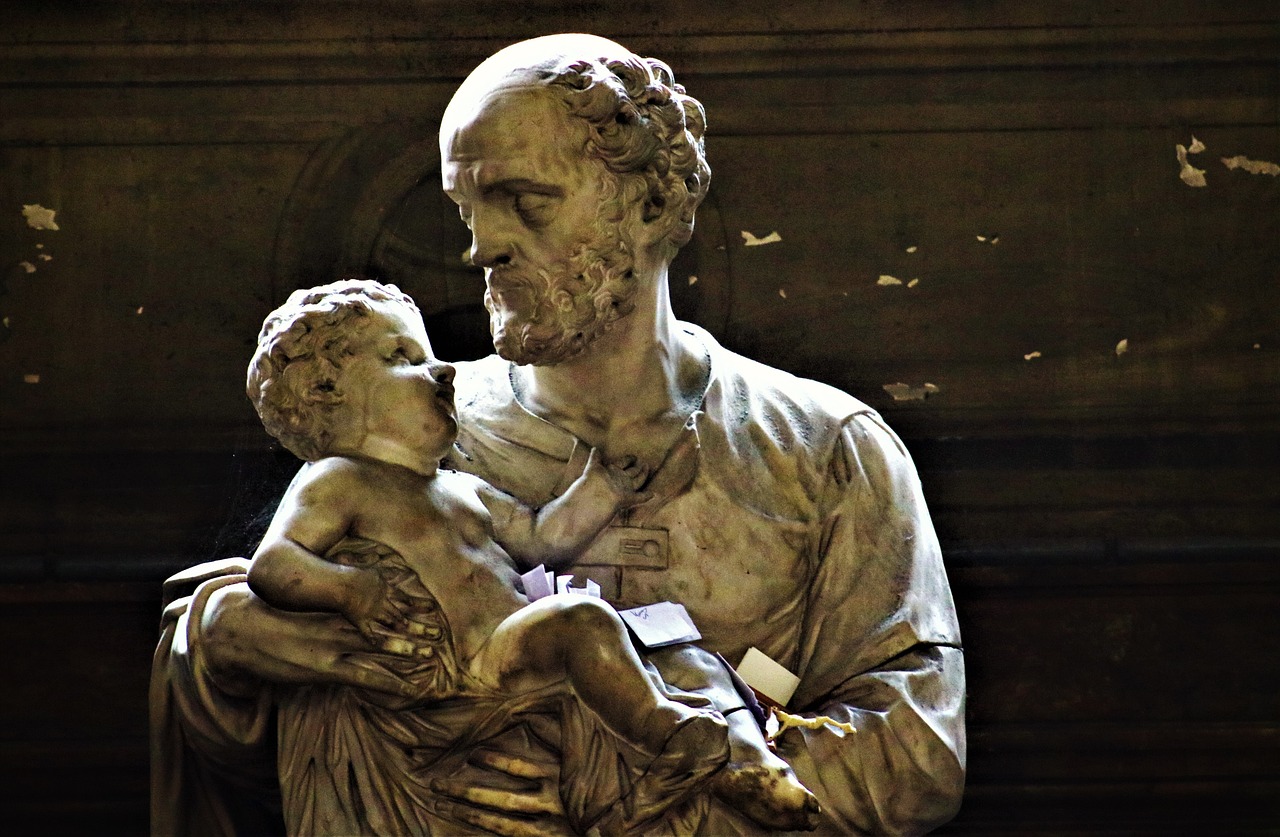
Mar 19, 2023 | DAILY BREAD
Saint Joseph, husband of the Blessed Virgin Mary
First reading - 2 Samuel 7:4-5,12-14,16
St. Joseph gives us always a lot to meditate. St. Joseph accompanies in our way. St. Joseph strengthens us when we are in doubts. St. Joseph intercedes always for us to keep Jesus safe in us. “Your House and your sovereignty will always stand secure before me, and your throne be established for ever”. This is the promise given to the People of God through Prophet Nathan. The presence of God will be always there with us for ever. And God chose Joseph to be very important instrument in His Plan. Joseph fostered Jesus as a father. And St. Joseph continues his vocation in each one of us. God wants to establish His sovereignty in our hearts, and He wishes that our heart be His throne. In the life of Joseph, we can see how he welcomes the plan of God in his life changing his own plans to establish the sovereignty of God in his life. We can see how he embraces with courage the plan of God. Let’s reflect: Do we have the courage like St. Joseph to embrace the plan of God?

Mar 18, 2023 | DAILY BREAD
4th Sunday of Lent (Laetare Sunday)
First reading - 1 Samuel 16:1,6-7,10-13
“God does not see as man sees: man looks at appearances but the Lord looks at the heart”. How wonderful this is! The Lord looks at the heart and not at appearances. Imagine, how much time we spent to make our appearances appealing to others. In many circumstances, our only worry is about the judgement of others. The Lord looks at the heart because it is through the heart He works. We can become His instruments only if our heart permits Him to work through us. In the reading we read, after the anointing “the spirit of the Lord seized on David and stayed with him from that day on”. That is what happens when our heart is ready for the Lord. The Lord seizes on us and works through us. So, let’s prepare our heart in humility, in caring the other, in looking after the weak. Our heart becomes ready to the Lord when we try to love, when we love. The capacity to love is the capacity of the heart to be an instrument of the Lord. This we understand when we see as God sees and not as men see. Let’s reflect: Lent calls us to see as God sees us and others.
